
Introduction
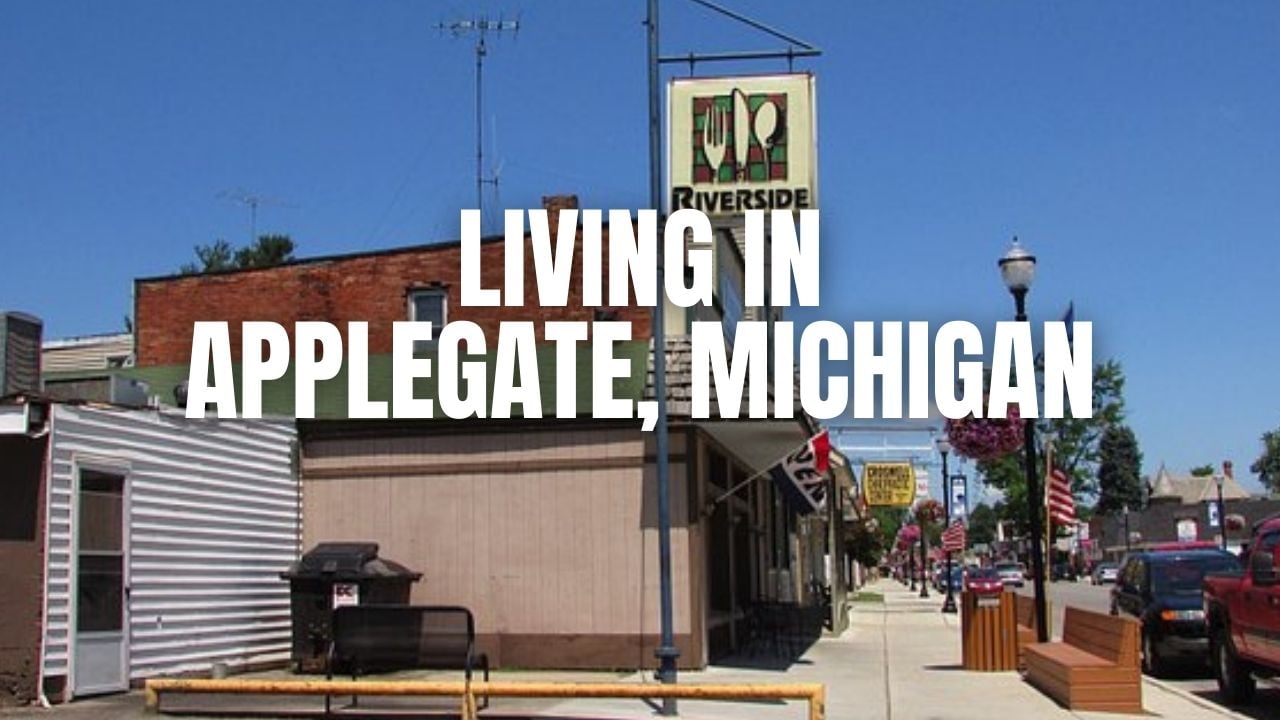
If you’re searching for a truly small-town Michigan experience, Applegate may be one of the quietest options on your radar.
Located in Sanilac County in Michigan’s Thumb region, Applegate is a village where open space, farmland, and proximity to Lake Huron shape daily life. It’s not a bustling suburb or a fast-growing city — and that’s exactly why some people are drawn to it.
In this guide, we’ll take an honest look at what living in Applegate, Michigan is really like — from housing and cost of living to schools, property taxes, and lifestyle.
Cost of Living in Applegate, Michigan
Cost of living in Applegate reflects its rural setting.
According to U.S. Census Bureau data for Sanilac County, median home values and median household incomes are below the Michigan statewide median. Because Applegate is a very small village, some housing data is reported at the county level rather than the village level.
BestPlaces.net reports that Sanilac County’s overall cost of living index is below the national average. Housing is typically one of the more affordable components compared to many parts of Southeast Michigan.
Utilities and transportation costs generally align with broader Midwest averages, based on Bureau of Labor Statistics regional data.
As with any rural area, individual expenses can vary based on home size, heating source, and driving distances.
Real Estate & Housing Overview
Applegate’s housing stock is modest and traditional.
Based on U.S. Census Bureau housing age data for Sanilac County:
Many homes were built before 1980
Detached single-family homes are the most common property type
Lot sizes tend to be larger than those in suburban communities
You’ll commonly see:
Ranch-style homes
Farmhouses and older two-story properties
Homes on multi-acre parcels outside the village core
New construction activity is limited compared to high-growth regions, and available inventory can fluctuate due to the small population base.
Market trends in rural communities like Applegate tend to move more gradually compared to major metropolitan areas, based on general MLS reporting patterns in similar Michigan markets.



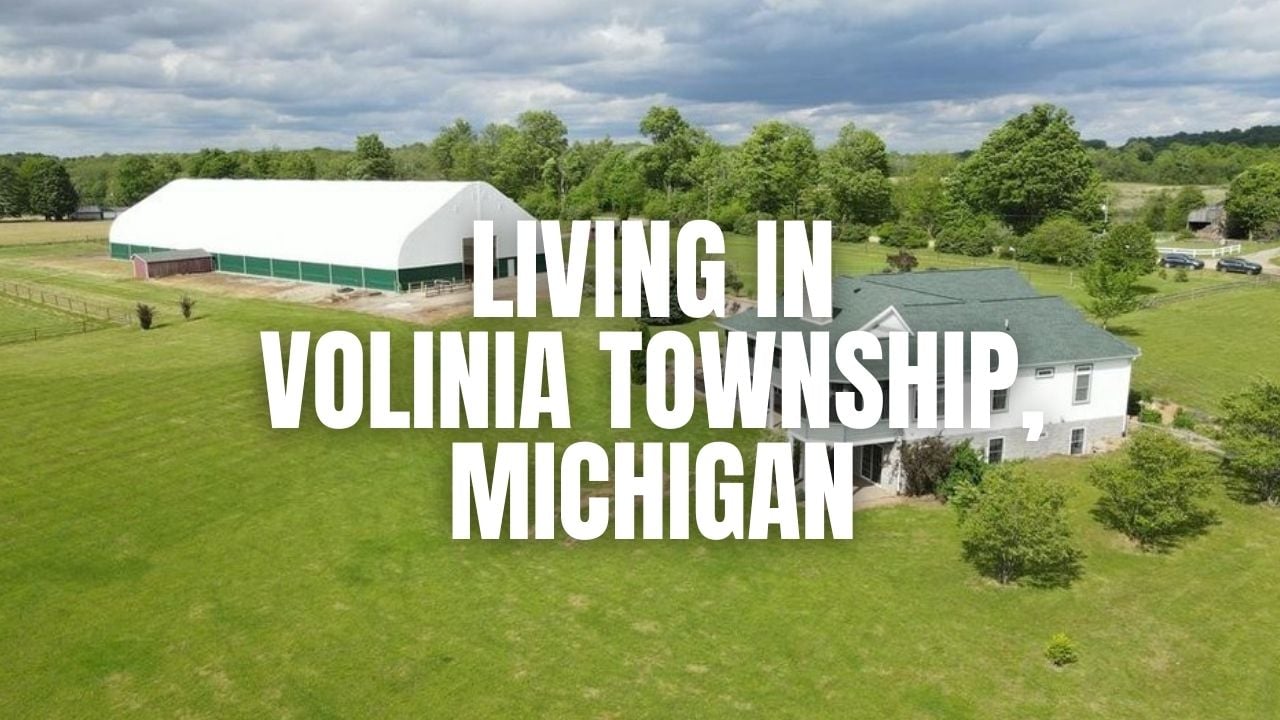
Is Volinia Township, Michigan a Good Place to …
Volinia Township, Michigan is one of Cass…
Moving to Silver Creek Township, Michigan? What to …
Silver Creek Township, Michigan is where Cass…
Living in Porter Township (Cass County), Michigan: Pros, …
Porter Township, Michigan is a lake-studded rural…