
Introduction
If you’re exploring smaller communities in Michigan’s Thumb region, Unionville might be one of the places that catches your attention.
Located in Tuscola County, Unionville is a small village surrounded by farmland and open landscapes typical of this part of the state. Many people consider living here because of the quieter pace, proximity to Lake Huron and Saginaw Bay, and housing costs that are often lower than those found in larger Michigan cities.
That said, living in Unionville comes with trade-offs that are typical of rural communities. In this guide, we’ll walk through what to expect when it comes to housing, cost of living, schools, property taxes, and everyday lifestyle in Unionville, Michigan.
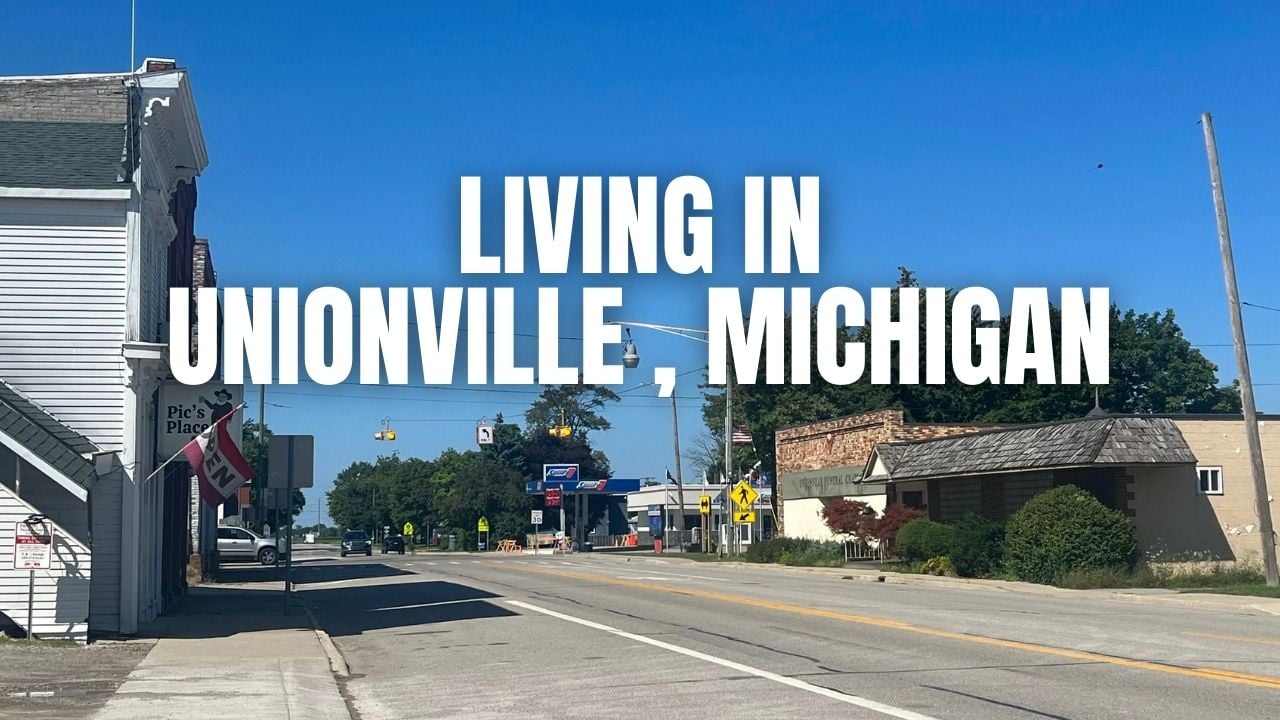
Cost of Living in Unionville, Michigan
Cost of living in Unionville is generally lower than many urban areas in Michigan.
According to U.S. Census Bureau housing data, median home values in Tuscola County are below the Michigan statewide median. Niche.com also reports that housing costs in smaller Thumb-region communities tend to be more affordable compared to larger metropolitan areas.
BestPlaces.net indicates that many rural Michigan communities have cost-of-living indexes below the national average, particularly due to lower housing prices.
Utilities and transportation costs typically align with regional averages in the Midwest, according to the Bureau of Labor Statistics.
However, transportation expenses can vary depending on commute distance, since most residents rely on personal vehicles for daily travel.
Real Estate & Housing Overview
Unionville’s housing market reflects its rural and small-village character.
According to the U.S. Census Bureau, much of the housing stock in the region was built between the 1940s and 1980s, though older farmhouses and more recent builds can also be found.
Common housing types include:
Single-family homes within the village
Farmhouses and rural properties on larger parcels
Ranch-style homes common throughout rural Michigan
Lot sizes can vary widely. Within the village, lots are typically smaller residential parcels, while surrounding rural areas often include larger acreage properties.
New construction activity in Unionville is limited compared to larger suburban communities, which is typical for smaller villages in Michigan’s Thumb region.
Real estate availability and pricing tend to fluctuate based on inventory levels and broader regional housing trends, according to MLS data.



The Truth About Bridgman, Michigan: Neighborhoods, Prices, Taxes …
Thinking about relocating to Bridgman, Michigan? Located…

Is Benton Harbor, Michigan a Good Place to …
Considering a move to Benton Harbor, Michigan?…
Moving to Unionville, Michigan? What to Know About …
Considering a move to Unionville, Michigan? Located…