
Augusta, Michigan: Best Neighborhood Pockets + Pros/Cons for Newcomers — Should You Move Here?

Introduction

There are places in Michigan that punch well above their weight. Augusta, Michigan is one of them. Tucked into Kalamazoo County, just a short drive east of Kalamazoo and a few minutes west of Battle Creek, this small village of under 900 people carries a surprisingly full hand of cards: a world-class state recreation area right outside town, one of Michigan's most beloved historic theaters around the corner, and a cost of living that makes a lot of larger communities in the region look overpriced by comparison.

If you've stumbled onto Augusta while researching where to live in southwest Michigan, you're doing your homework right. The village is compact and genuinely small — we're talking just about one square mile of land area, per U.S. Census Bureau data. But what it lacks in size, Augusta compensates for with character, outdoor access, and an authentic community feel that's increasingly rare to find.

This guide lays out everything a serious relocation researcher needs to know: the real numbers on housing costs and property taxes, what the schools actually look like, the recreational lifestyle on your doorstep, and an honest pros and cons breakdown. No fluff, no invented statistics.
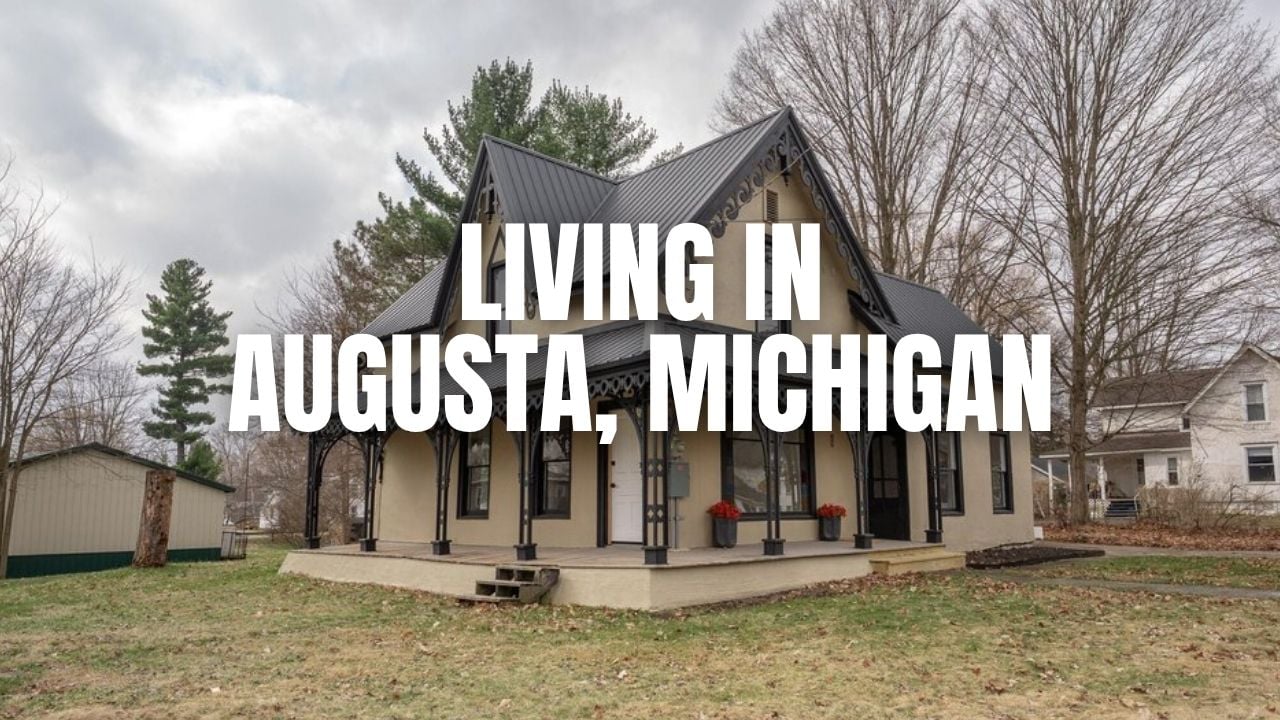
Search For All Homes For Sale
See My Home's Current Value

Where Is Augusta, Michigan Located?

Augusta is a village in Ross Township, Kalamazoo County, Michigan, located along M-96 in the southwestern part of the state. According to the U.S. Census Bureau, the village covers approximately 1.02 square miles of land area — making it one of the more compact incorporated communities in the county.

From a geographic position standpoint, Augusta sits roughly midway between two of southwest Michigan's major urban centers. According to city-data.com, the nearest city with a population of 50,000 or more is Battle Creek, approximately 7.8 miles to the east. Kalamazoo is accessible westward along M-96, placing the village within a reasonable commute corridor to both cities. The broader Kalamazoo-Portage, MI Metropolitan Statistical Area, of which Augusta is a part per U.S. Census Bureau geographic classifications, has a population of approximately 261,000 people.

For highway access, I-94 runs through the region connecting Battle Creek and Kalamazoo, with access points reachable from Augusta via M-96. This positions Augusta residents well for regional travel toward Detroit to the east and Chicago to the west. Per U.S. Census Bureau ACS data, the mean travel time to work for Augusta residents is approximately 25.2 minutes — consistent with a reasonable commute in either direction along the M-96/I-94 corridor.

The ZIP code serving Augusta is 49012, and per city-data.com, the village is classified as 100% rural — an important context point for anyone weighing urban convenience against small-community living.

Cost of Living in Augusta, Michigan

Augusta, Michigan offers a cost of living that positions it firmly in the affordable range for the region and the state. According to city-data.com, the December 2024 cost of living index for Augusta is 80.7 — well below the U.S. average of 100 and meaningfully below the Michigan statewide BestPlaces index of 91.5. That gap is real and felt most sharply in housing.

According to U.S. Census Bureau ACS 2023 5-year estimates, as reported by Census Reporter, the median household income in Augusta is approximately $58,958 — running about 80% of both the Kalamazoo-Portage Metro Area median of $70,525 and the Michigan statewide median of $71,149. The per capita income is approximately $32,663 per year.

On the housing side, city-data.com reports the estimated median home or condo value in Augusta as approximately $149,285 based on 2023 ACS data — well below the Michigan average home value of approximately $237,918 per Zillow data. Active listing prices on the market tend to run higher than the median assessed value; per Movoto data, recent listing prices in the Augusta area have carried a median around $299,000, reflecting the current resale market.

Median gross rent in Augusta is approximately $823 per month, per city-data.com 2023 ACS data. For renters, the rent-to-income ratio in Augusta sits around 19.2% according to Point2Homes analysis of Census data — well below the commonly cited 30% affordability threshold, which is a positive indicator of overall housing affordability for renters in the village.

Specific cost of living index breakdowns for Augusta from BestPlaces.net were not available at time of publication for the village specifically. Readers are encouraged to verify current figures directly through BestPlaces.net or Niche.com.

Real Estate & Housing Overview in Augusta, Michigan

Housing Market Overview in Augusta, Michigan

The housing market in Augusta, Michigan reflects the character of a small, established village with limited new inventory. Supply is constrained by the village's compact land area — approximately one square mile — and homes that come to market tend to generate consistent interest. According to Redfin, the Augusta market has been described as somewhat competitive, with well-priced homes moving relatively quickly and some properties attracting multiple offers at the right price point.

Inventory levels in Augusta can vary meaningfully by season. Spring and early summer typically see increased activity, while the fall and winter months tend to be slower. For buyers searching for homes in Augusta MI, staying connected to fresh listings is important — desirable properties don't always linger.

Types of Homes in Augusta, Michigan

Augusta's housing stock reflects its history as a small, established village. Single-family homes dominate the inventory, with a mix of older colonials, ranches, and traditional two-story designs that span a wide range of vintages. The village contains modest lots typical of incorporated small-town Michigan, with homes generally closer together than rural township properties in the surrounding area.

Multi-family structures also exist within the village, including two- and three-unit buildings per city-data.com housing data. Mobile homes represent a smaller segment of the market. New construction within the village footprint itself is limited given the built-out nature of the community, though properties in the broader Augusta ZIP code (49012) include homes on larger parcels outside the village boundaries.

Price Range & Affordability (Evergreen Style)

Homes in Augusta, Michigan typically fall into an accessible to mid-range price point for the Kalamazoo County region. According to city-data.com 2023 ACS data, the median estimated home value for the village sits around $149,285. Active listings tend to be priced higher than assessed values — per Movoto, recent median listing prices in the Augusta area have approached approximately $299,000, with the full range spanning from more modest entry-level options to updated or larger properties at higher tiers.

Per Redfin data, Augusta has recently shown median listing prices around $262,000 for available inventory. Compared to the broader Kalamazoo-Portage metro area and nearby suburban communities, moving to Augusta Michigan generally offers competitive entry points, particularly for buyers willing to consider older housing stock or properties needing updating. Readers are encouraged to verify current listing prices and trends directly through Realtor.com, Redfin, Zillow, or Trulia for the most up-to-date figures.

Market Segments & Buyer Activity (Neutral Language)

Entry-level housing demand is present in Augusta, particularly given the village's relative affordability compared to nearby larger communities. Move-up demand also exists for buyers seeking larger or more updated homes in the area. The village's small-town character and access to Fort Custer Recreation Area make it appealing to buyers with specific lifestyle priorities around outdoor recreation and community scale.

Downsizing interest in lower-maintenance housing is another active demand segment, particularly for buyers seeking to reduce property upkeep while staying in the southwest Michigan region. New construction demand within the village itself is limited given the built-out nature of the community.

New Construction & Development Trends

Augusta village is largely built out within its incorporated boundaries. Active new residential subdivision development within the village is minimal based on publicly available information. Buyers seeking brand-new construction will generally need to look toward Augusta Township, Ross Township, or nearby communities along the M-96 and I-94 corridors for those options.

The broader Augusta ZIP code (49012) includes properties on larger rural parcels and some new builds in the surrounding townships. Buyers interested in new construction near Augusta should search by ZIP code rather than strictly by village boundaries.

What It's Like to Own a Home Here

Owning a home in Augusta means living in a compact, established village with an authentic small-town character. Lots within the village are generally modest in size. Most properties connect to municipal water and sewer — a practical advantage compared to the rural townships surrounding the village, where private well and septic are the norm.

Property upkeep expectations are consistent with Michigan's seasonal climate: winters require snow management, and the warmer months call for regular lawn and exterior maintenance. HOA structures are not common in Augusta's village context. Homes here tend to carry histories — many properties have multiple decades of ownership behind them, which means buyers should budget for potential updates depending on the vintage of the home.

If you're considering a move to Augusta and want to better understand how the housing market fits your budget and goals, reviewing current listings on Realtor.com, Redfin, Zillow, or Trulia — and running property-specific numbers — can help you make a more informed decision.
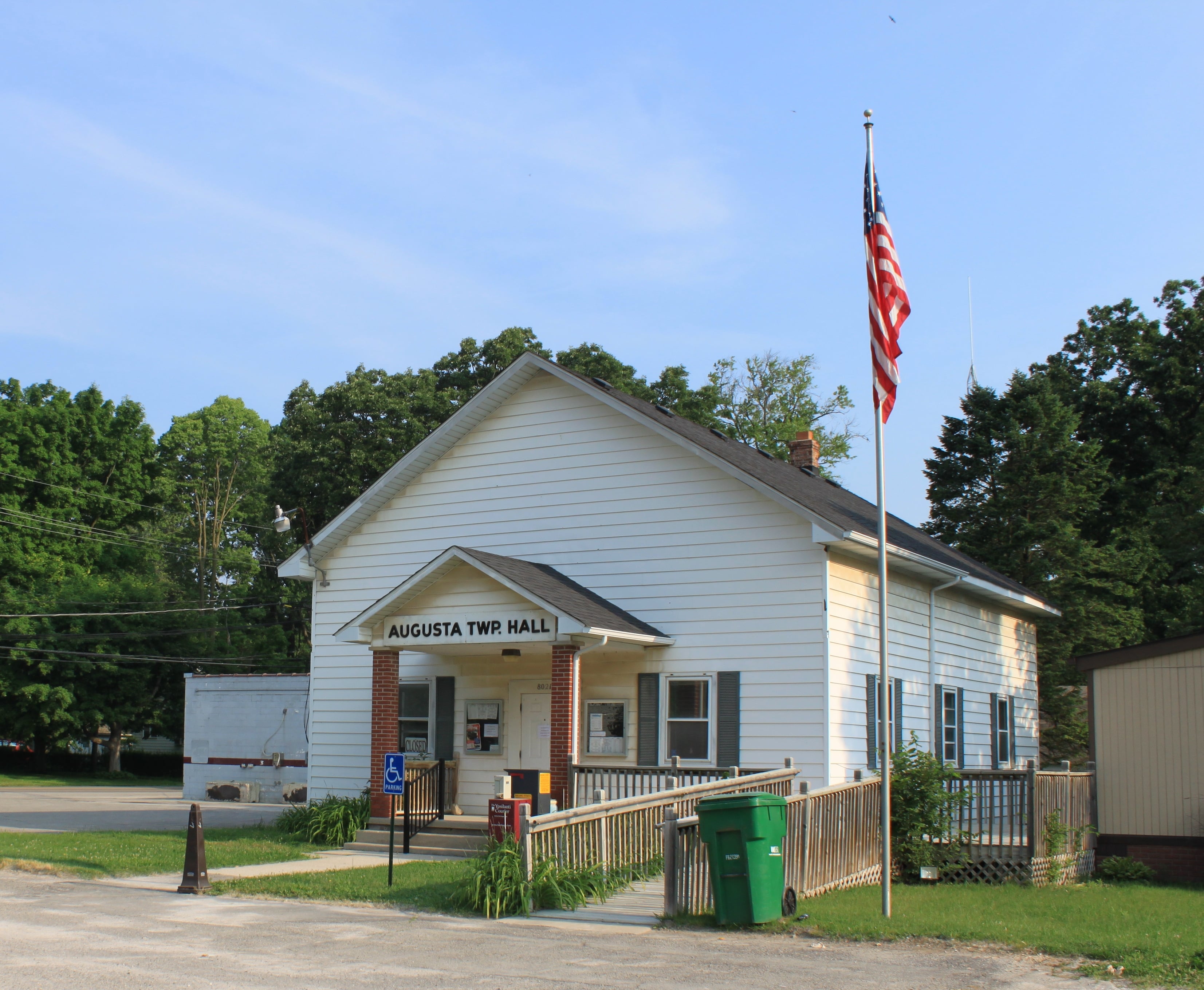
Augusta

Property Taxes in Augusta, Michigan

Property taxes in Augusta — and throughout Michigan — are based on a millage system. One mill equals $1 for every $1,000 of taxable value.

Michigan operates under Proposal A (passed in 1994), which is one of the most important things to understand if you're buying a home here. This law caps how much your taxable value can increase each year, typically at the rate of inflation. In simple terms, this protects long-term homeowners from dramatic spikes in property taxes — even if home values rise significantly.

However, there's one key moment where this changes.

What Happens When You Buy a Home?
When a property transfers ownership, the taxable value typically "uncaps" the following year and resets closer to the home's current market value. This means your property taxes may be significantly higher than what the current owner is paying. That's why it's critical to estimate your taxes before you buy.

According to city-data.com, the median real estate property taxes paid for Augusta housing units with mortgages in 2023 was approximately $1,654, or about 1.2% of home value. For units without a mortgage, the median was approximately $2,695 per year. These figures reflect the current owner's taxable value — which may be substantially lower than what a new buyer's taxes will be after the uncapping event. Use these numbers as context, not as your estimate.

How to Estimate Property Taxes in Augusta, Michigan
The State of Michigan provides a free estimator here:
https://www.michigan.gov/taxes/property/estimator

To get a realistic high-end estimate, follow this method:

  • Select: County / City/Township/Village / School District
  • For State Equalized Value (SEV): Use approximately 50% of the home's list price
    (This simulates the post-sale taxable value after uncapping)
    This will give you a strong estimate of your future property taxes.

Pro Tip:

  • Look at a current listing's SEV for a lower estimate
  • Use the 50% rule for a higher estimate
  • Plan for the worst, hope for the best

Want to Calculate It Manually?
You can estimate property taxes using this formula:
(Taxable Value × Millage Rate) ÷ 1,000 = Annual Property Taxes

Example:
$200,000 taxable value / 40 mills
→ ($200,000 × 40) ÷ 1,000 = $8,000/year

Important Disclaimers About the Estimator
The Michigan property tax estimator is extremely helpful, but there are a few important notes:

  • Millage rates are based on those levied and billed in the prior year
  • Rates include the 1% property tax administration fee
  • Rates include special assessments levied on a millage basis and applied across entire townships, cities, or villages
  • Rates may also include certain police, fire, or emergency service millages applied broadly across a township (excluding villages in some cases)
  • Rates do not include all special assessments, which may vary by property
  • In some areas, community college millages vary depending on exact property location, and the database may only reflect one rate
  • Some properties transferred between school districts may have split millages not fully represented

You can view updated millage rates here:
https://www.michigan.gov/taxes/property/estimator/related/millage-rates

Specific current millage rate data for Augusta village was not available at time of publication from the Michigan Department of Treasury's public database. Readers are encouraged to verify current rates directly through the Michigan Department of Treasury at michigan.gov/treasury or the Kalamazoo County Equalization Office.

Bottom Line
Property taxes in Augusta can vary significantly depending on the exact location, school district, and timing of ownership transfer. Understanding Michigan's uncapping rule is one of the most important steps in accurately budgeting for a home here. If you're unsure how this applies to a specific property, it's always worth running the numbers ahead of time — or reaching out for guidance.

Things to Do & Lifestyle in Augusta, Michigan

If there's one thing that makes Augusta genuinely stand out as a place to live in Kalamazoo County, it's what's right outside the door. And in this case, that's literally a world-class state recreation area.

Fort Custer State Recreation Area sits immediately south of Augusta village along the Kalamazoo River. According to the Michigan DNR (michigan.gov/dnr), Fort Custer encompasses 3,033 acres featuring three lakes, the Kalamazoo River, over 40 miles of multi-use trails, a modern campground with 219 sites, rustic cabins, a swimming beach at Eagle Lake, boat rentals, disc golf, hunting, fishing, paddling, and cross-country skiing in winter. The trail system is popular with mountain bikers, equestrians, hikers, and dog sledders. Originally acquired as Camp Custer — a U.S. Army training center during World War II — the land was deeded to the State of Michigan in 1971 under President Nixon's Legacy of Parks program, per Michigan DNR records.

For those who like their outdoor recreation paired with a little culture, the Barn Theatre is a five-minute drive from the village center on M-96. According to Wikipedia, the Barn Theatre is Michigan's oldest professional equity summer stock theatre — a genuine regional institution that has launched careers and drawn audiences from across southwest Michigan for decades. The intimate venue operates out of a converted dairy barn and stages professional productions through the summer season.

The W.K. Kellogg Bird Sanctuary, approximately 4.9 miles from Fort Custer per TripAdvisor geographic data, offers another excellent nature destination in the area. And for a broader day out, both Kalamazoo and Battle Creek are accessible within a 20-to-30-minute drive, offering everything from Bell's Brewery and the Kalamazoo Nature Center to the Gilmore Car Museum, Leila Arboretum, and a full range of dining, shopping, and entertainment options.

Within the village itself, Augusta has a compact but functional local commercial presence, including restaurants and small businesses along M-96. Fort Custer National Cemetery, located just north of the recreation area, is a significant historical and veterans landmark in the community. Per city-data.com, Augusta supports 51 business establishments employing approximately 644 people — reflecting a local economy with both commercial and service-sector activity.

Schools & Education in Augusta, Michigan

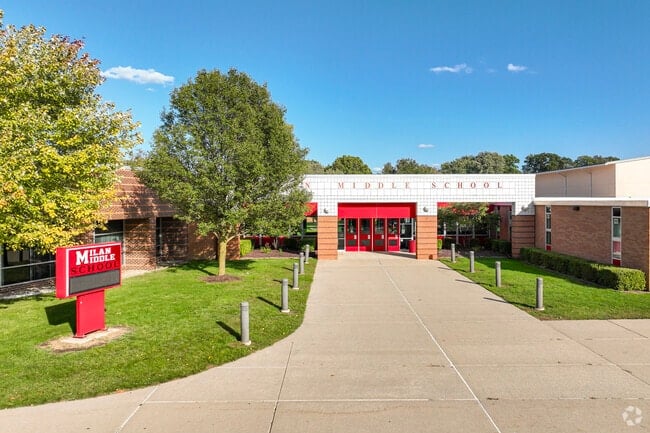
Augusta village is served by the Galesburg-Augusta Community Schools district. According to Wikipedia and the district's own records, the district was formed in 1951 as a joint effort between the Augusta and Galesburg communities, and today includes a primary school and high school in Galesburg and a middle school (Galesburg-Augusta Middle School) located in Augusta itself.

According to Niche.com, Galesburg-Augusta Community Schools enrolls approximately 978 students in grades PK through 12 with a student-teacher ratio of 16 to 1. District-wide state test score data shows approximately 26% of students at least proficient in math and 41% in reading, per Niche.com. The district offers a Gifted & Talented program.

At the individual school level, the picture is mixed. According to GreatSchools.org, Galesburg-Augusta High School is performing above average compared to public and charter schools in Michigan at the same grade levels — a strong data point. Per Niche.com, the high school carries a C+ overall grade, with a 95% graduation rate, a student-teacher ratio of 13 to 1, and an average GPA of 3.47. GreatSchools.org gives the high school a 7 out of 10 rating and notes it offers AP courses and a Gifted & Talented program.

The middle school, Galesburg-Augusta Middle School located in Augusta, receives a 4 out of 10 from GreatSchools.org and a C+ from Niche.com. The district's primary school in Galesburg is rated below average in test score performance by GreatSchools.org, though parent reviews on the platform consistently highlight supportive staff and a positive school culture.

Per GreatSchools.org, the district overall has a mixed record — with the high school performing as the strongest building in the system. Prospective residents are encouraged to review current ratings and school-specific data directly through GreatSchools.org and Niche.com and to contact the district directly to verify school assignment for any specific address.

Augusta school

Image credit :  https://www.homes.com/school-search/augusta-washtenaw-county-mi/middle-schools/

Pros & Cons of Living in Augusta, Michigan

Pros:

  • Fort Custer State Recreation Area — 3,033 acres with 40+ miles of trails, fishing, paddling, camping, and swimming — is essentially in the backyard, per Michigan DNR
  • The Barn Theatre, Michigan's oldest professional equity summer stock theatre per Wikipedia, is minutes away — a genuinely rare cultural amenity for a village this size
  • Cost of living index of 80.7 per city-data.com, well below both the U.S. average of 100 and Michigan's BestPlaces index of 91.5
  • Median estimated home value of approximately $149,285 per city-data.com 2023 ACS data makes entry-level ownership accessible relative to the broader region
  • Low poverty rate of approximately 6.1% per Census Reporter ACS data — well below both the Kalamazoo Metro area rate (13.3%) and the Michigan statewide rate (13.1%)
  • High school graduation rate, mean travel time to work, and high school diploma attainment (94.2%) all compare favorably to regional and statewide averages per Census Bureau and Niche data
  • Municipal water and sewer service within the village — a practical convenience compared to surrounding rural townships
  • Mean travel time to work of approximately 25.2 minutes per Census Reporter data — reasonable access to both Kalamazoo and Battle Creek employment markets

Cons:

  • Median household income of approximately $58,958 per Census Reporter ACS data runs about 80% of both the Kalamazoo Metro median and the Michigan statewide median
  • Per capita income of approximately $32,663 per Census Reporter data is similarly below regional and statewide averages
  • Galesburg-Augusta Community Schools has a mixed record overall per GreatSchools.org, with the elementary and middle school levels underperforming relative to the high school — a meaningful consideration for buyers with school-age children
  • Very limited commercial retail within the village itself; most shopping, dining, and services require a drive to Battle Creek or Kalamazoo
  • Small village scale means limited housing inventory — buyers may face thin selection and may need to wait for the right property to come available
  • Per city-data.com, Augusta is classified as 100% rural with no urban walkability infrastructure — a car is essential for daily life
  • Bachelor's degree attainment rate of approximately 15.5% per Census Reporter ACS data is roughly half the Michigan statewide rate of 31.8% — a context point for buyers assessing workforce and professional community

Frequently Asked Questions About Living in Augusta, Michigan

What is the population of Augusta, Michigan?
According to U.S. Census Bureau ACS 2023 5-year estimates as reported by Census Reporter, Augusta village has a population of approximately 726 people. World Population Review estimates a 2026 population of approximately 842, noting the village is in a gradual modest decline from the 859 recorded in the 2020 Census.

Where is Augusta, Michigan located?
Augusta is a village in Ross Township, Kalamazoo County, Michigan. It sits along M-96, approximately 7.8 miles west of Battle Creek and accessible to Kalamazoo to the west, per city-data.com geographic data. The village is part of the Kalamazoo-Portage, MI Metropolitan Statistical Area.

How far is Augusta, Michigan from Kalamazoo?
Augusta is accessible from Kalamazoo along M-96. The mean travel time to work for Augusta residents is approximately 25.2 minutes per Census Reporter ACS data, consistent with a roughly 20-to-30-minute commute to Kalamazoo depending on the route and destination.

What is the median home price in Augusta, Michigan?
According to city-data.com 2023 ACS data, the median estimated home value in Augusta is approximately $149,285. Active listing prices tend to run higher — per Redfin and Movoto data, recent median listing prices in the Augusta area have ranged from approximately $262,000 to $299,000. Readers should verify current figures through Realtor.com, Redfin, Zillow, or Trulia.

What is the cost of living in Augusta, Michigan?
According to city-data.com, Augusta's December 2024 cost of living index is 80.7, which is meaningfully below the U.S. average of 100 and below Michigan's BestPlaces statewide index of 91.5. Augusta is classified as a low-cost-of-living area primarily due to its housing market.

What school district serves Augusta, Michigan?
Augusta village is served by the Galesburg-Augusta Community Schools district, which was formed in 1951 as a joint district between Augusta and Galesburg, per Wikipedia. The district includes a middle school located within Augusta village and a primary school and high school in Galesburg.

How are the schools rated in Augusta, Michigan?
According to GreatSchools.org, Galesburg-Augusta High School performs above average compared to Michigan public schools and holds a 7 out of 10 rating. The middle school carries a 4 out of 10 from GreatSchools.org. Per Niche.com, the district enrolls approximately 978 students with a 16-to-1 student-teacher ratio, with state test proficiency of 26% in math and 41% in reading district-wide.

What is Fort Custer Recreation Area?
Fort Custer State Recreation Area is a 3,033-acre Michigan DNR park located immediately south of Augusta village along the Kalamazoo River. Per the Michigan DNR (michigan.gov/dnr), it features three lakes, over 40 miles of multi-use trails, camping, swimming at Eagle Lake, paddling, fishing, hunting, disc golf, boat rentals, and cross-country skiing.

What is the Barn Theatre in Augusta?
The Barn Theatre, located on M-96 just west of Augusta, is Michigan's oldest professional equity summer stock theatre, per Wikipedia. It stages professional theatrical productions through the summer season in a converted dairy barn setting and has been a regional cultural institution for decades.

What is the property tax situation in Augusta, Michigan?
Michigan uses a millage-based property tax system governed by Proposal A (1994), which caps annual taxable value increases for existing homeowners but resets to market value when a property sells. According to city-data.com, the median property taxes paid for Augusta homes with mortgages was approximately $1,654 in 2023. New buyers should use the Michigan Property Tax Estimator at michigan.gov/taxes/property/estimator to calculate a post-purchase estimate.

Is Augusta, Michigan a walkable community?
Per city-data.com, Augusta is classified as 100% rural. The village has a small commercial center along M-96, but a personal vehicle is essential for most daily tasks including shopping, major errands, and commuting.

What are the biggest employers near Augusta, Michigan?
Augusta itself has approximately 51 business establishments per city-data.com. The primary employment sectors for Augusta residents include manufacturing, healthcare and social assistance, and educational services, per Data USA analysis of Census data. Battle Creek and Kalamazoo are the primary regional employment centers within commuting distance.

Is Augusta, Michigan good for outdoor recreation?
Yes — Augusta's proximity to Fort Custer State Recreation Area makes it one of the better-positioned small villages in southwest Michigan for outdoor recreation. Per the Michigan DNR, Fort Custer offers hiking, mountain biking, equestrian trails, camping, swimming, paddling, fishing, disc golf, and cross-country skiing across 3,033 acres.

What is the poverty rate in Augusta, Michigan?
According to Census Reporter ACS 2023 5-year data, approximately 6.1% of Augusta residents are below the poverty line — meaningfully lower than both the Kalamazoo Metro rate of 13.3% and the Michigan statewide rate of 13.1%.

Are there rental properties available in Augusta, Michigan?
Yes. According to city-data.com, the median gross rent in Augusta is approximately $823 per month. Point2Homes reports a rent-to-income ratio of approximately 19.2% based on Census data — well within the commonly cited affordability threshold. Rental inventory in a village of this size is limited; prospective renters should monitor listings on Zillow, Trulia, and Realtor.com.

To Conclude:

If you're looking to move to, from, or within the state of Michigan in one day or a million, I help people do just that and I love it as a Michigan Realtor. Please reach out anytime for help — I'm happy to be your go-to resource.

Question for you!

Have you ever visited Augusta, Michigan or explored Fort Custer Recreation Area? What draws you most to small-village living in southwest Michigan — the outdoor access, the community feel, the affordability, or something else? Drop your thoughts in the comments below!

Search For All Homes For Sale
See My Home's Current Value
living in michigan | andrew mcmanamon realtor

Andrew McManamon

Founder of Living In Michigan
Michigan Realtor®
[email protected]
Contact Us
www.LivinginMichigan.com

Check Out the EXCLUSIVE "Living In Michigan" Apparel HERELiving In Michigan apparel

Subscribe to the Living in Michigan Newsletter HEREliving in Michigan newsletter | michigan realtor |andrew mcmanamon realtor | living in michigan

Check out recent articles

Is Sturgis, Michigan a Good Place to Live? …

Is Sturgis, Michigan a Good Place to Live? …

Sturgis, Michigan is the largest city in…

Moving to Vicksburg, Michigan? What to Know About …

Moving to Vicksburg, Michigan? What to Know About …

Vicksburg, Michigan is a fast-growing village in…

Living in Schoolcraft, Michigan: Pros, Cons, Cost of …

Living in Schoolcraft, Michigan: Pros, Cons, Cost of …

Schoolcraft, Michigan is a small village in…