
6 Biggest Mistakes Relocation Buyers Make in Metro Detroit
So you are thinking about buying a house somewhere in Metro Detroit. You have been scrolling Zillow for the last three weeks straight, you have probably already mentally arranged your furniture in four different living rooms, and you might think you have already found the one.
Maybe you have. Or maybe you are about to walk directly into one of the biggest relocation mistakes out-of-state buyers make here all the time.
Some of these mistakes are annoying. Some are expensive. And a couple of them can cost you thousands of dollars every single year you own the home.
If you take absolutely nothing else from this, understand this: Metro Detroit is an incredible place to live, but it is wildly different than what most relocation buyers expect before they actually get here.
I get on calls almost every single week with people moving here from California, Texas, Florida, Illinois, and Arizona, and the funny part is they all tend to make the exact same assumptions.
Half the things that matter most in Metro Detroit are not obvious online. Zillow does not tell you about township life. Listing photos do not tell you about the commute in February. And that beautifully staged finished basement is not exactly advertising the fact that it may have turned into an indoor swimming pool three separate times since 2019.
Here are the six biggest mistakes I see relocation buyers make in Metro Detroit, and more importantly, how to avoid becoming one of them.
Mistake 1: Falling Into the Metro Detroit Property Tax Trap

This one is so significant I could make an entire video on it alone.
Picture this: you are on Zillow late at night, probably eating something you absolutely should not be eating at 11:47 PM, and you find a gorgeous house listed at $350,000 somewhere around Metro Detroit. Updated kitchen, finished basement, nice backyard. Your immediate thought is that this same house would have been $700,000 where you are moving from.
And you might be right. But then comes the part that catches relocation buyers constantly: the property taxes.
In a lot of states, taxes are relatively consistent suburb to suburb. Metro Detroit is not like that. One city can have dramatically different taxes than the city right next to it, and sometimes neighboring communities can swing your monthly payment by several hundred dollars.
Metro Detroit has over 180 municipalities, and each one stacks its millage rates differently. A buyer looking at a similarly priced home in Troy, Rochester Hills, or Royal Oak may end up with a wildly different tax bill than someone buying in parts of Wayne County.
The difference on comparable properties can reach several thousand dollars per year. At certain price points, that swing alone can move your monthly payment by $300 to $500. That is not a rounding error. That is groceries. That is vacations. That is someone staring at their escrow statement wondering why life suddenly feels more expensive than they planned for.
Zillow tax estimates in Michigan are not reliable. Some of them appear to have been generated by someone throwing darts blindfolded at a spreadsheet.
Use the Michigan property tax estimator for any home you are seriously considering and cross-reference the millage rate PDF for your target municipality. (HERE's the calculator)
A quick calculation: take 50% of your expected purchase price, multiply by the local millage rate, and divide by 1,000. That gives you a rough annual estimate you can actually plan around according to several Michigan assessor's
What Is Proposal A and Why Does It Matter?
Michigan has something called Proposal A, passed in 1994, and if you are relocating here you need to understand the basics.
Taxable values on a property are capped while the current owner holds it, but once the property sells, that taxable value can reset significantly closer to market value.
What that means in plain terms: the seller's current tax bill is never what your future tax bill will look like.
Most buyers who get burned here budget based on what the current owner is paying monthly, close on the house, then face an escrow adjustment the following year that nobody warned them about.
I have watched buyers love everything about a property and still regret the purchase later simply because the monthly payment was not what they expected long term.
Understand the taxes before you buy. Full stop.
Mistake 2: Underestimating the Metro Detroit Commute
Google Maps lies to you.
Or maybe “lies” is too strong a word. Let's call it aggressively optimistic, in the same way gym memberships are aggressively optimistic.
You look at a map, see that your office is 24 miles from a house you love, and think that is probably 30 minutes. Then you move here, hit I-75 at 5:14 PM on a Tuesday while it is sleeting sideways and someone has somehow crashed into a construction barrel again, and that 30-minute commute is pushing an hour.
Construction in Michigan is not an occasional inconvenience. Construction barrels here reproduce overnight by the dozens. Michigan essentially has four seasons: winter, construction season, an incredible summer, and a beautiful fall.
Every freeway has its own personality. I-696 feels different than M-59. Hall Road during holiday shopping season is its own experience entirely. Crossing the metro area east to west every day sounds manageable on paper until you are doing it in January darkness at 5 PM three days a week.
Test the Commute Before You Commit
Living in a completely different city than where you work is completely normal in Metro Detroit. People commute from Macomb County to Warren, from Genesee County to Auburn Hills, and from Livingston County to Oakland County daily without much thought.
Before you fall in love with a house, test the commute realistically. Not on a Saturday afternoon when nobody is on the roads. Test it on a Tuesday or Wednesday during the actual time you would be driving.
I have had buyers completely change their entire search area after doing this exercise, and every single one of them thanked me later.
Some relocation buyers move here chasing square footage because homes are more affordable than where they are coming from, then realize afterward that sacrificing 500 square feet for a dramatically better commute would have made them happier.
Bigger is not always better if your car becomes your second residence Monday through Friday.
Mistake 3: The Rural Township Surprise Package
A lot of people move to Metro Detroit, start touring the suburbs, and eventually realize they can get significantly more land if they move further out into the townships.
They are right.
Places like Washington Township, Bruce Township, Groveland, Brandon, Hamburg, Putnam Township, and parts of Livingston County offer gorgeous properties with acreage, pole barns, and privacy that simply do not exist in most major metro areas.
During a showing in July, acreage life feels incredible. You are sitting on a deck looking at trees, hearing birds, feeling like you have officially escaped civilization in the best possible way.
Then February arrives and your propane bill shows up looking emotionally aggressive.
What Rural Township Living Actually Costs
A large number of these homes do not have natural gas connections. That means propane.
Heating a large Michigan home with propane during a cold winter can get expensive fast, with costs varying based on home size, insulation quality, and the propane market that year.
Then there is well water and septic. Both are completely functional and millions of Michigan homeowners use them without issue. But if you have never owned either before, you need to know what comes with them.
When a well needs replacement, you are suddenly having a conversation that involves numbers that stop being fun very quickly.
Road maintenance is another one. Some roads in rural townships are private, which means the county is not plowing them. Either a road association handles it, or you handle it yourself. These properties typically do not have associations, which usually means it is the second option.
That sounds charming until you wake up after a storm and realize your driveway is approximately the length of a regional airport runway.
Verify Internet Before You Fall in Love
Some buyers assume that if a house exists, high-speed internet exists. In Michigan, that is an aggressive assumption.
I had a buyer moving from Florida who found an unbelievable property online, one of those homes where everything looked perfect on paper. Then we started digging into internet options and discovered that remote work would have been nearly impossible from that address.
That single issue completely changed the direction of their entire search.
Verify internet providers before the inspection period ends. Ask for average propane bills. Ask who maintains the road. Ask about snow removal, trash pickup, water quality, and septic age.
The beautifully staged farmhouse kitchen is not going to tell you the internet speeds are powered by hopes and dreams.
Some buyers absolutely love township life and would rather deal with propane than hear a neighbor sneeze through a shared wall. That is completely fair.
Just know that the Instagram version and the February version of rural acreage life are two very different experiences.

Mistake 4: Ignoring Metro Detroit Geography and Weather Patterns
Metro Detroit has more microclimate variation than most relocation buyers realize.
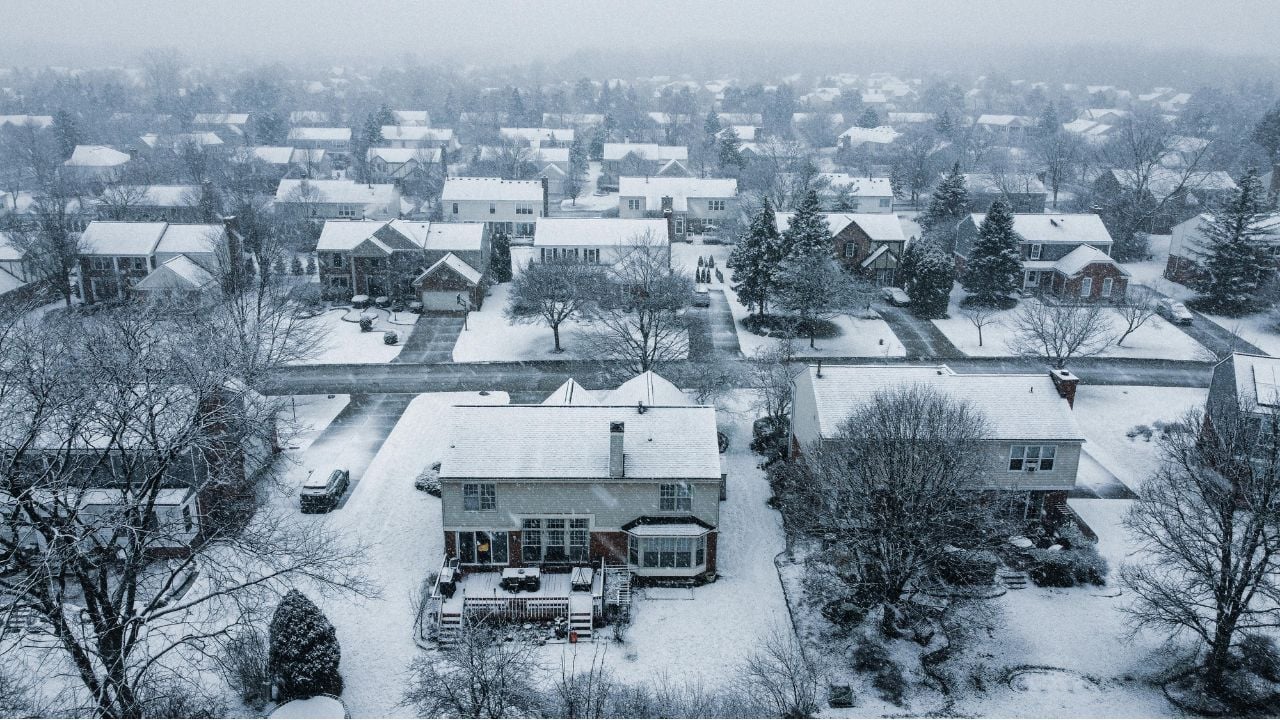
Lake effect snow is real. Eastern Macomb County, St. Clair County, and Lapeer County can get hammered with snow while western suburbs barely see a dusting.
And if you have never driven on black ice before, your first experience tends to be memorable in all the wrong ways.
The first snowfall in Michigan is magical. People post cozy photos, kids get excited, and everyone acts like they are starring in a Hallmark movie.
The fifth snowfall in late March while you are scraping ice off your windshield sideways in a Meijer parking lot is a noticeably different experience.
The first 55-degree day after a long winter, though? Everyone loses their minds. Someone is grilling in shorts before noon regardless of whether it is actually warm enough.

Flooding and Finished Basements
Flooding is something buyers consistently underestimate, particularly in lower-lying areas or neighborhoods with known drainage issues.
Finished basements in Michigan are a major selling point right up until they become unintended indoor water features.
If you are moving from Arizona or Southern California where basements barely exist, dealing with water intrusion for the first time can feel like a financial hostage situation.
Before getting emotionally attached to any property near water or in lower elevation areas, check FEMA flood maps, ask directly about prior water intrusion history, and find out whether flood insurance is required before you even schedule a second showing.

The Michigan Lake House Fantasy vs. Reality
Everyone moving to Michigan eventually starts browsing lake properties.
Understandable, because Michigan summers are genuinely elite.
But not all lake properties are the same product. All-sports lake, no-wake lake, private lake, public lake, lakefront, lake access, and lake view are completely different lifestyle experiences with completely different price tags.
Some lakes are deep, clear, and beautiful for boating. Others by mid-July look like someone dumped spinach dip around the shoreline.
Before buying near water, verify everything: depth, access rights, restrictions, HOA rules, and public access points.
Because once summer arrives, you will find out very quickly whether you bought the lake experience you thought you were buying.
Mistake 5: The Metro Detroit School District Shell Game
Out-of-state buyers naturally assume that city boundaries and school district boundaries are basically the same thing.
In Metro Detroit, they are absolutely not.
Some of these district maps look like someone spilled spaghetti all over Southeast Michigan and decided it was close enough.
Troy schools cover portions of multiple communities. Rochester Community Schools stretch across several municipalities. Bloomfield Hills Schools does not even fully cover the city of Bloomfield Hills.
There are homes with mailing addresses that lead buyers to assume they are in one district when they are actually enrolled in an entirely different one.
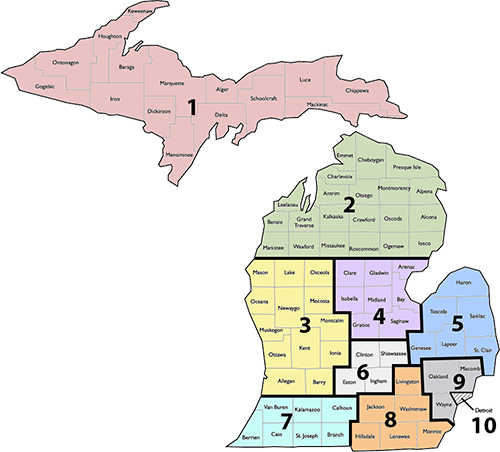
How to Actually Verify School Districts in Michigan
Schools of Choice allows students to apply to attend schools in a district outside where they live, but the operative word is apply. It is not automatic and it is not guaranteed.
I have seen buyers move to Metro Detroit specifically targeting a school district, only to discover weeks before enrollment that the situation was not what they assumed.
Verify school assignments directly with the district itself, not through Zillow, not through Redfin, and not through the listing description.
Confirm which specific elementary, middle, and high school the property feeds into, because homes within the same district boundary can still feed into different buildings.
Districts also rezone their maps from time to time, so make sure you are looking at the current version and not whatever was posted online three years ago.
Do not feel bad if this is confusing. School district boundaries in Metro Detroit confuse people who have lived here for 20 years.
Mistake 6: The Remote Work and Short-Term Rental Trap
Remote work changed everything about how people buy homes.
Buyers are now prioritizing home offices, larger lots, flex spaces, and finished basements in ways that were not a major factor five years ago.
But internet infrastructure throughout Metro Detroit and Southeast Michigan still varies dramatically depending on location.
There are areas, particularly as you move further into rural townships, where internet options are genuinely limited.
If high-speed internet is non-negotiable for your lifestyle or your job, verify it before the inspection period ends. Not after.

Short-Term Rental Rules Vary Dramatically by Municipality
If any part of your plan involves Airbnb income or short-term rental income, verify local ordinances before making an offer.
The rules vary dramatically from one municipality to the next. Some cities heavily restrict short-term rentals. Some require permits with strict eligibility requirements. Some HOAs ban them entirely. Some areas prohibit non-owner occupied rentals altogether.
As one recent local example, Birmingham implemented a 180-day moratorium on new short-term rental licenses in April 2026.
That type of regulatory shift can happen in any municipality without much notice to buyers who are not paying close attention.
Verify city ordinances before making offers, read HOA bylaws before inspections end, and never assume rental rules are consistent from one city to the next.
What All of This Actually Means for Your Move
Most relocation mistakes in Metro Detroit do not happen because buyers are careless. They happen because this market operates very differently than almost anywhere people are moving from.
And despite everything covered above, when people make the right move here, they absolutely love it.
You get more space, more affordability, beautiful summers, fall colors that feel like a movie, cider mills, lake culture, amazing downtown districts, professional sports, and weekends Up North.
Once people settle in properly, a lot of them wonder why they did not move sooner.
The buyers who end up happiest here are the ones who slow the process down just enough to ask the questions nobody told them they were supposed to ask.
If you want a head start on all of this, I put together a free 74-page Michigan Relocation Guide that walks through regional breakdowns, commuting, property taxes, school districts, township living, infrastructure, and a lot more.
Grab it using the link below. And if you want to talk through your move, your budget, your timeline, or the specific areas you are weighing, schedule a consultation with me directly. That is exactly what I help people do.
I also run the Living in Michigan newsletter where I share things I do not always post here. Subscribe using the link below and stay in the loop.
Frequently Asked Questions: Buying a Home in Metro Detroit
What are property taxes like in Metro Detroit compared to other states?
Metro Detroit property taxes vary significantly by municipality. With over 180 separate cities, townships, and villages across the region, millage rates can differ dramatically even between neighboring communities. A $350,000 home in one Oakland County community can carry a tax bill that is $2,000 or more per year higher than a similarly priced home in a neighboring municipality.
Buyers moving from states where suburban tax rates are relatively uniform are often caught off guard by how much this variation affects their monthly payment.
What is Proposal A and how does it affect home buyers in Michigan?
Proposal A, passed in 1994, caps annual increases on a property's taxable value at 5% or the rate of inflation, whichever is lower, while the current owner holds the property.
When the home is sold, that cap resets and the taxable value adjusts toward the current state equalized value, which is typically close to 50% of market value.
For buyers, this means the seller's current tax bill is not an accurate predictor of what you will pay after purchase. Always calculate your expected taxes based on a fresh assessment at your purchase price, not what the current owner is paying.
How do I estimate property taxes before buying a home in Michigan?
A reliable estimate starts with taking 50% of your expected purchase price, multiplying by the local millage rate, and dividing by 1,000.
For example, on a $350,000 home in a municipality with a 35-mill rate: $175,000 x 35 / 1,000 = $6,125 per year before any exemptions.
The Michigan Treasury's property tax estimator and each municipality's published millage rate document are the two most reliable sources to cross-reference before making a purchase decision.
Which Metro Detroit suburbs have the lowest property taxes?
Millage rates vary by year and shift with local ballot measures, so no ranking is permanently accurate.
Generally, some Macomb County communities and western Wayne County townships have historically carried lower overall millage rates than many Oakland County communities.
That said, lower taxes do not always mean lower total cost of ownership, since home prices, HOA fees, and infrastructure differences factor in as well.
Comparing the full estimated monthly payment across target communities is more useful than focusing on millage rate alone.
Is traffic really that bad in Metro Detroit?
It depends heavily on your specific commute corridor and timing.
I-75, I-696, and M-59 are the routes that generate the most complaints from buyers who underestimated drive times before relocating.
Michigan also has an extended construction season that significantly affects travel times on major freeways from roughly April through November.
Testing your actual commute during peak hours on a weekday before choosing a search area is one of the most practical steps any relocation buyer can take.
What is Schools of Choice in Michigan and can I rely on it?
Schools of Choice is a Michigan program that allows students to apply to attend schools in a district other than where they live. Participation varies by district and is not guaranteed.
Some districts cap Schools of Choice enrollment by grade level or total numbers. Buyers targeting a specific school district should verify directly with that district which school the property address feeds into, and should treat Schools of Choice as a possible option rather than a fallback plan.
Are there areas in Metro Detroit that get more snow than others?
Yes. Eastern Macomb County, St. Clair County, and Lapeer County are most affected by lake effect snow from Lake Huron and Lake St. Clair.
These areas can receive significantly heavier snowfall than western Oakland County or western Wayne County communities during lake effect events.
Geographic location within Metro Detroit matters more for snow totals than most relocation buyers expect.
What should I know about buying lakefront property in Michigan?
Key distinctions in Michigan lake properties include whether the lake is all-sports, no-wake only, private, or publicly accessible, and whether a given property is true lakefront, lake access, or lake view.
These categories carry very different price points and very different day-to-day experiences.
Lakefront properties sit directly on the water. Lake access properties have deeded access through a shared easement or association. Lake view properties may have a sightline to water with no formal access rights at all.
Verify access rights, HOA restrictions, and lake regulations directly before making any offer on a water-adjacent property.
Can I run an Airbnb in Metro Detroit suburbs?
Short-term rental regulations vary widely across Metro Detroit.
Some cities allow them with a permit. Some restrict them to owner-occupied properties only. Some HOAs prohibit them entirely regardless of what the city allows.
Birmingham, for example, implemented a moratorium on new short-term rental licenses in April 2026.
Always verify both city ordinances and HOA bylaws specific to the property before factoring any rental income into your purchase decision.
What is the best way to find a relocation realtor in Metro Detroit?
Look for an agent with documented experience working specifically with out-of-state buyers, not just general residential volume.
Relocation buyers face a different set of questions than local move-up buyers, including property tax structure, municipality differences, commute realities, and school district verification.
An agent who regularly works with relocation clients will typically raise these issues proactively rather than waiting for the buyer to stumble into them.

Check Out the EXCLUSIVE "Living In Michigan" Apparel HERE

A Neighborhood Lifestyle Just Minutes From Downtown Mason …
Discover 422 Coventry Lane in Mason, Michigan,…
Inside One of Clarkston Michigan’s Most Relaxing Homes …
Tour 6692 Balmoral Terrace, a fully remodeled…