
Introduction
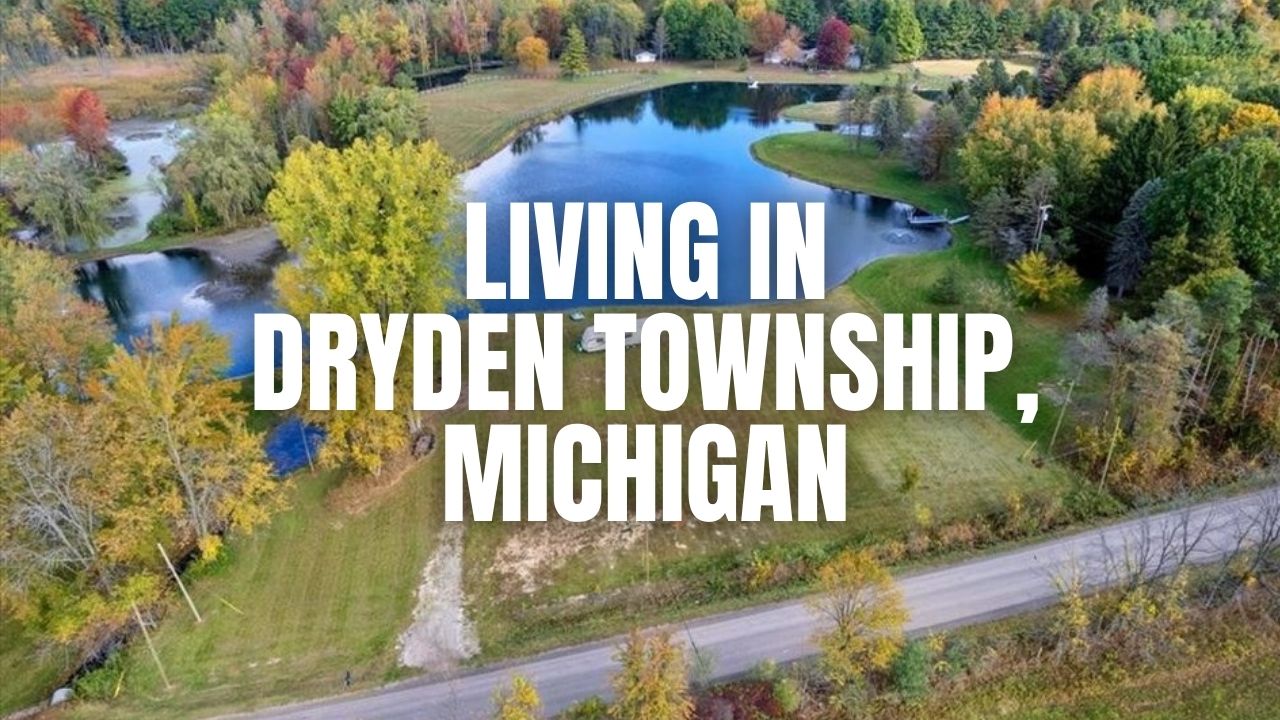
Dryden Township, Michigan is one of those places people discover when they’re ready for more space, quieter surroundings, and a slower pace compared to busy suburban areas.
Located in Lapeer County, this township combines rural character with accessibility to nearby communities like Rochester, Romeo, and Lapeer. Many people consider Dryden Township when they want larger properties, newer homes, or access to outdoor recreation without being too far from employment centers.
In this guide, we’ll cover what locals and homebuyers often wish they knew before moving to Dryden Township — including cost of living, real estate trends, property taxes, schools, and lifestyle.
Cost of Living in Dryden Township, Michigan
Cost of living in Dryden Township is largely driven by housing, transportation, and property ownership costs.
According to U.S. Census Bureau housing data, townships like Dryden primarily consist of owner-occupied, detached homes on larger parcels. While larger properties may have higher purchase prices than smaller suburban lots, overall housing costs in Lapeer County tend to be below national averages.
BestPlaces.net reports that Lapeer County’s cost of living index is lower than the U.S. average, particularly in housing.
Transportation costs may be higher due to reliance on personal vehicles. According to the Bureau of Labor Statistics, transportation is one of the largest household expenses, especially in rural and suburban areas without public transit.
Utilities and everyday living expenses are generally consistent with Michigan statewide averages.
Real Estate & Housing Overview
Housing in Dryden Township is defined by space, privacy, and detached homes.
According to the U.S. Census Bureau:
The majority of homes are single-family detached residences
Many homes were built between 1970 and 2005
Owner occupancy rates are high compared to more urban communities
Common housing types include:
Ranch-style homes
Two-story traditional homes
Custom homes on acreage
Newer homes built in low-density subdivisions
New construction exists but is limited compared to high-growth suburban cities. MLS listings show that inventory levels are typically lower, which is common in rural townships.
Buyers often look here when they want more land and fewer densely packed neighborhoods.



Moving to Portage, Michigan? What to Know About …
Thinking about moving to Portage, Michigan? This…
Living in Parchment, Michigan: Pros, Cons, Cost of …
Thinking about living in Parchment, Michigan? This…
Thinking About Kalamazoo, Michigan? A practical guide
Thinking about moving to Kalamazoo, Michigan? This…