
Introduction
If you’ve been searching for a quiet Lake Michigan community where nature and privacy take center stage, Michiana, Michigan may already be on your radar.
Located in Berrien County along the Lake Michigan shoreline, Michiana is one of Southwest Michigan’s smallest municipalities. It’s known for wooded residential areas, beach access, and proximity to larger lakefront destinations like New Buffalo and Grand Beach.
Because the community is small and primarily residential, living here can feel very different from typical suburban areas. Let’s walk through what prospective residents should know about housing, cost of living, property taxes, schools, and everyday lifestyle before making a move.
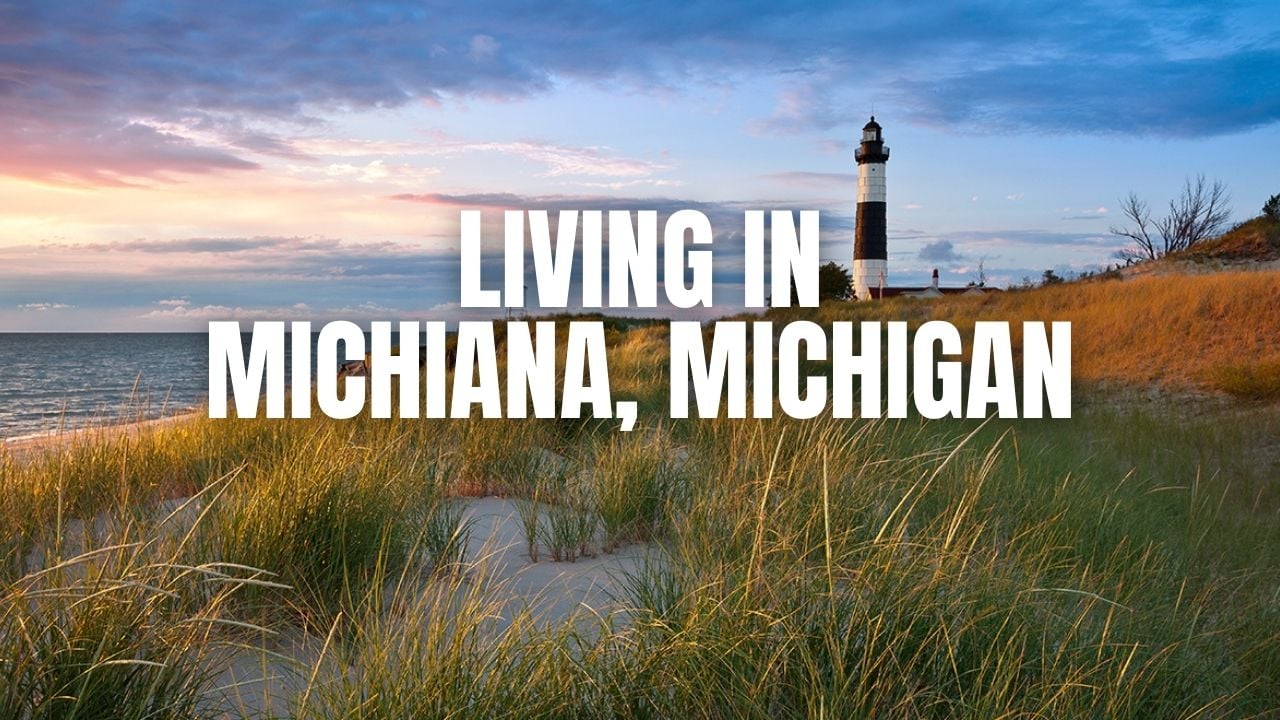
Cost of Living in Michiana, Michigan
Cost of living in Michiana tends to be influenced heavily by its location near Lake Michigan.
According to the U.S. Census Bureau and housing data compiled by Niche.com, housing values in Lake Michigan shoreline communities in Berrien County are typically higher than inland communities due to limited inventory and proximity to the water.
BestPlaces.net notes that coastal communities often see higher housing costs compared to statewide averages.
Utilities and transportation costs are generally similar to Michigan averages, based on Midwest regional consumer spending data from the Bureau of Labor Statistics.
Because Michiana has a small population and limited housing turnover, pricing trends can fluctuate depending on available listings.
Real Estate & Housing Overview
Housing in Michiana is primarily composed of single-family homes, many of which are located within wooded lots near Lake Michigan.
Based on U.S. Census Bureau housing data and regional MLS listings:
Many homes were built between the 1940s and 1980s
Some properties have been renovated or rebuilt over time
Lot sizes are often larger than typical suburban parcels
Common property characteristics include:
Cottage-style homes
Modern lake houses
Traditional single-family homes
New construction exists but is limited due to the village’s small geographic size and zoning constraints.
Market activity is relatively low compared to larger cities simply because the number of properties is small.



Is Volinia Township, Michigan a Good Place to …
Volinia Township, Michigan is one of Cass…
Moving to Silver Creek Township, Michigan? What to …
Silver Creek Township, Michigan is where Cass…
Living in Porter Township (Cass County), Michigan: Pros, …
Porter Township, Michigan is a lake-studded rural…