
Introduction
Detroit is a city that means different things to different people—and that’s exactly why so many relocation conversations start here. Some people are drawn by the city’s energy and scale, others by its neighborhoods, architecture, or access to jobs and amenities. Living in Detroit isn’t a one-size-fits-all experience, so understanding how daily life actually works is key before making a move.
This relocation guide focuses on the practical side of Detroit, Michigan: where it’s located, what housing looks like, how much things cost, and how people typically experience the city day to day.
Where Is Detroit, Michigan Located?

Detroit is located in southeastern Michigan within Wayne County and sits along the Detroit River, directly across from Windsor, Ontario. According to the U.S. Census Bureau, Detroit covers approximately 138.8 square miles of land area, making it one of the larger cities in the Midwest by geographic size.
Detroit functions as the core of the Metro Detroit region and is surrounded by cities such as Dearborn, Hamtramck, Highland Park, and Grosse Pointe. Major roadways including I-75, I-94, and I-96 run through the city, providing regional access throughout Southeast Michigan. Based on U.S. Census Bureau data, the mean travel time to work for Detroit residents is about 26.2 minutes (2019–2023).
Cost of Living in Detroit, Michigan
Cost of living in Detroit varies significantly depending on neighborhood, housing type, and lifestyle. According to U.S. Census Bureau QuickFacts (2019–2023):
Median value of owner-occupied housing units: $78,400
Median gross rent: $1,042
Median selected monthly owner costs (with a mortgage): $1,153
For comparison, Michigan’s statewide median home value is $217,600, per U.S. Census Bureau data, which highlights how Detroit’s housing costs differ from the state average.
BestPlaces.net reports Detroit’s overall cost of living index below the national average, with housing costs being the largest contributing factor. Transportation, utilities, and food costs align more closely with regional Midwest norms, according to Bureau of Labor Statistics regional pricing data.
Real Estate & Housing Overview
Detroit’s housing stock is diverse and largely historic. According to U.S. Census Bureau data, a significant portion of Detroit’s homes were built before 1960, which shapes both the city’s architectural character and maintenance considerations. Common housing styles include brick colonials, duplexes, bungalows, and row-style homes.
The owner-occupied housing rate in Detroit is approximately 50.4% (2019–2023), per the U.S. Census Bureau. New construction exists in specific redevelopment corridors and downtown-adjacent areas, though most residential inventory consists of existing homes.
Market activity varies by neighborhood, and pricing trends are highly localized. Because of this variation, citywide median values are best used as a general reference point rather than a prediction of individual property pricing.
Property Taxes in Detroit
Michigan property taxes are based on taxable value and local millage rates, which vary by municipality. The Michigan Department of Treasury explains that taxable value generally starts at 50% of a property’s true cash value and can increase annually by the lesser of 5% or the rate of inflation, unless ownership changes.
Detroit residents may qualify for the Principal Residence Exemption (PRE), which exempts eligible primary residences from up to 18 mills of local school operating tax, according to the Michigan Department of Treasury.
Detroit’s property tax bills are issued by the City of Detroit and Wayne County, and exact amounts depend on property location, taxable value, and exemptions. Buyers should always confirm current millage rates and estimated taxes directly with the local assessor before purchasing.
Things to Do & Lifestyle
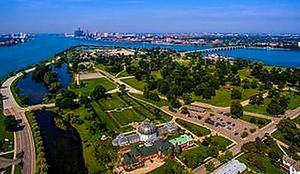
Detroit offers a wide range of lifestyle options, from large public parks to walkable downtown spaces. Belle Isle Park, managed by the Michigan Department of Natural Resources, provides trails, waterfront access, and recreational facilities.
Downtown areas such as Campus Martius Park host seasonal programming and serve as central gathering spaces, according to the Downtown Detroit Partnership. The Detroit Riverwalk offers pedestrian access along the river and connects multiple neighborhoods and attractions, per the Detroit Riverfront Conservancy.
Eastern Market operates as a historic public market district and functions year-round as a hub for food vendors, retail, and community activity, according to Eastern Market Partnership information.
Schools & Education (Neutral Framing)
Detroit is primarily served by Detroit Public Schools Community District (DPSCD), along with several public charter school options within city boundaries. According to GreatSchools.org, schools in Detroit vary in performance metrics depending on the specific campus and program.
Niche.com provides aggregated education data and reviews for Detroit-area schools, which many relocating households use as a starting point for research. As with any large city, school options and assignments depend on exact address and enrollment policies, and families are encouraged to verify directly with school districts.



The Truth About Springfield, Michigan: Neighborhoods, Prices, Taxes …
Considering a move to Springfield, Michigan in…

Is Marshall, Michigan a Good Place to Live? …
Considering a move to Marshall, Michigan? Located…
Moving to Battle Creek, Michigan? What to Know …
Thinking about moving to Battle Creek, Michigan?…