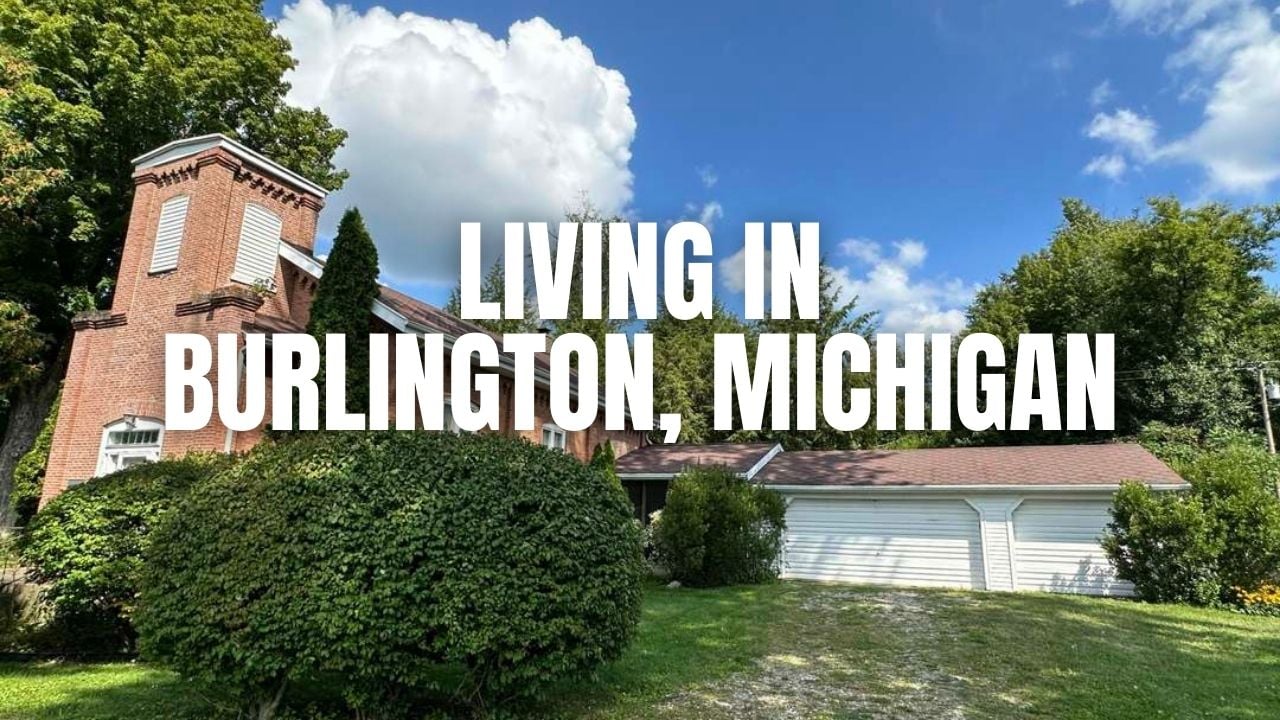
How to Get a GREAT Deal on a Michigan Home Today!

Are you finally ready to snag a Michigan home without getting dragged into a bidding war or overpaying by tens of thousands?

Imagine this: you find a great house that’s been sitting for a month, and instead of competing with 20 buyers, you’re the only serious person at the table. Sounds fake… but it’s way more realistic in today’s market than it was a couple years ago.

Sellers have gotten more price-sensitive, more listings are lingering, and concessions are back in a big way. That doesn’t mean every home is suddenly a bargain—but it does mean buyers with a plan can negotiate like it’s… normal again.

Below is an A-to-Z, step-by-step game plan to help you get a great deal on a Michigan home—using strategy, timing, and real data

Search For All Homes For Sale
See My Home's Current Value

Step 1: Understand the market you’re shopping in (buyers have more leverage than they did)

The first step to getting a deal is simple: know what kind of market you’re actually in.

Nationwide, 2025 was widely described as a slow, affordability-constrained year where sellers increasingly used price cuts and concessions to move homes. (Redfin “2025 Housing Market Year in Review”: https://www.redfin.com/blog/housing-market-year-in-review-2025/)

In Michigan specifically, you can see the “less frenzied” trend in competitiveness metrics like sale-to-list, homes with price drops, and homes sold above list. For example, Redfin’s Michigan market page tracks these monthly, and by December 2025 it showed:

  • 24.8% of homes sold above list
  • 21.2% had price drops
  • 97.7% sale-to-list ratio

What that means in plain English: you’re not walking into a market where everything is “highest and best in 12 hours.” There are still hot pockets—but overall you have more room to negotiate than the peak frenzy era.

Also, mortgage rates matter because they directly affect competition. As of January 8, 2026, Freddie Mac’s weekly survey put the average 30-year fixed mortgage rate at 6.16%. (Freddie Mac PMMS: https://www.freddiemac.com/pmms)

Higher rates shrink the buyer pool. A smaller buyer pool means fewer bidding wars and more sellers willing to deal.


Step 2: Get financially “dangerous” (pre-approval + clarity beats wishful thinking)

If you want a great deal, you need sellers to take you seriously.

That starts with a solid pre-approval (not just “I talked to my cousin who used Rocket once”), plus a clear comfort zone for your monthly payment at today’s rates (Freddie Mac PMMS: https://www.freddiemac.com/pmms).

A strong buyer doesn’t just win homes—they win concessions.

A seller is far more likely to accept a lower price, pay closing costs, or fund a rate buydown when they believe:

  1. you can close, and
  2. you won’t implode halfway through inspections.

Quick prep checklist:

  • Pre-approval in hand (and updated if rates move)
  • Proof-of-funds ready for your down payment / appraisal gap (if applicable)
  • No new debts while shopping (cars, furniture, “but it’s 0% for 48 months!”)

This isn’t the fun part, but it’s the part that makes your negotiation power real.


Step 3: Hunt “stale” listings (days on market = leverage)

If you want a deal, you typically do not chase the listing that hit yesterday and already has 14 showings booked.

You look for the house that’s been sitting long enough that the seller is starting to think,
“Okay… what are we missing here?”

In many Michigan areas, “days on market” has been running meaningfully longer than the peak frenzy years, which is one reason buyers are seeing more negotiation room. (Example of longer DOM trend in West Michigan reporting: https://www.greenridge.com/posts/west-michigan-q2-2025-real-estate-market-update)

Your best targets:

  • Listings sitting 30+ days
  • Listings with one or more price drops
  • Homes that fell out of contract and came back (“back on market” often = motivated seller)
  • Homes with mediocre photos, clutter, or cosmetic weirdness that scares off “HGTV-only” buyers

These aren’t necessarily bad homes. They’re often just homes the market ignored—or homes the seller overpriced and then had to come back down to reality.


Step 4: Avoid bidding war traps (yes, they still exist)

Even in a more negotiable market, bidding wars still happen—especially on homes that are:

  • perfectly updated
  • priced intentionally under market
  • in ultra-competitive submarkets

Redfin has noted that multiple-offer dynamics still exist in 2025, including the reality that some portion of homes sell above list even when buyers have more negotiating power overall. (Redfin multiple-offers guidance + above-list mention: https://www.redfin.com/blog/incite-a-bidding-war-to-bring-in-multiple-offers/)

The simple move: don’t fight on the seller’s battlefield.

If a house is a unicorn and priced like a bargain, your “deal strategy” usually becomes a “winning strategy.” Different game. Different rules.

For deal-hunting, the better play is: choose homes where you’re negotiating with time, not competing with adrenaline.


Step 5: Make a smart “low” offer (bold, justified, and clean)

Low offers work best when they’re:

  • backed by comps
  • consistent with the home’s time-on-market
  • paired with clean, believable terms

A low offer is not “throw spaghetti at the wall and hope the seller panics.”

It’s: “Here’s the price the data supports, and here’s why.”

How to do it without getting ignored:

  • Use comparable sales (your agent should pull these)
  • Consider the seller’s pattern: price drops, DOM, and whether they already reduced
  • Keep your offer clean: solid earnest money, reasonable timelines, clear financing

If you go 10% under asking on Day 3 of a new listing, expect a “lol no.”

If you go 5–10% under on Day 45, after a price reduction, with strong financing and flexibility, you’ll be shocked how often the conversation stays alive.


Step 6: Negotiate seller concessions (this is where deals get “real”)

This is the part many buyers forget: a “good deal” isn’t only the sale price.

It’s your total cost.

Common concessions that can save you real money:

  • seller-paid closing costs (within lender limits)
  • inspection repair credits
  • home warranty
  • rate buydown credits (temporary or permanent, depending on loan structure)

Concessions have been widely discussed as making a comeback in the post-frenzy market as sellers work harder to attract buyers. (Redfin “2025 year in review” discussion of a slower market + sellers responding: https://www.redfin.com/blog/housing-market-year-in-review-2025/)

If you’re negotiating with a seller who’s already had the home sitting… asking for help with closing costs is no longer some outrageous insult. It’s normal again.


Step 7: Use inspections and contingencies as leverage (no more “waive everything” nonsense)

The “waive inspection or lose the house” era isn’t the default anymore.

Inspections protect you—and they can also reduce your total cost if you negotiate the findings the right way.

Examples of deal-improving inspection outcomes:

  • seller repairs before closing
  • seller credit at closing
  • price reduction based on documented issues

And here’s the part people don’t realize: if your inspection finds legitimate issues, the seller may prefer to negotiate with you rather than put it back on market—because future buyers might discover the same problems anyway.

Keep your protections. A cheap house stops being cheap real fast if you inherit a $12,000 surprise.


Step 8: Use seasonal timing without falling into “wait forever” paralysis

In Michigan, seasonality matters. Buyer competition often cools down outside the spring/summer rush, and that can create opportunity—especially if a listing crosses into the slower months still unsold.

But here’s the trap: people wait for the “perfect” moment and miss the useful moment.

Mortgage rates are still a major constraint for buyers overall (Freddie Mac PMMS: https://www.freddiemac.com/pmms). If rates drop significantly, more buyers jump back in, and your leverage can shrink.

So the practical approach is:

  • shop strategically when competition is lower if you can
  • negotiate like a buyer while the market is more balanced
  • don’t postpone your life forever trying to time a chart perfectly

Quick recap: the buyer deal checklist

You get better deals in Michigan today when you:

  • know the real market temperature
  • show up financially ready
  • target listings sitting 30+ days
  • avoid “hot” homes designed to trigger bidding wars
  • negotiate price and concessions
  • use inspections to reduce risk and cost

FAQs (with real sources)

What’s a “buyer-friendly” sign I can watch for in Michigan?

Look at whether homes are selling above list, how often price drops are happening, and the sale-to-list ratio. Those are strong indicators of negotiating room. (Redfin Michigan Housing Market: https://www.redfin.com/state/Michigan/housing-market)

What are mortgage rates right now?

Freddie Mac’s Primary Mortgage Market Survey showed the average 30-year fixed mortgage rate at 6.16% for the week ending January 8, 2026. (Freddie Mac PMMS: https://www.freddiemac.com/pmms)

How long should a home sit before I try a “deal” offer?

There’s no magic number, but many buyers start looking harder at negotiation opportunities once a listing is 30+ days on market—especially if there’s been a price drop, a contract fell through, or showings slowed.

Are bidding wars still a thing in 2026?

Yes—especially on homes that are exceptionally updated, priced aggressively, or in highly competitive submarkets. Redfin notes above-list sales and multiple-offer dynamics still exist in 2025-era conditions depending on the market. (Redfin multiple-offer guidance: https://www.redfin.com/blog/incite-a-bidding-war-to-bring-in-multiple-offers/)

What are seller concessions and why do they matter?

Seller concessions are when the seller pays for costs you’d normally cover—like closing costs, rate buydowns, or repair credits. In slower, affordability-constrained markets, concessions tend to become more common as sellers compete for fewer buyers. (Redfin “2025 year in review”: https://www.redfin.com/blog/housing-market-year-in-review-2025/)

Should I ever waive inspection to “win” a deal?

In most normal situations, it’s a bad idea—because inspection is how you avoid inheriting major repair surprises that destroy the deal you thought you got. In a more negotiable market, keeping inspection is typically expected.


Closing

You’ve now got the full game plan for getting a great deal on a Michigan home today—without the bidding war chaos, without blind overpaying, and without getting smacked by surprise costs after closing.

What are you seeing out there right now—more price cuts, more concessions, more listings sitting… or does it still feel competitive where you’re searching? Drop a comment and tell me what market you’re in.

And if you’re thinking about making a move to Michigan in one day or a billion, feel free to reach out—I’d be happy to be a resource. I also have a link to the Living in Michigan newsletter in the description for all things Michigan. Thanks as always for watching, and until next time!

Search For All Homes For Sale
See My Home's Current Value
living in michigan | andrew mcmanamon realtor

Andrew McManamon

Founder of Living In Michigan
Michigan Realtor®
[email protected]
Contact Us
www.LivinginMichigan.com

Check Out the EXCLUSIVE "Living In Michigan" Apparel HERELiving In Michigan apparel

Subscribe to the Living in Michigan Newsletter HEREliving in Michigan newsletter | michigan realtor |andrew mcmanamon realtor | living in michigan

Check out recent articles

The Truth About Allen Township, Michigan: Neighborhoods, Prices, …

The Truth About Allen Township, Michigan: Neighborhoods, Prices, …

Allen Township, Michigan offers a rural Hillsdale…

Is Adams Township (Hillsdale County), Michigan a Good …

Is Adams Township (Hillsdale County), Michigan a Good …

Adams Township, Michigan is a rural Hillsdale…

Moving to Reading, Michigan? What to Know About …

Moving to Reading, Michigan? What to Know About …

Reading, Michigan is a small Hillsdale County…