
I DON’T understand this about Michigan.. - If this topic was a relationship on Facebook, it would be “it’s complicated”. One of the most confusing things people come to me with when moving to Michigan (even moving within too) has to do with villages, townships, cities, and counties. What’s the point of them? Why are they so gosh darn confusing? And why should you care? Well, stick around and find out!
Introduction
Let’s make Michigan’s local-government “word soup” finally make sense — because yes, it matters, and no, you’re not crazy for being confused.
People throw around words like city, town, township, village, and county like they all mean the same thing. In Michigan, they don’t.
Also: Michigan doesn’t officially have “towns.” If you’re not inside a city, you’re almost always in a township. So today I’m going to break down the hierarchy in plain English — and then I’ll end with why you should care as a homeowner, buyer, or investor.
The Michigan Local Government Hierarchy
In most cases, from smallest to largest, you’ll hear:
- Village
- City
- Township (including Charter Township)
- County
Each one can affect:
- Your taxes
- What services you get
- How permits and ordinances work
- What rules apply to your home
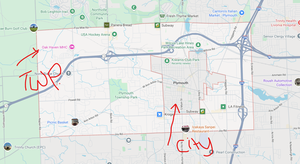
What Is a Village in Michigan?
A village is an incorporated community that still sits inside a township.
That’s the simplest way to remember it:
✅ Village = inside a township
So village residents often deal with two layers of local government:
- Village government (local ordinances + some services)
- Township government (certain required functions)
Villages commonly exist because Michigan needed a way to govern denser settlements without turning them into full cities right away. Over time, the state created a structure where villages could incorporate but still remain tied to the surrounding township.
Why you should care:
If you buy inside a village, you may be paying village taxes on top of township/county taxes, and some services might be split between governments.
Village vs. City (The Key Difference)
Here’s the cleanest explanation:
- Village: stays within the township
- City: separates from the township
When an area becomes a city, it generally becomes its own unit of local government, handling more responsibilities directly.
In plain English:
A city is more independent. A village is kind of like “a municipality within a municipality.”
What Does a Village Government Typically Handle?
Villages often create local ordinances and provide certain services, such as:
- Local police/fire (sometimes)
- Utilities (sometimes)
- Public works (often limited)
- Local rules (noise, zoning, etc.)
But some functions are often handled by the township (or shared), including things like:
- Property assessing (in many cases)
- Tax collection (often through township/county systems)
- Elections administration (frequently township/county)
What Is a City in Michigan?
A city is incorporated and typically operates outside township control.
Cities generally handle a broader range of services and responsibilities, such as:
- Property assessment
- Tax collection
- Voter registration and elections within the city
- Ordinances, zoning, permitting
- Police/fire/DPW services (varies by city)
Why you should care:
Cities often come with:
- More services
- More rules
- Higher taxes (not always, but often)
But the tradeoff is you may get more infrastructure, maintenance, and services packaged into that tax bill.
“Home Rule” in Michigan (Why Cities and Villages Feel Similar)
You may hear the term home rule when researching Michigan municipalities.
In simple terms: home rule allows cities and villages to adopt charters and exercise local self-government — meaning they can structure governance and adopt local powers as long as they aren’t prohibited by state law.
That’s why:
- Two Michigan cities can feel completely different in rules, permit processes, fees, and enforcement.
- Two villages can also operate differently depending on local charters and how responsibilities are split with the township.
What Is a Township in Michigan?
Townships are Michigan’s original unit of local government — and they cover most of the state’s land area.
Typically (not always), a township is about 36 square miles, and it’s governed by elected officials such as:
- Supervisor
- Clerk
- Treasurer
- Trustees
Townships usually handle services like:
- Fire protection (sometimes via departments or contracts)
- Law enforcement (often via county sheriff contracts)
- Parks and recreation
- Water/sewer in some areas
- Trash/recycling programs (varies)
- Trails/sidewalks (varies)
- Cemeteries (more common than people realize)
Townships can generate revenue through:
- Millages
- Permits
- Fees
- Special assessments
Why you should care:
Townships often have:
- More land
- More “space” (rural or semi-rural feel)
- Fewer services bundled in
- Lower taxes in many cases (but not guaranteed)
What Is a Charter Township?
A charter township is basically a township with extra powers and protections.
It was created by Michigan law to help growing communities govern more efficiently and protect themselves from being absorbed by neighboring cities.
Big reason charter townships exist:
✅ More protection from annexation (a city trying to “take” land)
Why you should care:
Charter townships can feel more like cities in some ways — they may offer more services and have more administrative structure than a standard township.
What Is a County in Michigan?
Counties are the larger regional unit made up of:
- Cities
- Villages
- Townships
They handle big-picture functions such as:
- Courts
- Sheriff
- Register of deeds
- Public records
- Some public health functions
- Regional infrastructure and administration
Why you should care:
Counties influence taxes and services too — but most homeowners feel the differences more at the city/village/township level.
Why This Matters (The “Okay Andrew, Why Should I Care?” Part)
This matters because when you’re buying a home in Michigan, the municipality affects:
1) Your property taxes
- Villages can add extra layers of taxation
- Cities often have higher taxes because they offer more services
- Townships may have lower taxes but fewer bundled services
2) Your services (and what your taxes actually pay for)
A city might maintain roads differently, plow differently, offer trash pickup, or provide different permitting services than a township.
3) Your rules and restrictions
Some areas have:
- Historic districts
- Design review boards
- Zoning restrictions
- Limits on exterior changes
- Permit hurdles for additions, fences, sheds, short-term rentals, etc.
Example: Historic districts (like parts of Northville) can require approvals for exterior changes to preserve the historic character. That’s not “good” or “bad” — it’s just something you want to know before you buy.
4) Your long-term plans for the property
If you’re thinking:
- “I’m going to add a garage”
- “I want a fence”
- “I want to expand the house”
- “I want to build an ADU”
- “I want to run a home-based business”
…those rules can vary drastically depending on whether you’re in a city, village, or township.
What To Do Before You Buy
Here’s the quick checklist:
- Confirm if the home is in a city, village, or township
- Look up the municipality’s ordinances (or ask your agent to help)
- Use Michigan’s property tax estimator to get a rough idea of taxes
- If you have big renovation plans, call the municipality early and ask what’s allowed
Because you pay for the services — you should understand what you’re paying for.
Conclusion
I know this topic is a little dry, but it’s one of those “small details” that can make a huge difference in affordability, lifestyle, and what you can actually do with your property.
If this cleared things up even a little, mission accomplished.
Question for you
What’s your take on Michigan’s local-government setup — does it feel organized, or does it feel unnecessarily complicated?
Drop your thoughts in the comments.



Moving to Portage, Michigan? What to Know About …
Thinking about moving to Portage, Michigan? This…
Living in Parchment, Michigan: Pros, Cons, Cost of …
Thinking about living in Parchment, Michigan? This…
Thinking About Kalamazoo, Michigan? A practical guide
Thinking about moving to Kalamazoo, Michigan? This…