
Introduction
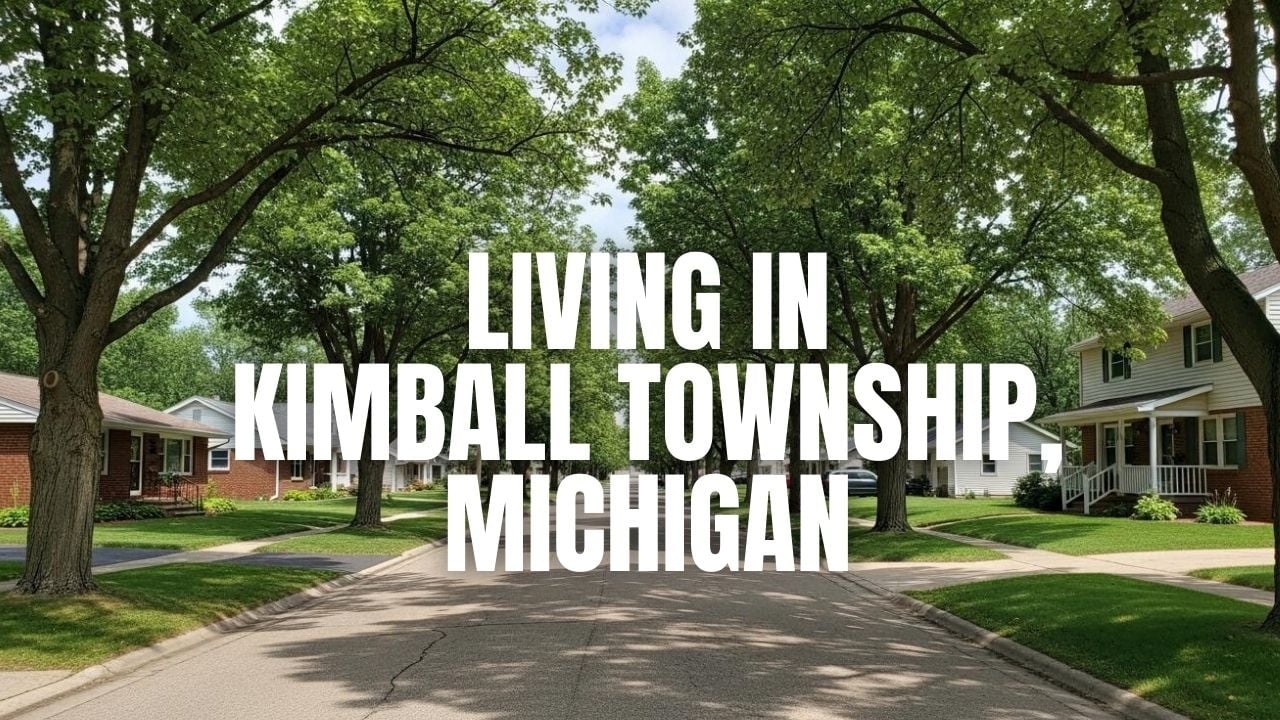
If you’re researching communities near Port Huron that offer a quieter residential feel while still being close to everyday conveniences, Kimball Township, Michigan may already be on your list.
Located in St. Clair County, Kimball Township sits just west of Port Huron and provides a mix of suburban neighborhoods, open space, and access to regional highways. Some people consider living here for the lower-density housing and proximity to the St. Clair River area.
Like any community, Kimball Township has characteristics that work well for some lifestyles and not as well for others. Let’s break down the housing market, cost of living, schools, and daily lifestyle so you can get a realistic picture.
Cost of Living in Kimball Township, Michigan
Overall living expenses in Kimball Township tend to be moderate compared with many parts of Michigan.
According to U.S. Census Bureau housing data, median home values in the township are typically below the statewide median. Niche.com also notes housing affordability as a common characteristic of communities in this part of St. Clair County.
BestPlaces.net reports that the broader Port Huron area generally has a cost of living index below the national average.
Utilities and transportation costs are generally consistent with Michigan averages, based on regional consumer expenditure data from the Bureau of Labor Statistics.
Individual household costs can vary depending on home size, commuting distance, and lifestyle preferences.
Real Estate & Housing Overview
Kimball Township’s housing market consists mostly of suburban-style single-family homes with moderate lot sizes.
According to U.S. Census Bureau housing statistics:
Many homes were built between the 1970s and early 2000s
Owner-occupied housing represents the majority of residences
Lot sizes are typically larger than those in denser city neighborhoods
Common housing styles include:
Ranch-style homes
Split-level homes
Two-story traditional homes
Some newer subdivisions developed in the past few decades
New construction does occur but at a slower pace than high-growth suburban counties in southeast Michigan.
Local MLS listings generally show steady housing demand influenced by proximity to Port Huron, I-94 access, and regional employment centers.




Before You Move to Port Huron Township, Michigan: …
Thinking about moving to Port Huron Township,…

Mussey Township, Michigan Relocation Guide: Vibe, Housing, Amenities …
Thinking about relocating to Mussey Township, Michigan?…

The Truth About Lynn Township, Michigan: Neighborhoods, Prices, …
Considering a move to Lynn Township, Michigan?…