
What Are Riparian Rights?
According to the State of Michigan, riparian rights are “those rights which are associated with the ownership of the bank or shore of an inland lake or stream.”
In simple terms, riparian rights apply when your property directly touches a natural body of flowing water — like a river, stream, or inland lake. These rights transfer with the property, meaning that when the land is sold, the new owner inherits them.
By contrast, littoral rights apply to properties along non-flowing waters such as oceans, seas, or large lakes. In Michigan, however, both terms are often used interchangeably as riparian rights.
Riparian rights are recognized under Michigan common law and influenced by rulings from the Michigan Department of Environment, Great Lakes, and Energy (EGLE) and the Michigan Lakes and Streams Association (MLSA).
What Rights Come with Riparian Ownership?
If you own a qualifying waterfront property in Michigan, you typically have the right to:
- Access the water directly from your shoreline.
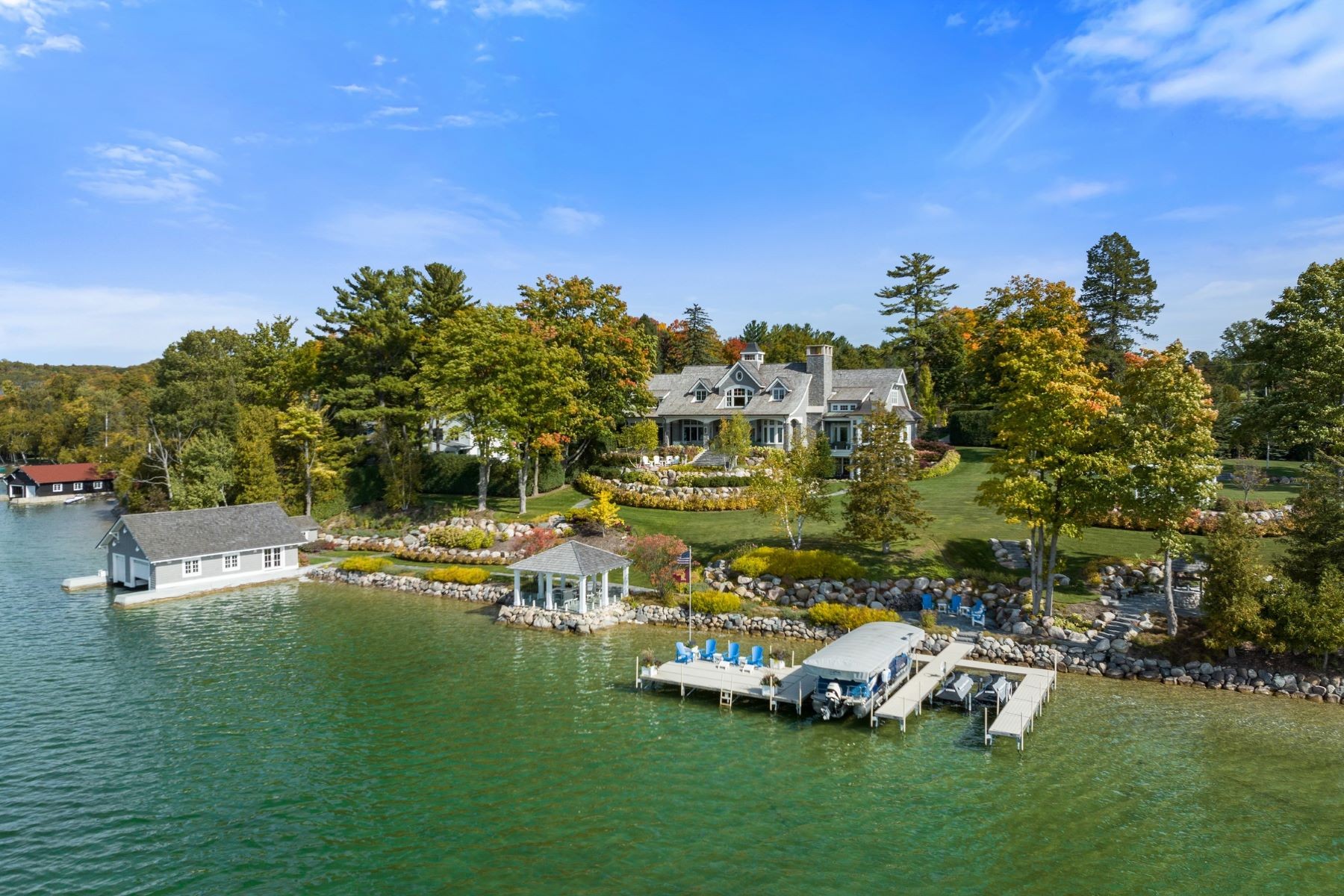
- Install and maintain a dock or pier, anchored in the bottom-land adjacent to your property, with proper permits from EGLE.
- Anchor or moor a boat within your defined bottom-land area.
- Use the water for domestic purposes, such as watering plants or irrigation, as long as it’s reasonable.
- Claim accretions or reliction, meaning ownership of additional land that naturally forms as sand or soil builds up on your shoreline.
- Protect your property from erosion, subject to state approval.
It’s important to note that you do not own the water itself — only the land that borders it. Michigan considers navigable waters part of the public trust, which protects public use for navigation, fishing, and recreation.
Common Issues with Riparian Rights
While riparian rights can make a property more desirable, they can also create confusion or disputes between neighbors. Here are a few common issues to watch for:
- Dock and mooring disputes: Determining how far out a dock can extend before it interferes with navigation or neighboring docks.
- Changing shorelines: When water levels rise or recede, your property lines — and usable land — can change.
- Artificial lakes: Rights are not always clear for man-made bodies of water like reservoirs or dam-created lakes.
- Shared access: Disagreements over “keyhole” or “funneling” access, where non-riparian owners gain water access through a single lot.
- Erosion and construction: Building seawalls, dredging, or placing fill material typically requires an EGLE permit.
- Public trust boundaries: On the Great Lakes, the State of Michigan retains ownership of the bottom-lands below the ordinary high-water mark.
Boundary Changes and Water Levels
Michigan’s riparian law allows ownership to extend as the shoreline naturally shifts through accretion (slow buildup of sand or soil) or reliction (water recedes permanently). However, you can’t build permanent structures on newly exposed land without proper authorization.
If water levels return to normal, the state may reclaim submerged areas, and structures built there could be subject to removal.
The public trust doctrine also applies to Michigan’s navigable waters — meaning the State holds them for the benefit of all residents. You may own land adjacent to these waters, but you cannot restrict lawful public use below the high-water mark.
Artificial vs. Natural Water Bodies
Riparian rights traditionally apply only to natural watercourses. Artificial or man-made lakes, canals, or reservoirs fall into a gray area.
Two Michigan Court of Appeals cases — Persell v. Wertz (2010) and Holton v. Ward (2014) — addressed this issue. Both determined that man-made or altered bodies of water may not automatically grant riparian rights to adjacent property owners.
This distinction is especially relevant in places like Wixom Lake and Sanford Lake, which were drained after dam failures in 2020. Because these were artificial reservoirs, riparian rights for property owners remain uncertain until reconstruction and legal determinations are complete.
If you’re considering buying on an artificial lake, check local ordinances, review title documents, and consult with a riparian rights attorney to clarify your access rights.
What to Know When Buying or Selling Waterfront Property
Whether you’re buying, selling, or already own waterfront property in Michigan, here are key things to verify:
- Confirm Riparian Access: Ensure your lot directly touches the water. If separated by a road, park, or strip of land, you may not have riparian rights.
- Request a Title Search: Check for easements, shared access agreements, or restrictions that could impact water access.
- Flood Insurance: Request an elevation certificate and check FEMA flood maps before purchasing.
- Dock Permits: Contact EGLE’s Water Resources Division for dock and bottom-land permitting requirements.
- Water Frontage Zone: Properties within 1,000 feet of certain waters may face additional construction or environmental regulations.
- Watering Rights: Michigan follows the reasonable use doctrine, allowing limited domestic use without harming others’ access.
- Water Depth and Dredging History: Know your lake’s depth, access channels, and dredging schedule — critical for boaters and dock owners.

Michigan Resources Worth Bookmarking
Michigan Lakes & Streams Association:Riparian Rights in Michigan Guide
Michigan Department of Environment, Great Lakes, and Energy (EGLE):Water Resources Division Permits and Guidance
Michigan Compiled Laws:Natural Resources and Environmental Protection Act, Part 301
Michigan Waterfront Alliance:Riparian Law FAQs
These resources provide legal background, permit forms, and educational materials on waterfront ownership across the state.
Frequently Asked Questions About Riparian Rights in Michigan
-Do I automatically have riparian rights if my property touches the water?
Typically, yes — if the body of water is natural and your property borders it directly. Properties separated by a road or public land generally do not.
-Can I build a dock without a permit?
Not always. You must comply with EGLE regulations and may need a joint permit depending on the dock’s size and location.
-Do riparian rights apply to man-made lakes?
Not automatically. Artificial or dam-created lakes often have separate agreements or associations that manage access and usage.
-What happens if my lake recedes and dry land appears?
The newly exposed land typically becomes yours, but any permanent construction may require approval to avoid violating riparian law if the water returns.
-Do I need flood insurance for waterfront property?
That depends on your property’s elevation and FEMA zone designation. Always review the flood map and insurance requirements before closing.
-Who do I contact for legal questions about riparian rights?
Consult with a Michigan attorney specializing in riparian or waterfront property law. The Michigan Lakes & Streams Association and Michigan Waterfront Alliance can provide referrals.
Final Thoughts
Owning waterfront property in Michigan is a dream for many — but it comes with unique responsibilities. Understanding your riparian rights ensures you can enjoy your property, avoid disputes, and stay compliant with Michigan law.
Whether you’re preparing to buy, sell, or simply want to better understand your rights, take the time to review your property’s access, permits, and shoreline boundaries.
If you’d like personalized guidance or are looking to buy or sell a waterfront home in Michigan, contact me today. I help homeowners navigate riparian rights and ensure their lakeside living experience stays smooth and stress-free.




Moving to Silver Creek Township, Michigan? What to …
Silver Creek Township, Michigan is where Cass…

Living in Porter Township (Cass County), Michigan: Pros, …
Porter Township, Michigan is a lake-studded rural…

Thinking About Pokagon Township, Michigan? A practical guide
Pokagon Township, Michigan is one of Cass…
Check out this article next

Leave a Reply
You must be logged in to post a comment.