
Introduction
If your idea of “home” includes more space, fewer neighbors, and a quieter pace, Leroy Township, Michigan might be exactly what you’re looking for.
Located in Calhoun County, just outside Battle Creek, Leroy Township offers a rural setting with access to nearby city conveniences. People often consider moving here for larger lot sizes, open land, and a more relaxed day-to-day lifestyle.
That said, rural living comes with its own set of trade-offs. In this guide, we’ll walk through what to expect when it comes to cost of living, real estate, property taxes, schools, and overall lifestyle in Leroy Township.

Cost of Living in Leroy Township, Michigan
Leroy Township generally offers a lower cost of living compared to larger Michigan cities.
According to U.S. Census Bureau data for Calhoun County, housing costs are typically below the Michigan statewide average. Niche.com also reflects more affordable housing in rural parts of the county.
BestPlaces.net reports that overall cost of living in this region tends to fall below the national average, particularly due to lower housing prices.
Utilities and transportation costs are generally in line with Michigan averages, based on Midwest regional data from the Bureau of Labor Statistics.
Because many residents rely on personal vehicles, transportation costs may vary depending on commute distance.
Real Estate & Housing Overview
Real estate in Leroy Township is centered around space and land.
According to U.S. Census Bureau housing data:
Homes are primarily single-family residences
Many properties sit on larger lots compared to suburban areas
A mix of older farmhouses and newer custom homes exists
Common property types include:
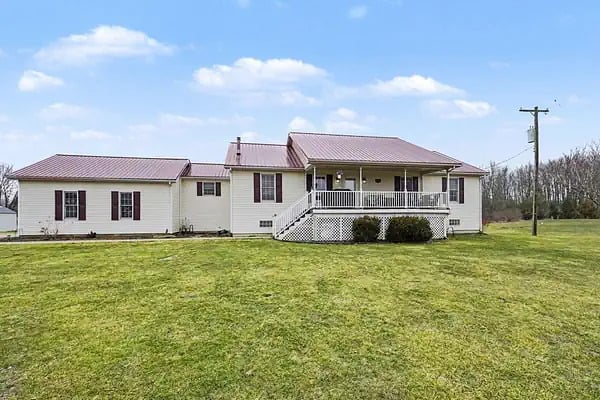
Ranch-style homes on acreage
Farmhouses and rural homesteads
Custom-built homes with larger parcels
New construction is typically custom or small-scale rather than large subdivision developments.
Local MLS trends show that property values are influenced by land size, condition, and proximity to Battle Creek. Inventory levels can be more limited compared to urban or suburban markets.




Living in Newton Township (Calhoun County), Michigan: Pros, …
Considering a move to Newton Township, Michigan…
Thinking About Marshall Township, Michigan? A practical guide
Considering a move to Marshall Township, Michigan?…
Marengo Township, Michigan Living Guide: The Ultimate living …
Considering a move to Marengo Township, Michigan?…