
Introduction
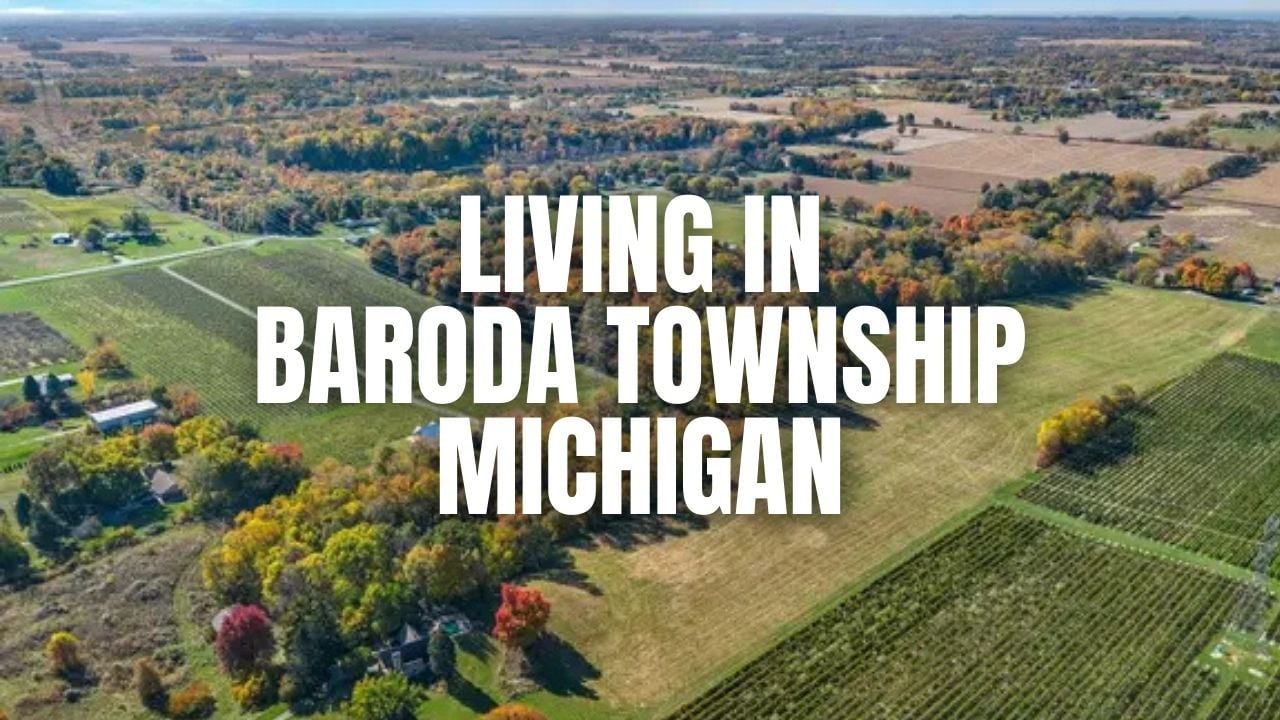
If you're looking for a quieter lifestyle surrounded by farmland, vineyards, and small-town communities, Baroda Township, Michigan may already be on your radar.
Located in Berrien County in Southwest Michigan, Baroda Township offers a rural atmosphere while still being close to larger communities like St. Joseph, Benton Harbor, and the Lake Michigan shoreline. Some people are drawn to the open space and slower pace, while others appreciate the proximity to wine country and outdoor recreation.
Before making any relocation decision, it helps to understand what daily life here actually looks like. Let’s walk through the location, housing options, property taxes, schools, and lifestyle considerations in Baroda Township.
Cost of Living in Baroda Township, Michigan
Cost of living in Baroda Township tends to align with the broader Southwest Michigan region.
According to U.S. Census Bureau data for Berrien County, housing costs in the region are generally lower than many large metropolitan areas in the Midwest. Niche.com also reports that housing affordability is one of the factors that attracts residents to smaller townships in the county.
BestPlaces.net indicates that overall living costs in the Benton Harbor–St. Joseph area are below the national average, particularly when it comes to housing.
Utilities and transportation costs in this region are generally consistent with Midwest averages based on data from the Bureau of Labor Statistics.
As with any area, individual expenses depend on property size, commute distance, and household spending patterns.
Real Estate & Housing Overview
Baroda Township’s housing market is largely defined by rural properties, agricultural land, and low-density residential development.
According to U.S. Census Bureau housing data:
A significant portion of homes were built between the 1960s and 1990s
Owner-occupied housing represents a large share of properties
Many homes sit on larger lots compared to suburban subdivisions
Common property types include:
Ranch-style homes on acreage
Farmhouses and rural homesteads
Mid-century single-family homes
Occasional newer homes on subdivided parcels
New construction occurs periodically but at a smaller scale compared to high-growth suburban communities. Local MLS data typically shows limited inventory relative to larger cities due to the township’s rural zoning and lower population density.
Housing availability can vary depending on demand for rural properties and seasonal buyer activity.



Coloma Township, Michigan: What It’s Like to Live …
Thinking about relocating to Coloma Township, Michigan?…
Before You Move to Chikaming Township, Michigan: The …
Thinking about living in Chikaming Township, Michigan?…
Buchanan Township, Michigan Relocation Guide: Vibe, Housing, Amenities …
Considering a move to Buchanan Township, Michigan?…