PROS and CONS of Moving To Berkley MI - Are you thinking about making the move to Berkley Michigan? Well, in this video I am going to break down some crucial pros and cons you need to keep in mind if you’re considering making the move.
Berkley MI is an AWESOME place. There are so many good things about living in Berkley MI, but there are also some not so good things about Berkley as well. Make sure you watch this video if you're thinking about relocating to Berkley MI, Royal Oak MI, or any other cities in southeast Michigan.
Overview of Berkley, Michigan
If you’re not familiar with Berkley, here’s the quick snapshot:
Berkley is located just south of Birmingham and east of Farmington in Oakland County. It covers 2.62 square miles and has a population of roughly 15,000 residents. Berkley was incorporated in 1932, and although it’s small in size, it has grown into one of the more recognizable inner-ring suburbs along the Woodward corridor.
To give you a complete and balanced picture, let’s start with a few cons of living in Berkley, followed by the pros that attract so many buyers to the area.

Con #1 – Berkley’s Small Downtown Area
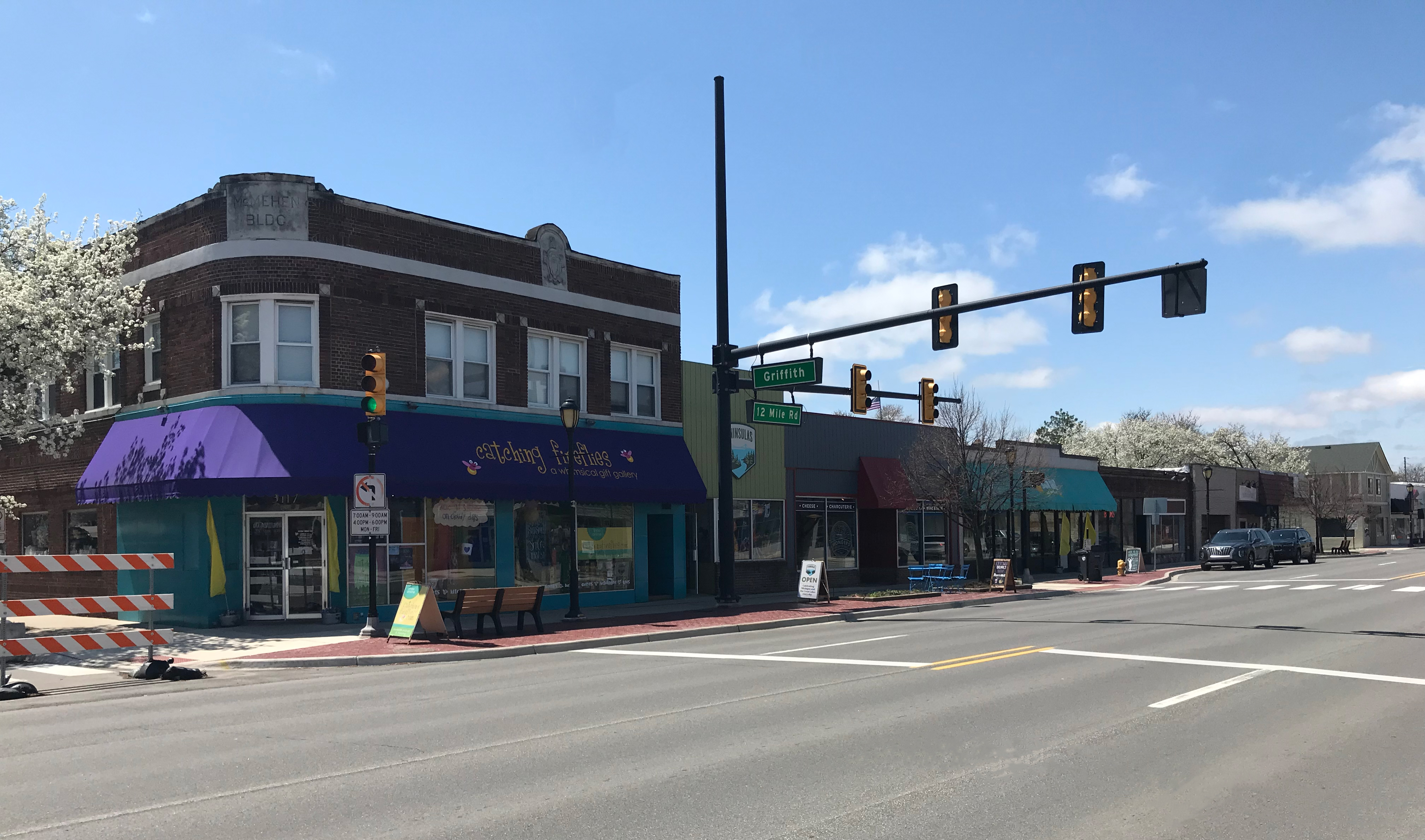
Berkley’s downtown district sits at 12 Mile Road and Coolidge Highway. While there are over 178 shops, restaurants, services, and entertainment options, it’s still much smaller than places like Royal Oak, Ferndale, or Birmingham.
Some people ask:
“Why have a downtown at all when Royal Oak is right next door?”
It’s a fair question, but downtown spaces often serve a purpose beyond retail—they create a central gathering point, encourage walkability, and strengthen local identity. Berkley’s downtown does this, even if it’s compact.
If you’ve spent time in Berkley, do you feel the downtown adds character—or do you find yourself driving to neighboring communities? It’s a common point of debate.
Con #2 – Higher Population Density
With just over 15,000 people in under three square miles, Berkley’s density is approximately 5,000 people per square mile.
Most lots fall in the 0.10–0.15 acre range, so homes sit relatively close together.
For some buyers, that tighter neighborhood layout can feel a bit compact.
Others see it differently—and as we’ll talk about later, there’s actually an upside to this when it comes to community engagement.
Con #3 – Air-Traffic Holding Pattern Overhead
This is one of Berkley’s lesser-known quirks:
Roughly 7,000 feet above the city is an auxiliary air-traffic holding pattern used during certain flight conditions. This impacts Berkley but also portions of Royal Oak, Birmingham, and Southfield.
Residents report that:
- Aircraft noise is generally sporadic, not constant
- The busiest times tend to be early morning, mid-day, and early evening
- Most people adapt quickly, but it’s something to be aware of
For those curious, there are online air-traffic tools that allow you to visualize real-time flight patterns.
Pro #1 – Central, Convenient Southeast Michigan Location
Berkley’s location is one of its strongest advantages. You’re only:
- Minutes from Royal Oak
- ~7 minutes to Birmingham
- 20 minutes to Troy
- 25 minutes to Downtown Detroit
- 25 minutes to Novi
On top of that, Berkley sits close to:
- I-696
- I-75
- Woodward Avenue (M-1)
It’s a highly connected suburb for anyone who wants quick access to multiple job centers, entertainment districts, and shopping corridors, all while living in a community that maintains a calmer, small-town residential feel.
Pro #2 – A Strong, Highly Engaged Community
Earlier, the small lot sizes came across as a con—but here’s the upside:
Close neighborhoods create connection.
Berkley is repeatedly described as:
- Involved
- Friendly
- Active
- Community-focused
One resident mentioned joining a local Berkley Facebook group and eventually turning off notifications because so much was happening within the community daily. That level of engagement fuels local events such as:
- Berkley Days Celebration
- Berkley CruiseFest Parade (part of the Woodward Dream Cruise)
- Berkley Art Bash
- Many seasonal and family-oriented gatherings
Some cities struggle to establish community involvement despite having large downtowns. Berkley, on the other hand, consistently shows how active and connected a small city can be.
Pro #3 – Cost of Living and Housing Market Stability
According to multiple data sources that assess local economic conditions, housing values, real estate stability, municipal services, and related metrics, Berkley continually ranks as one of the stronger real estate markets in the Detroit metro region.
A few key points:
- The median household income is around $86,000
- As of mid-2022, the average sale price in Berkley was just over $313,000, reflecting steady appreciation
- Cost-of-living evaluations indicate Berkley’s overall living expenses sit slightly below the national average
- Utility benchmarks show:
- Approx. $158/month for energy
- Approx. $174/month for phone service
- Median rent sits just over $1,000
These numbers, combined with Berkley’s location and market consistency, make it appealing for buyers seeking long-term value and stable neighborhood conditions.

Final Thoughts
These three pros and three cons offer a balanced look at what it’s like living in Berkley, Michigan. Whether you prioritize community involvement, geographic convenience, or affordability, Berkley has a mix of characteristics that appeal to many different lifestyles.
If you have questions about Berkley—or want help comparing it to nearby areas like Royal Oak, Ferndale, Birmingham, or Huntington Woods—feel free to reach out anytime.
MENTIONED LINKS 🔗
→Berkley MI Downtown Map: https://bit.ly/3NQsPL3
→Berkley MI Air Traffic Map: https://bit.ly/3bWnvsF
→Berkley Mi Events Page: https://bit.ly/3bLyhS9
Cheers,
Andrew



Is Volinia Township, Michigan a Good Place to …
Volinia Township, Michigan is one of Cass…
Moving to Silver Creek Township, Michigan? What to …
Silver Creek Township, Michigan is where Cass…
Living in Porter Township (Cass County), Michigan: Pros, …
Porter Township, Michigan is a lake-studded rural…