
Introduction
If you’re looking for a small Michigan community with a traditional downtown, established neighborhoods, and access to larger job centers, Richmond, Michigan might already be on your shortlist.
Located in St. Clair County near the Macomb County line, Richmond blends rural surroundings with a compact city center. Many people consider living here because it offers a quieter pace while still keeping Detroit’s northern suburbs within reach.
In this relocation guide, we’ll walk through what to realistically expect in terms of housing, cost of living, schools, property taxes, commute patterns, and everyday lifestyle.
Cost of Living in Richmond, Michigan
Cost of living in Richmond is generally aligned with or slightly below Michigan averages.
According to U.S. Census Bureau data, median home values in Richmond are typically lower than many Oakland and Macomb County communities. Niche.com reports housing costs as one of the more affordable aspects of the area.
BestPlaces.net indicates that Richmond’s overall cost of living index is close to or slightly below the national average.
Utilities and transportation costs generally follow statewide norms, based on Midwest regional data from the Bureau of Labor Statistics.
As always, actual expenses depend on the type of home, energy usage, commute distance, and individual spending patterns.
Real Estate & Housing Overview
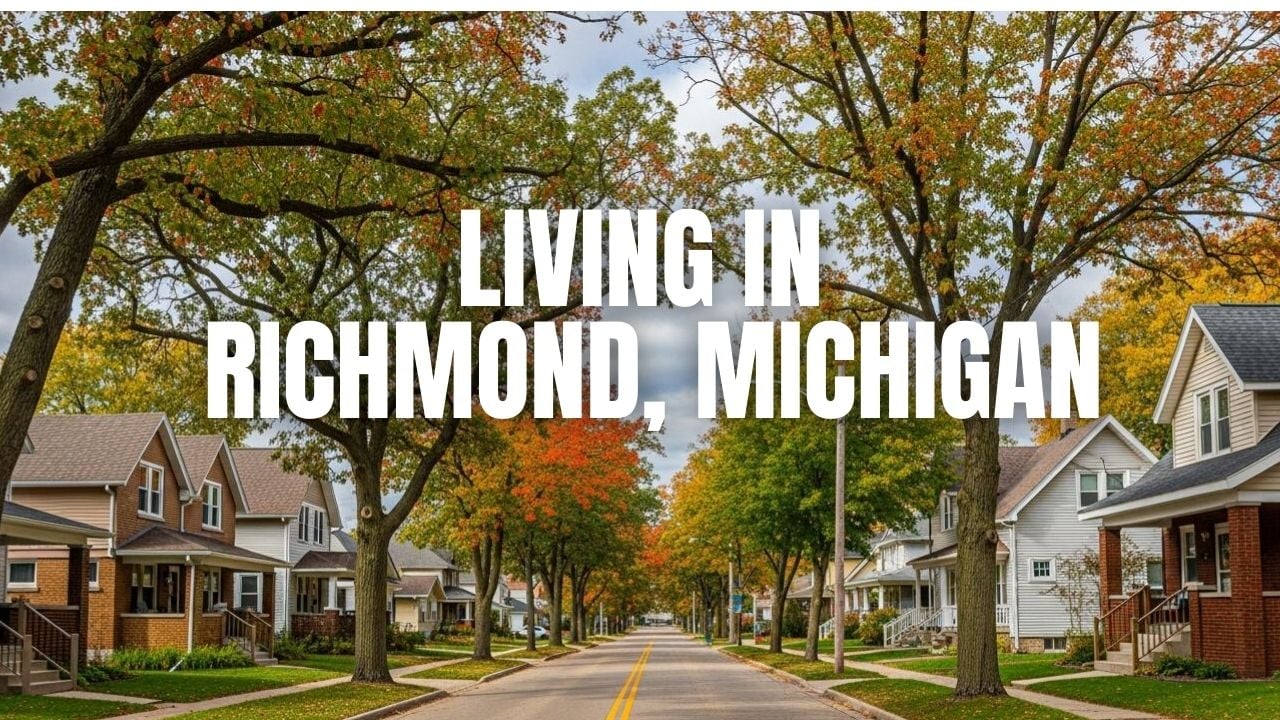
Richmond’s housing stock consists primarily of mid-century and late-20th-century builds, with some historic homes near the downtown core.
Based on U.S. Census Bureau housing data:
Many homes were built between the 1950s and 1990s
Owner-occupied properties make up the majority of housing
Lot sizes are typically suburban, with larger parcels on the city’s outskirts
Common home styles include:
Ranch homes
Split-level homes
Two-story traditional builds
Older homes with classic architectural details near downtown
New construction activity exists but is limited compared to high-growth suburban corridors in Metro Detroit.
Local MLS data shows steady housing demand, with pricing influenced by inventory levels and overall market conditions.






Thinking About Kalamazoo, Michigan? A practical guide
Thinking about moving to Kalamazoo, Michigan? This…
Galesburg, Michigan Living Guide: The Ultimate living guide
Galesburg, Michigan is a small Kalamazoo County…

Vandalia, Michigan: Best Neighborhood Pockets + Pros/Cons for …
Vandalia, Michigan is an incorporated village of…