
Imagine gliding alone on a frozen creek at midnight, the Michigan moonlight dancing on the ice. You hear the scrape of skates behind you—closer, closer—yet no one’s there. Or picture a ghost town buried so deep in the woods it’s literally called Hard Luck. From a lake named for starvation to an abandoned mine teeming with bats and a hidden cave with ancient rock art, Michigan is packed with eerie stories most people never hear about.
In this guide, we’re exploring five strange and haunting places in Michigan—the kind of spots that blend folklore, forgotten history, and goosebump-inducing atmosphere. Whether you’re into haunted Michigan stories, weird roadside lore, or planning your next spooky road trip, these tales will make you see the Great Lakes State in a whole new (dim) light.
The Phantom Skater of Hickory Creek (Buchanan, Michigan)
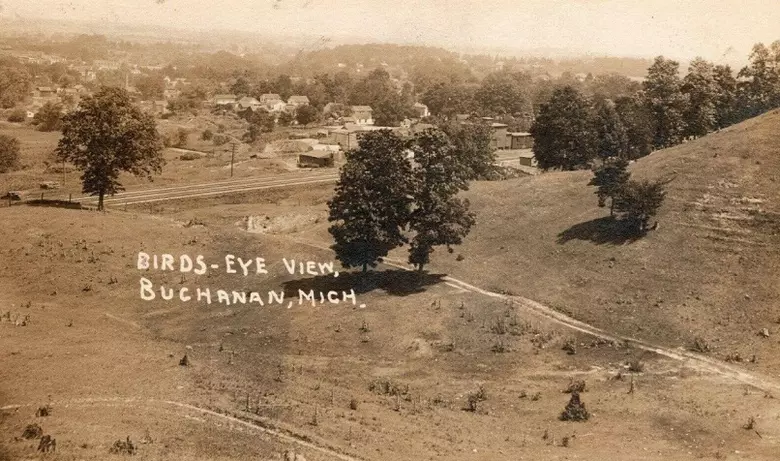
In the small town of Buchanan, Michigan, winter once turned Hickory Creek into a natural ice rink. Kids would skate all day on the frozen creek—until dusk, when parents warned them it was time to hurry home.
The reason? A local legend known as “The Phantom Skater.”
According to the story, a towering figure dressed in black tights and a skullcap would appear along the creek after dark. His skate blades supposedly shot green and blue sparks as he glided over the ice, leaping over snow-covered bridges and letting out a shrill, eerie laugh. For generations of kids in Buchanan, this wasn’t just a fun campfire tale—it was the reason you didn’t stay out skating too late.
One of the most well-known believers was Harvey Seasongood, a local farm supply store owner who claimed he saw the Phantom as a boy. One freezing evening, Harvey and his friends stayed too long on the ice. As they tried to get off the creek, they heard a grinding scrape… scrape… behind them. The other kids scrambled to safety, but Harvey snagged his clothing on a barbed wire fence at the bank.
Trapped, he said he watched a huge skater slide into view under the moonlight. Just like the legend: tall, dressed in black, blades sparking with color. And—according to Harvey—he had cloven hooves instead of feet and cast no shadow on the ice.
Harvey eventually broke free and never forgot the encounter. For the rest of his life, he insisted that Hickory Creek was truly haunted.
Today, Hickory Creek in southwest Michigan is quiet. There haven’t been any recent “official” sightings of the Phantom Skater, and most people chalk the story up to folklore and a clever way to get kids home before dark. But on a silent winter night in Buchanan, if you skate there alone and feel eyes on the back of your neck… well, some Michigan legends never quite melt away.
Hard Luck: The Lost Lumber Ghost Town in Grim Township, Michigan
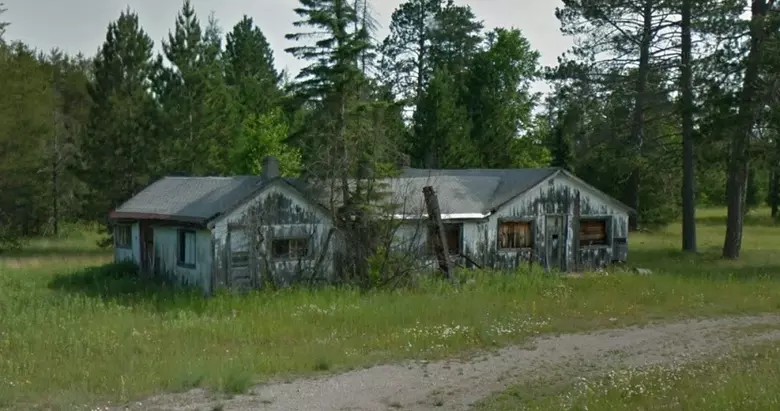
Yes, Hard Luck is a real place—and its name fits a little too well.
Hidden deep in Au Sable State Forest in Gladwin County, Hard Luck was once a short-lived lumber town in the early 1900s. At its peak around 1904, it had:
- A Michigan Central Railroad spur
- A sawmill buzzing with activity
- Around 200 residents
- Its own post office (opened in April 1904)
By 1906, the post office was gone, the railroad interest faded, and the settlement vanished. In classic Michigan fashion, the forest simply took it back.
No one is entirely sure how Hard Luck got its name. One story claims a logging train had “Peter Hardluck” painted on its engine, and the name stuck for the surrounding camp. Others say the camp experienced more than its fair share of accidents and misfortune, so “Hard Luck” became the tongue-in-cheek label for people tough (or unlucky) enough to live there.
To make things stranger, the ghost town sits inside Grim Township. So yes: Hard Luck, Grim Township, Michigan—you can’t script that better.
Visiting the area today takes some effort. There are no paved roads leading directly to the old site, just sandy two-tracks and confusing forest forks. Most of the original structures are long gone. Adventurous visitors report:
- Overgrown cellar depressions
- Rusty relics like axe heads or bits of metal
- Broken glass and subtle ground disturbances where buildings once stood
On a summer afternoon, it’s peaceful, quiet, and green. But as the sun sinks and the woods grow darker, you can almost feel the weight of history. No buildings, no streetlights—just the lingering echo of a town that rose and disappeared in just a couple of years.
Hard Luck isn’t “haunted” in the traditional ghost sense, but it is haunted by its own story—a reminder of how quickly a booming Michigan lumber town could fade back into the trees.
Starvation Lake: Eerie Legends in Kalkaska County, Michigan

Northern Michigan is full of picturesque lakes, but few names hit like Starvation Lake.
Located in Kalkaska County, this roughly 125-acre lake is surrounded by forests and cozy cottages—perfect for fishing, boating, or snowmobiling. On the surface, it looks like just another beautiful Up North lake. But the name “Starvation Lake” carries darker stories.
Local folklore offers a couple of chilling explanations:
- The trapped trapper – One version tells of a trapper who set his lines along the lake’s icy shore. He allegedly got caught in one of his own traps and couldn’t free himself. With no way to reach help and winter closing in, he slowly succumbed to the elements and starvation on the frozen shoreline.
- Outlaws and a blizzard – Another story speaks of fugitives or outlaws hiding near the lake to avoid arrest. They holed up in a remote cabin just as a brutal blizzard hit. Snow cut them off from town and supplies, and by the time anyone reached the area, they’d all starved to death.
Whether either account is literally true or not, the name “Starvation Lake” stuck—and it’s hard not to imagine those desperate final days when you look across the quiet water at dusk.
Today, Starvation Lake is a peaceful recreational spot. You’ll see:
- Anglers casting for bass and pike
- Snowmobilers using nearby trails in winter
- Families swimming and boating in summer
But locals haven’t forgotten the tales. Some point out specific shoreline sections or foundations where cabins once stood. Early-morning fog rolling off the lake, or the hush of a winter night, can give even seasoned Up North regulars a slight chill.
The lake’s eerie reputation even inspired Michigan author Bryan Gruley, who set his “Starvation Lake” mystery series there, including the novel The Skeleton Box. His stories tap into that feeling the place gives you—small-town secrets, long-buried history, and the sense that the past never completely goes away.
In the end, Starvation Lake is a mix of beauty and unease—classic Northern Michigan atmosphere where clear water and dark stories share the shoreline.
Millie Hill Bat Cave (Iron Mountain, Michigan)
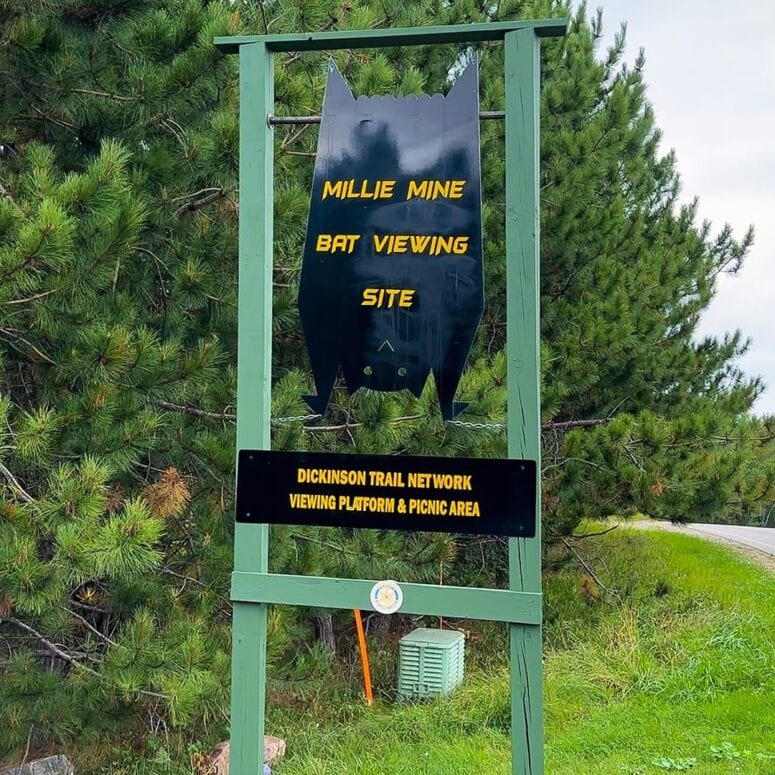
From ghosts and ghost towns, we head to something very real and very alive: bats. Lots of bats.
Overlooking the city of Iron Mountain in Michigan’s Upper Peninsula, the Millie Hill Bat Cave (also known as the Millie Mine Bat Viewing Area) is an old vertical iron mine shaft turned massive bat sanctuary. At one time, an estimated hundreds of thousands of bats used this site for hibernation and roosting, making it one of the most significant bat colonies in the region.
Here’s what makes Millie Hill so fascinating:
- It’s an abandoned iron mine shaft, roughly 300 feet deep
- It provides ideal conditions for bats to hibernate and breed
- On warm evenings in late summer and early fall, bats pour out at dusk in waves
From the fenced viewing area, visitors can watch as thousands of bats spiral out of the mine and into the night sky, hunting insects over Iron Mountain, Michigan. It’s a scene that looks like something between a horror movie and a nature documentary.
The backstory is just as wild. For years, locals considered the mine a dangerous “bottomless pit.” In the early 1990s, a caver descended with ropes and discovered not a bottomless shaft, but a critical bat habitat. When the city later considered filling in the mine for safety reasons, conservationists and local advocates stepped in to protect the colony. The site was eventually secured with a heavy steel gate, and a formal bat viewing area was created to let people experience the spectacle without disturbing the animals.
Is it haunted? Not in the ghostly sense—unless you count the lingering presence of the mining era. But standing there at dusk, with bat silhouettes swirling overhead and the city lights glowing below, you definitely feel like you’ve stepped into a different world.
If you go, remember:
- Stay behind the fence
- Be quiet and respectful
- Let the bats do their thing—they’re a huge help controlling mosquitoes and other bugs
It’s one of the strangest and coolest wildlife experiences in Michigan, and it easily earns a spot on any list of weird Michigan locations.
Spider Cave at Burnt Bluff: Ancient Rock Art in Michigan’s Upper Peninsula

Our final stop is strange in a very different way—less haunted, more deeply ancient and spiritual.
Along the Garden Peninsula in Michigan’s Upper Peninsula, between Manistique and Escanaba, rises a towering limestone cliff called Burnt Bluff. Hidden high on this cliff is a shallow recess known as Spider Cave (sometimes called Burnt Bluff Cave).
What makes Spider Cave unforgettable is not ghosts or bats, but something far rarer:
It holds Michigan’s only known prehistoric rock paintings (pictographs).
Inside the cave, faint red and violet images were painted on stone walls by Indigenous people centuries—possibly thousands of years—ago. The most famous of these is the so-called “Spider Man” pictograph: a human-like figure connected by what looks like a cord to a large spider. Nearby are other shapes and figures, including what some interpret as a guardian spirit or “Big Man” tied to forest protection.
Interpretations, guided by Ojibwe oral tradition and scholarship, suggest:
- The cord may symbolize a lifeline or connection to the web of life
- The circles beneath the figure may represent paths or stages of life
- The site may have been sacred, possibly used for visions, teaching, or ceremony
In the early to mid-1900s, wooden stairs were built up the bluff and tourists were charged a small fee to see the “Indian paintings.” Unfortunately, some well-meaning visitors touched, traced, or even splashed water on the pictographs to make them more visible—activities that accelerated their fading. Weather, lichen, and erosion did the rest.
By the 1990s, only a handful of images were still visible, and even those were badly worn. Today, Spider Cave is largely left alone, with access heavily discouraged to prevent further damage and to respect both the cultural and spiritual significance of the site.
The cave is “haunting” in a very different way than a ghost story:
- You’re not afraid of a presence coming toward you
- You’re humbled by the sense of a presence that has always been there
Spider Cave reminds us that Michigan’s strangest places aren’t just about scares—some are about memory, culture, and the quiet weight of history painted on stone.
Important note: Spider Cave and the surrounding cliff area are dangerous and culturally sensitive. It’s not a casual hike spot. If you’re curious, learn through books, documentaries, and official park resources rather than attempting to climb to it.
Michigan’s Strange Side: Folklore, History, and Haunting Atmospheres
From Buchanan’s phantom skater and a ghost town called Hard Luck, to the chilling stories of Starvation Lake, the swirling bats of Iron Mountain, and the ancient pictographs of Spider Cave, these strange places show a side of Michigan you don’t see on postcards.
Some are spooky. Some are tragic. Some are sacred.
But together they prove one thing:
Michigan isn’t just lakes and lighthouses. It’s legends, lost towns, and stories that linger long after you leave.
If you’re fascinated by haunted, weird, and mysterious places in Michigan, I’ve got an entire playlist of videos diving into even more locations—urban legends, ghost stories, and strange history from across the state.
And if all this creepy goodness hasn’t scared you off from moving here…
I help people move to, from, and within the great state of Michigan, and I love it.
You’ll also find a link to the Living in Michigan newsletter in the description, where I share more about Michigan living, real estate, and occasionally some of these strange stories too.
FAQs About Strange & Haunted Places in Michigan
What are some of the strangest places in Michigan?
Beyond popular spots like the Paulding Light or Grand Hotel legends, lesser-known strange places include Hickory Creek in Buchanan (home of the Phantom Skater legend), the ghost town site of Hard Luck in Gladwin County, Starvation Lake in Kalkaska County, Millie Hill Bat Cave in Iron Mountain, and Spider Cave at Burnt Bluff in the Upper Peninsula.
Are these haunted places in Michigan safe to visit?
Some, like the Millie Hill Bat Viewing Area, have official viewing platforms and signage. Others, like Hard Luck’s general area or Starvation Lake, are more remote and require careful navigation. Sites like Spider Cave are not recommended for casual visits due to safety concerns and cultural sensitivity. Always respect private property, posted signs, and local regulations.
Is Spider Cave open to the public?
Access is extremely limited and not promoted as a tourist attraction. The rock art is fragile and culturally significant. If you’re interested, it’s best to learn about Spider Cave through official park information, books, and documentaries rather than attempting to reach it in person.
Can I see bats at Millie Hill Bat Cave in Iron Mountain?
Yes, there is a designated bat viewing area in Iron Mountain where visitors can watch bats emerge at dusk during certain times of the year, typically late summer and early fall. Always follow posted guidelines and stay behind the fencing.
Why is it called Starvation Lake?
The exact origin isn’t confirmed, but local legends speak of trappers or fugitives who starved near the lake during harsh winters. Whether literally true or not, the name reflects the area’s rugged past and has inspired both folklore and fiction.



Living in Pavilion Township, Michigan: Pros, Cons, Cost …
Pavilion Township, Michigan is a quiet, rural…
Thinking About Oshtemo Township, Michigan? A practical guide
Thinking about Oshtemo Township, Michigan? This fast-growing…
Kalamazoo Township, Michigan Living Guide: The Ultimate living …
Kalamazoo Township, Michigan sits at the crossroads…