
Introduction
If you’re exploring Michigan communities that offer established neighborhoods, convenient access to nearby cities, and relatively affordable housing, Carrollton Township, Michigan is one you may come across.
Located in Saginaw County, Carrollton Township sits just outside the city of Saginaw and provides a suburban-style setting with a mix of residential areas, parks, and local amenities. Many people consider living here for its accessibility, housing affordability, and proximity to employment centers in the Great Lakes Bay Region.
This guide will walk you through what it’s actually like to live in Carrollton Township — including housing, cost of living, property taxes, schools, and lifestyle — so you can determine whether it fits your long-term plans.
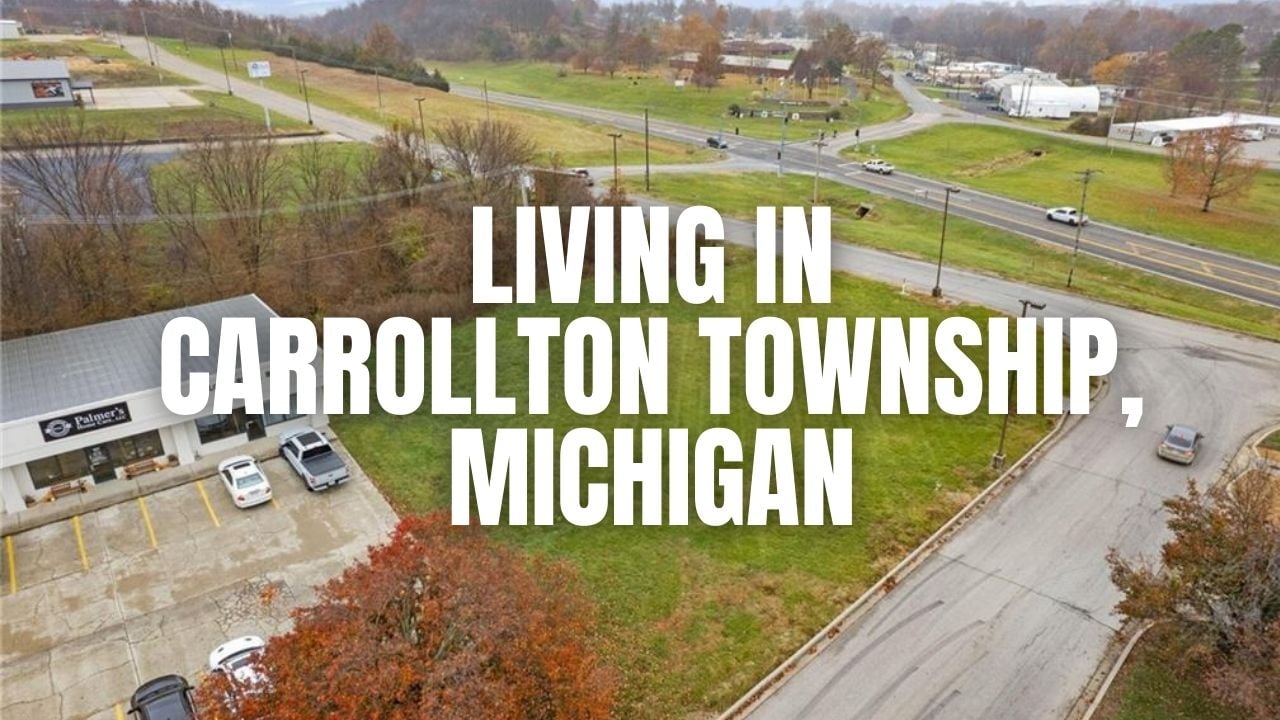
Cost of Living in Carrollton Township, Michigan
Carrollton Township’s cost of living is influenced primarily by housing, transportation, and everyday expenses.
According to BestPlaces.net, Saginaw County has a cost of living index below the national average, with housing costs being one of the largest contributing factors.
The U.S. Census Bureau reports that median home values in many Saginaw County townships are lower than statewide averages, making housing relatively accessible compared to larger Michigan metro areas.
Transportation costs typically align with regional Midwest averages, according to the Bureau of Labor Statistics. Because most residents rely on personal vehicles, commute distance can influence overall expenses.
Utilities and everyday expenses generally follow Michigan statewide trends.
Real Estate & Housing Overview
Carrollton Township’s housing stock consists primarily of established single-family homes.
According to U.S. Census Bureau housing data:
Most homes were built between the 1950s and 1980s
Detached single-family homes are the most common housing type
Lot sizes tend to be moderate compared to rural townships
Common home styles include:
Ranch-style homes
Split-level homes
Traditional single-family houses
New construction activity is limited compared to higher-growth suburbs, and most housing inventory consists of resale homes.
Local MLS data typically shows steady housing availability without the large fluctuations seen in major urban markets.






The Truth About Wayne Township, Michigan: Neighborhoods, Prices, …
Wayne Township, Michigan sits in the northern…
Is Volinia Township, Michigan a Good Place to …
Volinia Township, Michigan is one of Cass…
Moving to Silver Creek Township, Michigan? What to …
Silver Creek Township, Michigan is where Cass…