
Introduction
If you’re looking for more land, fewer neighbors, and a quieter pace of life, Metamora Township, Michigan is one of those places people discover and immediately want to learn more about.
Located in Lapeer County, Metamora Township offers a rural atmosphere with easy access to nearby cities like Lapeer, Oxford, and Rochester. Many buyers are drawn here for larger properties, newer custom homes, and access to outdoor recreation.
This guide breaks down what it’s really like living in Metamora Township — including housing, cost of living, property taxes, schools, and lifestyle — so you can decide if it’s the right fit for your relocation plans.
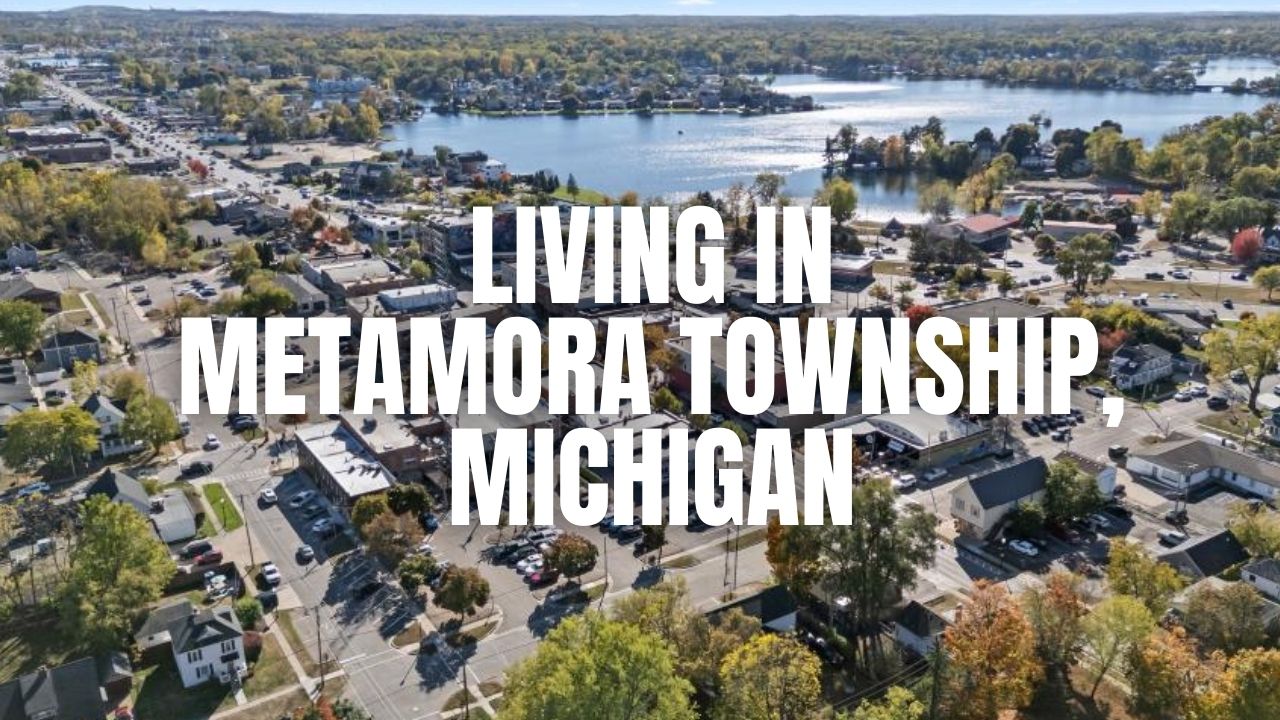
Cost of Living in Metamora Township, Michigan
The cost of living in Metamora Township is influenced heavily by housing and transportation patterns typical of rural townships.
According to U.S. Census Bureau housing data, most homes in Metamora Township are owner-occupied single-family homes, often located on larger lots than suburban neighborhoods.
BestPlaces.net reports that Lapeer County overall has a cost of living below the national average, with housing being a key contributing factor.
Transportation costs may vary depending on commute distance. The Bureau of Labor Statistics notes that transportation represents a significant portion of household expenses in areas without public transit.
Utilities and general expenses are generally consistent with Michigan statewide averages.
Real Estate & Housing Overview
Metamora Township is known for its larger residential properties and rural housing patterns.
According to U.S. Census Bureau housing data:
Most housing consists of detached single-family homes
Many homes were built between 1970 and 2005
Newer custom homes and subdivisions exist in select areas
You’ll commonly find:
Ranch-style homes
Two-story traditional homes
Custom-built homes on acreage
Properties with wooded or open land
MLS listings typically show lower housing density compared to suburban communities, which is consistent with rural township development patterns.
Housing inventory tends to fluctuate, and availability may be more limited than in larger suburban markets.




The Truth About Wayne Township, Michigan: Neighborhoods, Prices, …
Wayne Township, Michigan sits in the northern…
Is Volinia Township, Michigan a Good Place to …
Volinia Township, Michigan is one of Cass…
Moving to Silver Creek Township, Michigan? What to …
Silver Creek Township, Michigan is where Cass…