
If you’ve spent any time looking into the housing market lately, you’ve probably seen some pretty dramatic headlines.
“Home prices are crashing.”
“The housing market is frozen.”
“Buyers have disappeared.”
“Mortgage rates destroyed real estate.”
And depending on what you click on, you might walk away thinking the housing market is either collapsing… or somehow still booming at the same time.
The truth is, most of these headlines aren’t technically false — but they are misleading, especially when you apply them to a local market like Michigan.
Because real estate is not one national experience.
It’s not even one statewide experience.
It’s hyper-local, seasonal, and driven by supply and demand.
And when you actually look at the real data behind the Michigan housing market in 2026, the story becomes much clearer — and a lot less dramatic.
Michigan Home Prices Are NOT Crashing
One of the biggest claims right now is that home prices are falling.
But when you zoom out and look at the actual data, that’s not what’s happening.
Michigan’s median home price has risen from the high $230,000 range in early 2023 to around $275,000 as of February 2026. That’s roughly a 3.8% increase year-over-year.
That alone debunks one of the most common narratives online.
Prices are not crashing.
They are stabilizing and gradually increasing.
Now, that doesn’t mean we’re still in the frenzy market where homes were getting 15 offers in a weekend. What it means is that the market has normalized — and that’s actually a healthier long-term environment.
Inventory Is Rising… But Still Historically Low
Another headline you’ll see everywhere is that inventory is increasing.
And that part is true.
Michigan went from roughly 18,000 homes for sale to about 23,000, a ~14% increase year-over-year.
But here’s where people misinterpret that data.
Even with that increase, Michigan is still sitting at about 2.5 months of inventory.
A balanced market is typically 5–6 months.
So while inventory has improved, we are still far below a balanced market, which continues to support pricing.

Why Inventory Is Still Low (The Lock-In Effect)
One of the biggest reasons inventory remains tight is something called the lock-in effect.
Millions of homeowners locked in mortgage rates between 2–3% during the pandemic.
So when current rates are closer to 6–7%, many homeowners simply don’t want to move.
Even if they should move… financially, it often doesn’t make sense.
On top of that, the U.S. underbuilt housing after 2008, and we are still catching up.
That combination keeps supply tighter than many people expect.
Have Buyers Disappeared? Not Even Close
Another major narrative is that buyers have disappeared.
But when you look at pending sales data, that doesn’t hold up.
Pending sales in Michigan are actually slightly up year-over-year (about 1%).
That tells us something important:
Buyers are still active — they are just more cautious and more selective.
This also shows up in showing data. It takes fewer showings per accepted offer, which means today’s buyers are more serious, more prepared, and more intentional.
Michigan Real Estate Is Highly Seasonal
One of the most overlooked factors — especially for people relocating to Michigan — is seasonality.
Winter in Michigan slows everything down.
Cold weather, snow, and limited daylight naturally reduce activity.
Then around March and April, the market starts ramping up again, leading into the spring and summer peak.
So when people look at winter data and assume the market is collapsing, what they’re often seeing is simply Michigan being Michigan.

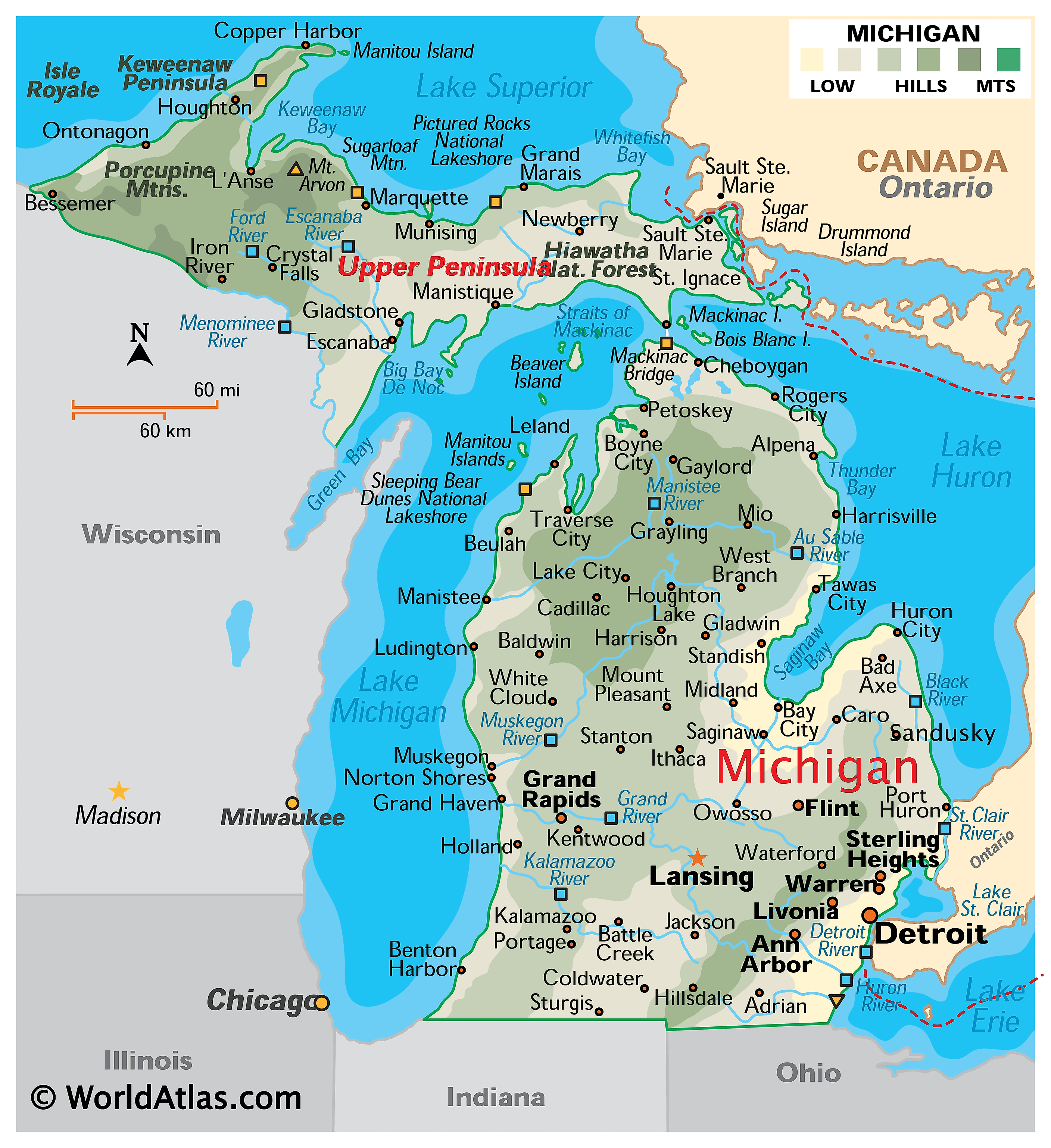
Not All Michigan Markets Behave the Same
Another major mistake is treating Michigan as one single housing market.
It’s not.
Southeast Michigan (Oakland County, Livingston County, Washtenaw County, Macomb County) tends to have the strongest demand due to:
- Population density
- Job opportunities
- Amenities
Western Michigan (Grand Rapids area) has seen strong growth as well.
Northern Michigan behaves more like a seasonal or second-home market.
Central Michigan tends to offer more affordability.
So when someone says “the Michigan housing market is doing this,” it’s usually an oversimplification.
Why People Are Moving to Michigan
Despite the headlines, Michigan continues attracting buyers from across the country.
Why?
Because compared to states like California, Texas, Florida, or the Northeast:
- Home prices are more attainable
- Monthly payments are often lower
- There’s access to lakes, nature, and outdoor recreation
- You still get major cities, universities, and healthcare systems
For many buyers, it’s not just about affordability — it’s about lifestyle value.
The Truth About Property Taxes in Michigan
One of the most misunderstood parts of buying a home in Michigan is property taxes.
Michigan operates under Proposal A, which caps how much taxable value can increase annually while you own the home.
However, when a property sells, that taxable value can reset closer to market value.
This is why the tax amount you see online is often not what you’ll pay after purchasing.
Understanding this is critical when estimating your true monthly cost.

The Problem With “Date the Rate” Advice
You’ve probably heard the phrase:
“Marry the house, date the rate.”
The idea is that you buy now and refinance later.
And while that’s not completely wrong, it’s also oversimplified advice.
Because:
- Rates may not drop as quickly as people expect
- Refinancing is not guaranteed
- There are costs involved
A better question is:
Can you comfortably afford the home today?
If yes, great. If rates drop later, that’s a bonus — not the entire strategy.
What Buyers and Sellers Should Know Right Now
For buyers:
- The market is not crashing
- Good homes still move quickly
- Preparation matters more than timing
For sellers:
- Pricing correctly is critical
- Buyers are more cautious
- Overpricing leads to longer days on market
This is not a collapsing market.
It’s a normalizing market.
What the Michigan Housing Market Looks Like in 2026
If current trends continue, the most likely scenario is:
- Gradual price growth
- Slightly improving inventory
- Active but selective buyers
That means:
- Buyers get more options than before
- Sellers can still do well if priced correctly
- The market becomes more sustainable overall
Final Thoughts: What’s Really Happening
The Michigan housing market is not collapsing.
It’s not exploding either.
It’s adjusting.
Prices are rising modestly.
Inventory is improving but still low.
Buyers are active but more selective.
That’s the real story — not the headlines.
Frequently Asked Questions About the Michigan Housing Market
Is the Michigan housing market crashing in 2026?
No. Home prices are still increasing modestly, and inventory remains below balanced levels.
Is now a good time to buy a house in Michigan?
It depends on your financial situation, but many buyers are finding opportunities due to slightly higher inventory and less competition than previous years.
Why are homes still expensive in Michigan?
Limited inventory, strong demand, and years of underbuilding continue to support home prices.
Are buyers still active in Michigan?
Yes. Buyers are still active but more cautious and selective compared to the peak market years.
How much inventory does Michigan have right now?
Around 2.5 months of supply, which is still below a balanced market.
Do Michigan home prices go down in winter?
Not necessarily. Activity slows due to seasonality, but that doesn’t automatically mean prices drop.
What is the lock-in effect in real estate?
It refers to homeowners staying in place because they have significantly lower mortgage rates than current market rates.
What should sellers do in this market?
Price realistically, prepare the home well, and understand that buyers are more price-sensitive.
Is Michigan still affordable compared to other states?
Yes. Michigan remains more affordable than many coastal and high-growth states.
How do property taxes work in Michigan after buying a home?
Taxes often increase after purchase due to reassessment, so buyers should estimate future taxes carefully.
Conclusion
If you’re thinking about buying, selling, or relocating to Michigan, the biggest thing to understand is this:
The headlines don’t tell the full story.
And if you’re looking to move to Michigan — whether that’s one day from now or a billion — don’t hesitate to reach out. That’s what I help people do.
I’ve also linked my Living in Michigan newsletter below where I share insights I don’t always post publicly.
Question for you:
Do you feel like the market is slowing down, speeding up, or just shifting?

Check Out the EXCLUSIVE "Living In Michigan" Apparel HERE
7 Things Buyers Miss When Touring Homes in …
Touring homes in Michigan? Most buyers focus…

They’re LYING to You About the Michigan Housing …
Is the Michigan housing market crashing in…