
Introduction
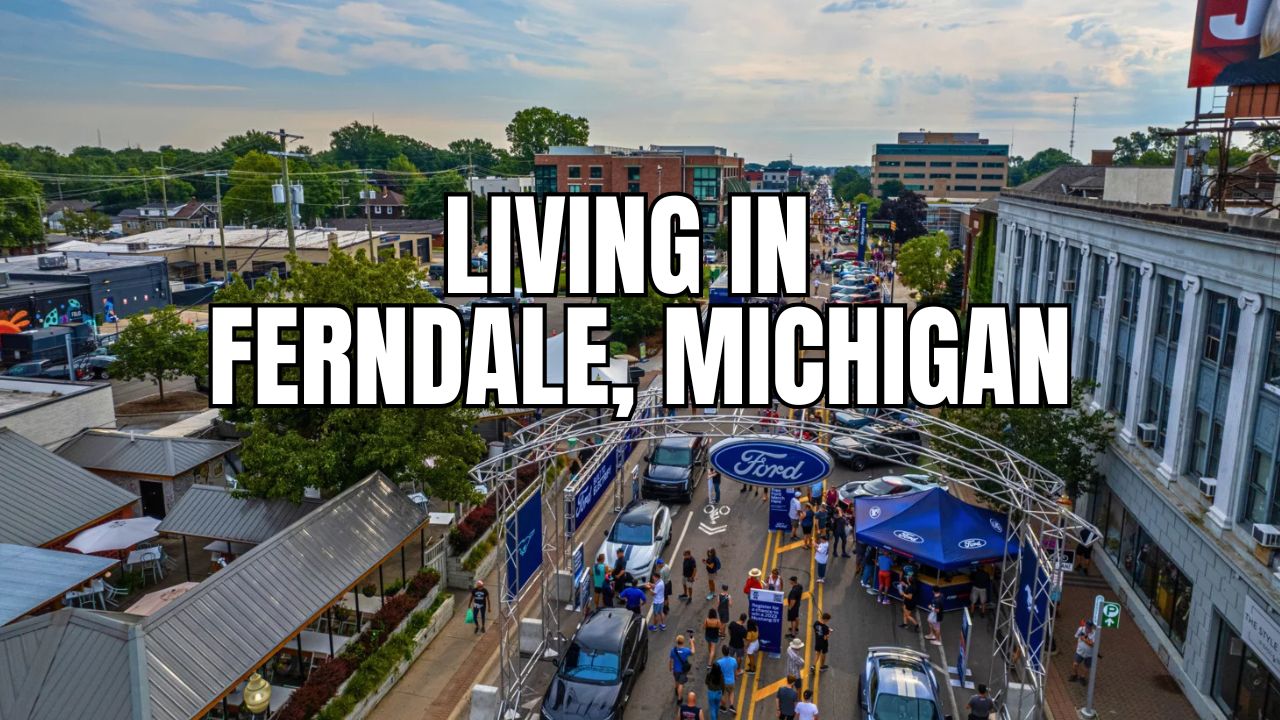
Ferndale, Michigan tends to come up when people want a place that feels energetic, walkable, and connected without being downtown Detroit. It’s a compact city with a strong sense of place, a recognizable downtown, and neighborhoods that feel established rather than cookie-cutter. If you’re researching where to live in Southeast Michigan and want something practical with personality, Ferndale is usually part of the conversation.
This guide walks through location, cost of living, housing, schools, and day-to-day lifestyle so you can decide if Ferndale aligns with how you actually live, not just how it looks on a map.
Cost of Living in Ferndale, Michigan
The cost of living in Ferndale is generally higher than the Michigan average but often lower than some neighboring Oakland County communities. Housing plays the largest role in overall expenses. Based on U.S. Census Bureau American Community Survey data, home values and rents in Ferndale reflect its proximity to Detroit and its established downtown.
Utilities and transportation costs tend to align closely with state averages, according to Bureau of Labor Statistics regional price data. Walkability in parts of the city can also reduce transportation reliance for some residents, though car ownership is still common throughout Metro Detroit. For broader comparisons, Niche.com and BestPlaces.net consistently place Ferndale near the middle-to-upper range for affordability within Southeast Michigan.
Real Estate & Housing Overview
Ferndale’s housing stock is largely made up of early-to-mid 20th century construction. According to U.S. Census Bureau housing data, the majority of homes are single-family residences, with a smaller but visible presence of duplexes, small apartment buildings, and mixed-use properties near downtown.
Architectural styles commonly include bungalows, colonials, and ranch homes, often on smaller lots compared to newer suburban developments. New construction exists but is limited, typically focused on infill projects or small-scale multi-family developments. Market activity fluctuates with broader Metro Detroit trends, and data from local MLS systems shows consistent buyer interest without extreme volatility.



Homer, Michigan: What It’s Like to Live Here …
Considering a move to Homer, Michigan? Located…
Before You Move to Burlington, Michigan: The Stuff …
Considering a move to Burlington, Michigan? Located…
Athens, Michigan Relocation Guide: Vibe, Housing, Amenities & …
Considering a move to Athens, Michigan? Located…