
Introduction
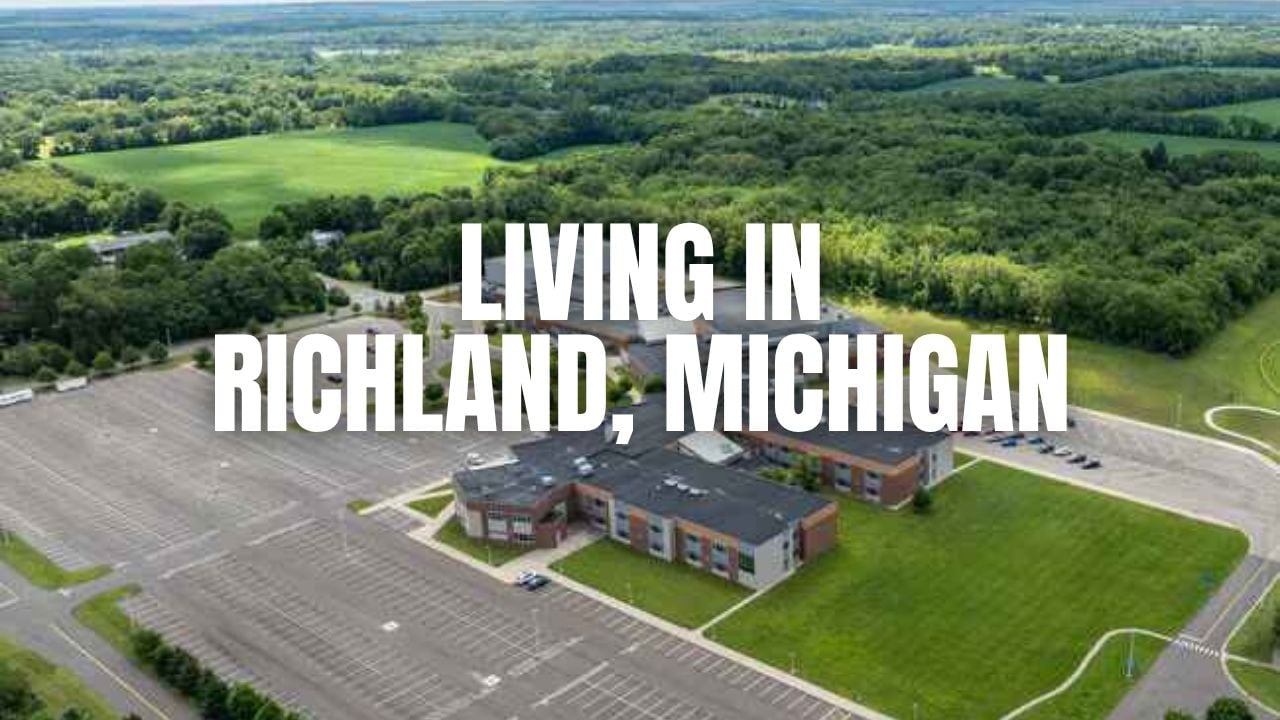
There's a certain type of Michigan town that doesn't make the national headlines, doesn't have a viral food scene, and honestly doesn't need to. Richland, Michigan is that town. Tucked into the northeastern corner of Kalamazoo County — between glacial lakes, dense second-growth forests, and some of the best inland water in the state — Richland quietly draws people in and then keeps them there.
If you're researching a move to Richland, Michigan, you're probably already aware that it sits near Gull Lake, that it's part of the Gull Lake Community Schools district, and that it's close enough to Kalamazoo to access city amenities without living in one. What you might not know yet is what the housing market actually looks like, what property taxes could run you after the purchase, and whether the day-to-day lifestyle fits what you're after.
Cost of Living in Richland, Michigan
Richland is not the cheapest place to live in Michigan — but it's not priced like a coastal suburb either. According to City-Data.com, the cost of living index for Richland (zip code 49083) is 82.6, which is below the U.S. average of 100. That's a meaningful marker: it suggests that while Richland's housing commands a premium relative to many Michigan communities, the broader cost of living — groceries, utilities, transportation — remains favorable compared to the national baseline.
For context, BestPlaces.net reports that Michigan as a whole carries a cost of living score of 91.5, meaning the state overall is 8.5% below the U.S. average. Richland, sitting at 82.6, actually comes in below even that statewide average, which reflects the rural character of the area keeping non-housing costs low.
Based on ACS 5-year data from the U.S. Census Bureau, the median household income in Richland Township is $106,470 — approximately 1.5 times the Michigan statewide median of $72,875. That income figure shapes the housing market considerably; this is a community where buyers tend to have meaningful purchasing power, and the inventory reflects that.
Utility and transportation costs generally follow Midwest regional patterns. Per the Bureau of Labor Statistics, Midwest households consistently post lower energy and transportation expenditures than national averages, and Kalamazoo County falls within that pattern. Specific Richland utility cost data was not available at time of publication. Readers are encouraged to verify current utility averages through the Bureau of Labor Statistics.
Real Estate & Housing Overview in Richland, Michigan
Housing Market Overview in Richland, Michigan
The housing market in Richland, Michigan tends to operate differently than the broader Kalamazoo metro. Inventory is limited — this is a township-and-village environment, not a sprawling suburban corridor — and demand is consistent across multiple price points. According to Redfin, the Richland housing market is characterized as not very competitive, with homes taking an average of 46 days to sell. That said, "not very competitive" in this context doesn't mean buyer's paradise — it means less frenzied than peak urban markets, not that homes are sitting unsold for months.
Seasonal variability is real here. Spring and summer listings, particularly anything with lake access or proximity to Gull Lake, tend to generate more interest and move faster. Off-season inventory may linger slightly longer, which can represent an opportunity for buyers with flexibility on timing.
Types of Homes in Richland, Michigan
Richland offers a genuinely diverse mix of housing stock. In the village center, you'll find older ranch and two-story colonial homes on relatively modest lots — the kind of established neighborhoods with mature trees and a settled feel. Move further into the township, and the properties open up considerably: larger lots, farmland parcels, wooded acreage, and newer subdivision construction.
The most distinctive housing category in the area is waterfront. Gull Lake is a more than 2,000-acre, spring-fed inland lake in Kalamazoo County, and properties on or near its shoreline represent a separate tier of the market entirely — ranging from modest seasonal cottages to multi-million-dollar year-round residences. Active listings in Richland at time of research ranged from homes priced around $199,900 to waterfront properties listed at $2,495,000, according to Zillow, which illustrates just how wide the spectrum runs here. New construction is also present in the area, with builders active in select subdivision developments within the township.
Price Range & Affordability (Evergreen Style)
Homes in Richland, Michigan generally sit in a mid-to-upper price tier relative to Kalamazoo County as a whole. According to Zillow, the average home value in Richland is $354,329. Redfin data pegs the median sale price at $268,000. The gap between these figures reflects the wide range of housing types — from entry-level village homes to high-end lakefront properties pulling the average upward.
For comparison, Zillow reports the average Kalamazoo home value at $223,841, meaning homes in Richland MI tend to be priced meaningfully higher than the city of Kalamazoo — a pattern consistent with townships that offer more space, stronger school districts, and recreational amenities.
More updated or larger properties, particularly those with lake access or acreage, command significantly higher price tiers. Entry-level buyers will find options in the village, while the move-up and waterfront segments dominate the upper end of the market.
Market Segments & Buyer Activity
The Richland market supports several distinct demand patterns. Entry-level and mid-range demand is steady among those relocating from Kalamazoo or commuting to metro employers who want more land and a quieter setting. Move-up demand — larger homes, larger lots, newer builds — is consistent and reflects the township's relative affluence. Waterfront housing demand, tied to Gull Lake access, represents a separate and highly specialized segment that operates on its own supply-and-demand dynamics year-round. There is also meaningful interest in low-maintenance housing options, including newer ranch-style homes and patio home developments, for those looking to own without extensive upkeep.
New Construction & Development Trends
Richland Township has seen incremental new construction activity, particularly in subdivision settings away from the village core. According to Zillow listings, new construction options in the Richland area are available with prices starting around $494,000 for new builds in current inventory, indicating that new product in the market tends to target the move-up segment. The township is not extensively built out, but available land for large-scale residential development is limited compared to fast-growing suburban corridors closer to Kalamazoo. Growth has been measured and relatively steady rather than rapid, which has helped preserve the rural and semi-rural character of the area.
What It's Like to Own a Home Here
Owning a home in Richland generally means accepting that you'll be maintaining your own property without the density-related shortcuts that come with urban or high-density suburban living. Lot sizes in the village tend to be modest but functional; township parcels can be large. Some subdivisions carry HOA structures with associated fees and maintenance expectations — buyers should ask specifically about HOA status on any property under consideration.
Seasonal maintenance is a genuine consideration: winters in Kalamazoo County are real Michigan winters, and older housing stock in the village will demand appropriate upkeep. Waterfront properties come with their own maintenance layer, from docks and seawalls to boat storage logistics.
The trade-off for that effort is meaningful: space, privacy, natural surroundings, and the kind of property-owning experience that's increasingly difficult to find at this price point in other parts of the country.
If you're considering a move to Richland and want to better understand how the housing market fits your budget and goals, reviewing current listings on Realtor.com, Redfin, Zillow, or Trulia — and running property-specific numbers — can help you make a more informed decision.



Is Sturgis, Michigan a Good Place to Live? …
Sturgis, Michigan is the largest city in…
Moving to Vicksburg, Michigan? What to Know About …
Vicksburg, Michigan is a fast-growing village in…
Living in Schoolcraft, Michigan: Pros, Cons, Cost of …
Schoolcraft, Michigan is a small village in…