If you haven’t heard much about Grand Blanc, you’re not alone—but that’s changing quickly. Tucked into Genesee County, Grand Blanc has quietly become one of the most desirable places to live in Mid-Michigan and the outer edges of Southeast Michigan.
Home prices are rising, demand remains strong, the school district consistently ranks at the top of the region, and the overall lifestyle hits a rare sweet spot: suburban, connected, and still affordable by Michigan standards. For buyers relocating from larger metros—or Michigan residents looking for more value without sacrificing quality of life—Grand Blanc is increasingly landing on the shortlist.
This guide breaks down where Grand Blanc is, what daily life looks like, how much homes cost, how the schools really perform, and what to know before moving here.
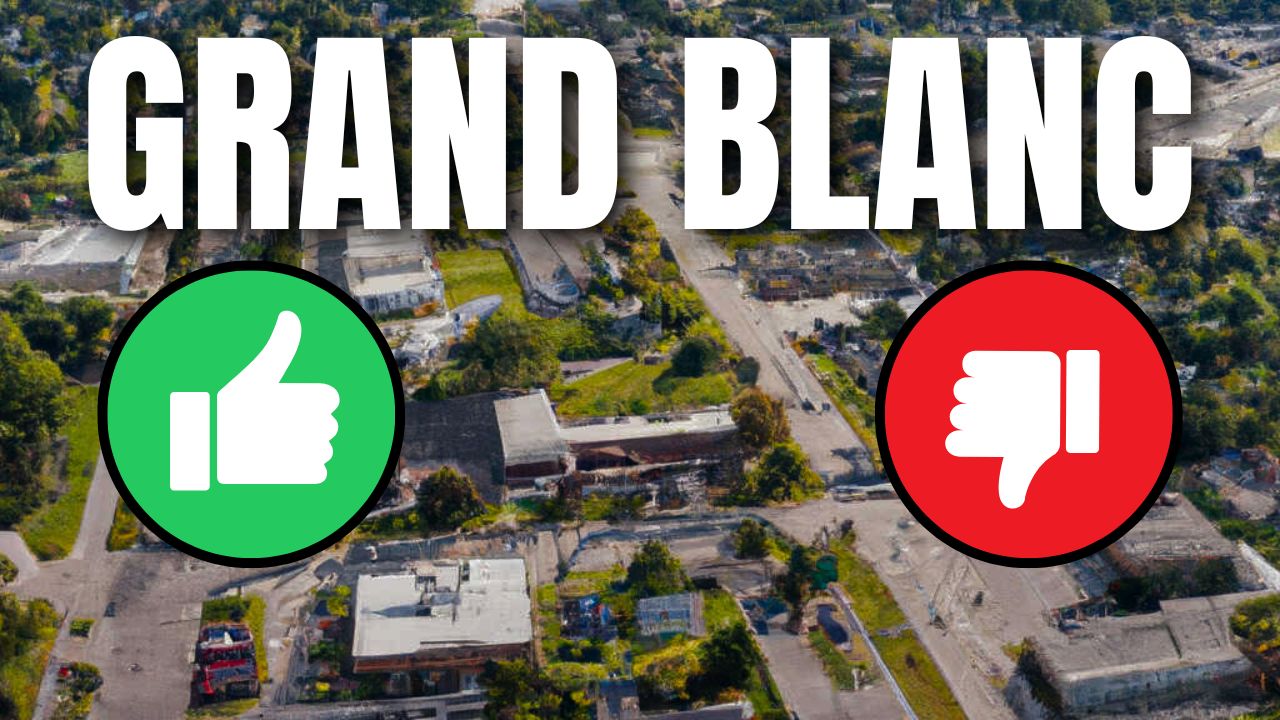
A Brief History of Grand Blanc, Michigan
Grand Blanc’s roots stretch back well before Michigan became a state. The area was originally home to a Chippewa (Ojibwe) settlement, later visited by French fur traders who coined the name “Grand Blanc,” meaning “Great White.” The first permanent American settler, Jacob Stevens, arrived in 1823.
When Michigan achieved statehood in 1837, Grand Blanc was even considered as a potential site for the state capital—losing out to Lansing. By the mid-1800s, the arrival of the railroad reshaped the area’s growth, pushing development toward what is now downtown Grand Blanc and away from early settlements like Gibsonville (also known as Whigville).
One fascinating distinction: Grand Blanc Township was the first organized township in Genesee County. The community later incorporated as a city in 1930.
Local history is preserved at the Grand Blanc Heritage Museum, housed in a restored 1885 church and featuring exhibits on early settlement, agriculture, and the rise of General Motors in the region.
Things to Do in Grand Blanc: Parks, Golf, Events & Entertainment
Despite its modest size, Grand Blanc offers a surprisingly active lifestyle—especially for residents who value outdoor space and community events.
Parks and Outdoor Recreation
Grand Blanc Commons, a 130+ acre nature preserve near the McFarlen Library, is a local favorite for walking trails, birdwatching, and quiet escapes into nature. Physicians Park, located downtown, features playgrounds, picnic areas, a splash pad in summer, and an ice-skating rink in winter—making it a true year-round gathering space.

Golf and Regional Recognition
Grand Blanc is nationally known for Warwick Hills Golf & Country Club, which hosted the Buick Open PGA Tour event for decades. Legends like Tiger Woods and Arnold Palmer once played here, giving the town a unique place in Michigan golf history.
Entertainment and Community Events
Residents enjoy access to classic attractions like the US-23 Drive-In Theater, modern movie options at NCG Trillium Cinemas, bowling and arcades, and nearby skating centers. Seasonal events—including food truck festivals, concerts in the park, and the annual Grand Blanc Art Fair—create a strong sense of local connection.
Downtown Grand Blanc: Small, Walkable, and Locally Focused
Downtown Grand Blanc spans a few blocks along Saginaw Road and emphasizes local businesses, cafés, and services rather than big-box retail. The city’s Downtown Development Authority has invested in streetscaping, sidewalks, and seasonal beautification.
A Sunday farmers market operates seasonally, and the area remains functional rather than flashy—something many residents appreciate. For larger shopping trips, Genesee Valley Center in Flint Township and Great Lakes Crossing in Auburn Hills are both short drives away.

Credit: https://commons.wikimedia.org/wiki/User:Lrgjr72
Dining in and Around Grand Blanc
Grand Blanc punches above its weight when it comes to dining. Local favorites include farm-to-table breakfast spots, Mediterranean cuisine, classic Michigan pizza, and familiar comfort food. While chains are present, there’s enough local flavor to keep residents from feeling like they have to leave town for every meal.
Grand Blanc Community Schools and Education Options
Education is one of Grand Blanc’s strongest draws. Grand Blanc Community Schools serves over 8,200 students and is consistently ranked among the top districts in the Flint metro area.
According to Niche, the district holds an A- rating and is frequently ranked #1 locally for academics, athletics, and overall quality. The district offers Advanced Placement programs, strong extracurriculars, and modern facilities—including a performing arts center used for both student and community events.
It’s also worth noting that parts of the broader Grand Blanc area fall into neighboring districts such as Goodrich Schools and Lake Fenton Schools, both of which also maintain strong reputations.
Grand Blanc Housing Market and Home Prices
Grand Blanc offers a wide range of housing styles—from mid-century ranches and colonials to newer subdivisions and condominiums. Development has occurred in waves since the 1970s, giving buyers options across price points and architectural styles.
Recent MLS data shows:
- Michigan median sale price: ~$270,000
- Grand Blanc Township: ~$281,750
- City of Grand Blanc: ~$275,333
In a broader Southeast Michigan context, finding homes under $300,000 with strong schools and amenities is becoming increasingly rare.
Homes typically spend 30–35 days on market, reflecting steady demand without extreme volatility.

Cost of Living in Grand Blanc, Michigan
Overall, Grand Blanc’s cost of living runs 4–9% below the national average, with groceries, utilities, and healthcare generally near or slightly under U.S. benchmarks. This affordability is especially noticeable for buyers relocating from higher-cost states like California, Illinois, or the East Coast.
Property Taxes in Grand Blanc: What You Need to Know
Property taxes vary significantly depending on which municipality you’re in within the Grand Blanc school district. Millage rates differ between areas such as Holly Township, Atlas Township, Grand Blanc Township, Burton, and the City of Grand Blanc.
Michigan’s Principal Residence Exemption (PRE) reduces taxes for owner-occupied homes, while non-homestead properties pay higher rates. Understanding district boundaries can result in thousands of dollars per year in savings, making professional guidance especially valuable.
Pros and Cons of Living in Grand Blanc, Michigan
Pros
Grand Blanc offers strong schools, a stable housing market, highway access, nearby healthcare, and a community-oriented environment. It appeals to households across many life stages and consistently ranks as one of the best places to live in the region.
Cons
Entertainment and nightlife are limited compared to larger cities, walkability varies by neighborhood, and property taxes can be higher depending on location. Some amenities require short drives to nearby communities.
Is Grand Blanc, Michigan a Good Place to Live?
For many people, yes. Grand Blanc combines affordability, education quality, and location in a way that’s increasingly hard to find in Michigan. It’s not a big-city lifestyle—but for those seeking balance, stability, and long-term value, it’s one of the state’s quiet standouts.
Frequently Asked Questions About Grand Blanc, Michigan
Is Grand Blanc, Michigan safe?
Grand Blanc is generally considered a safe community with crime rates lower than nearby urban centers, according to regional crime data sources.
How much do homes cost in Grand Blanc?
Most homes sell between the mid-$200,000s and low-$300,000s, depending on size, condition, and location.
Are Grand Blanc schools good?
Yes. Grand Blanc Community Schools are consistently top-ranked in Genesee County and receive strong ratings from Niche.
How far is Grand Blanc from Detroit?
About 55–60 miles, typically around a one-hour drive via I-75.
Is Grand Blanc good for families?
Many households choose Grand Blanc for its schools, parks, and community-oriented environment.
What county is Grand Blanc in?
Grand Blanc is located in Genesee County, Michigan.
Are there new construction homes in Grand Blanc?
Yes. Newer subdivisions continue to be developed, particularly in the township.
How high are property taxes in Grand Blanc?
Property taxes vary by municipality and school district boundaries; rates range significantly across the area.
Is Grand Blanc walkable?
Downtown areas are walkable, but many neighborhoods require driving.
Does Grand Blanc have a downtown?
Yes, though it is small and locally focused rather than a major commercial hub.
Is Grand Blanc affected by Flint’s water issues?
No. Grand Blanc has its own water system and was not impacted.
Is Grand Blanc good for retirees?
Many retirees appreciate the quiet neighborhoods, healthcare access, and lower overall cost of living.
How competitive is the housing market?
Homes sell relatively quickly, and move-in-ready properties often attract multiple offers.
What airports are near Grand Blanc?
Bishop International Airport is about 10 minutes away.
Is Grand Blanc growing?
Yes. Population and housing demand have steadily increased over time.
Final Thoughts: Moving to Grand Blanc, Michigan
Grand Blanc continues to evolve while holding onto the qualities that made it desirable in the first place. If you’re researching where to live in Michigan and want strong schools, reasonable home prices, and long-term stability, Grand Blanc deserves a serious look.
If you’re thinking about moving to Michigan—whether soon or someday—I’m always happy to be a resource. You can also join the Living in Michigan newsletter for weekly insights on communities, housing trends, and relocation tips across the state.



Living in Pavilion Township, Michigan: Pros, Cons, Cost …
Pavilion Township, Michigan is a quiet, rural…
Thinking About Oshtemo Township, Michigan? A practical guide
Thinking about Oshtemo Township, Michigan? This fast-growing…
Kalamazoo Township, Michigan Living Guide: The Ultimate living …
Kalamazoo Township, Michigan sits at the crossroads…