
Introduction
If you're searching for a quiet small-town lifestyle in Southwest Michigan, Eau Claire might be one of the places you're considering.
Located in Berrien County, Eau Claire offers a rural setting with convenient access to larger nearby communities. Some people explore living here because of the slower pace, lower housing costs compared to many urban areas, and proximity to Lake Michigan communities like St. Joseph.
Like any place, Eau Claire has its advantages and limitations. In this guide, we’ll walk through the cost of living, housing market, schools, property taxes, and everyday lifestyle so you can decide if Eau Claire, Michigan fits what you’re looking for.
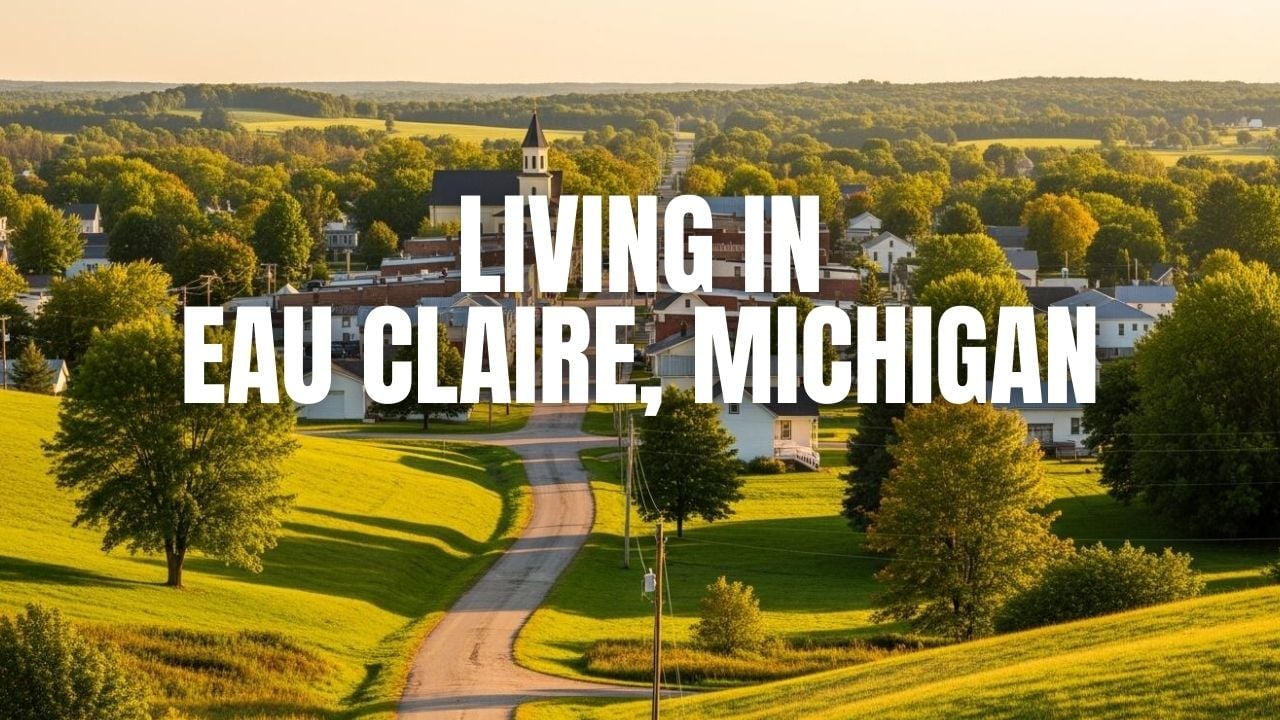
Cost of Living in Eau Claire, Michigan
One of the most noticeable aspects of Eau Claire is its relatively affordable housing.
According to the U.S. Census Bureau, home values in small villages like Eau Claire tend to fall below statewide averages. Niche.com also indicates that housing costs in Eau Claire are lower than many Michigan communities.
BestPlaces.net reports that Berrien County’s cost of living index is generally close to the national average, though housing prices in smaller villages like Eau Claire often come in lower.
Utilities and transportation costs in Southwest Michigan generally align with Midwest averages, according to the Bureau of Labor Statistics.
Overall living expenses depend heavily on housing choices, commuting distance, and individual spending patterns.
Real Estate & Housing Overview
Housing in Eau Claire reflects its rural village setting.
According to U.S. Census Bureau housing data, much of the housing stock was built between the mid-1900s and the late 20th century.
Common home types include:
Ranch-style homes
Traditional one- and two-story houses
Farmhouses on larger rural parcels
Small residential lots within the village center
Lot sizes can vary significantly depending on whether the property sits within the village limits or in surrounding township areas.
New construction activity is relatively limited in the village itself, although occasional new homes may be built on available parcels in the surrounding region.
Real estate market activity typically follows broader Berrien County housing trends, according to regional MLS data.



The Most Connected Home in Brighton, Michigan | …
6280 Beth Rd, Brighton, MI: move-in-ready 3-bed,…
Living In Northville, Michigan (Is It Worth It?)
Thinking about living in Northville, Michigan? Discover…

Birmingham Michigan Vs. Grosse Pointe Michigan: Which One …
Thinking about Birmingham Michigan or Grosse Pointe…