
The Plymouth Michigan Deep Dive: Why Everyone Keeps Picking It
Why Plymouth Keeps Winning “Best All-Around City” in Metro Detroit
There’s a question I asked on TikTok not too long ago that absolutely blew up. I asked people in Michigan: “If someone forced you to pick your favorite all-around city in Metro Detroit or Southeast Michigan—where would you choose?” And the comments came in like it wasn’t even a debate: Plymouth. Plymouth. Plymouth.
And the funny part is—I made a Plymouth video a couple years back. At the time I thought I did a solid job. But Michigan changes, people change, and I’ve helped a lot more relocations since then… so it’s time for a fresh, updated, extremely thorough Plymouth breakdown so you know exactly what it’s like to live here.
The “Kellogg Park Moment” That Explains Plymouth Better Than Any Statistic
One random weekday afternoon, I was driving past Kellogg Park. No festival. No event. Just a normal day.
And the park was full of life.
People on benches. Kids playing. Couples walking dogs. Someone playing guitar. People grabbing coffee and lingering like they didn’t have anywhere else to be.
It wasn’t chaotic. It wasn’t empty. It was simply alive.
That’s Plymouth. It’s not just a place people live—it’s a place people enjoy.

City of Plymouth vs. Plymouth Township: Same Name, Different Feel
Plymouth is made up of two separate municipalities:
City of Plymouth
- Roughly 2 square miles
- About 9,000+ residents
- Highly walkable
- Downtown-centered lifestyle
Plymouth Township
- Roughly 16 square miles
- About 27,000–28,000 residents
- More subdivisions and space
- More traditional suburban layout
They share the same name and community vibe, but taxes, services, and layout differ. This is one of those classic Michigan quirks buyers should understand.
Plymouth’s Location: Walkability Without Sacrificing Commute
Plymouth sits right near M-14 and I-275, which makes it incredibly practical:
- Ann Arbor: ~20 minutes
- Detroit: ~25–30 minutes
- DTW Airport: ~25 minutes
- Novi, Northville, Livonia, Canton: practically neighbors
For out-of-state relocators, this is the sweet spot. You get historic charm and a real downtown without giving up access to jobs and major roadways.
Downtown Plymouth: The Heart of Everything
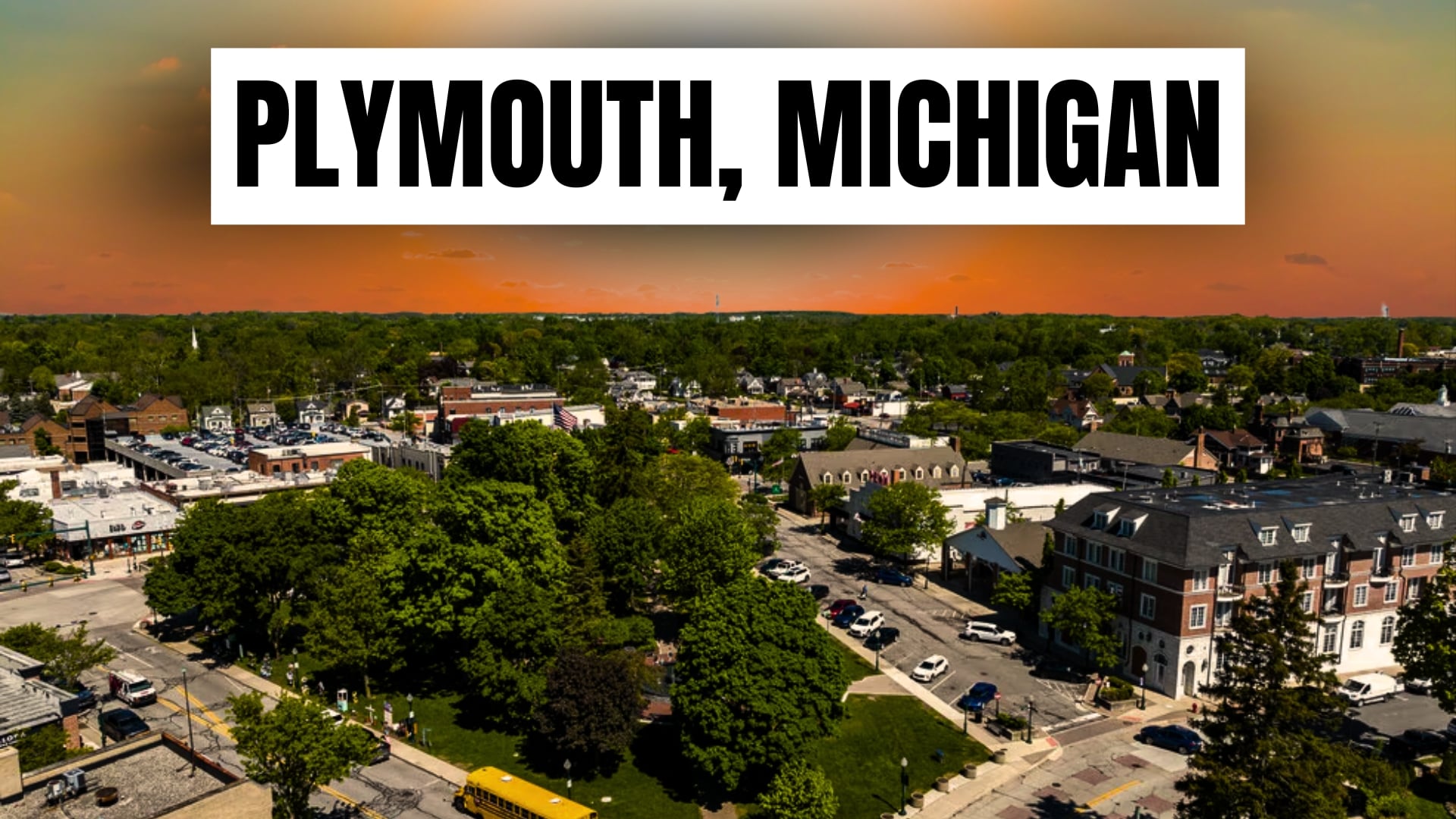
Downtown Plymouth radiates out from Kellogg Park. Restaurants, bakeries, coffee shops, boutiques, breweries, bars—all within walking distance.
Major annual events include:
- Plymouth Ice Festival
- Art in the Park
- Plymouth Fall Festival
- Summer concerts at Kellogg Park
- Chili Cook-Off
- Seasonal markets and smaller community events
But what’s impressive is how active it stays when there’s nothing scheduled. People don’t need a festival to be there—they just want to be.
It’s one of the strongest walkable dining and social scenes in Southeast Michigan.
Parks, Trails, and Outdoor Lifestyle
Beyond downtown, Plymouth Township adds even more lifestyle value.
Plymouth Township Park includes:
- 80 acres
- Multiple baseball diamonds
- Splash pad
- Trails and play areas
- Seasonal sledding hill
Then there’s Hines Drive—a major parkway and recreation corridor that’s a huge perk for biking, jogging, walking, and scenic drives.
The balance of walkable downtown + green space is a big reason Plymouth consistently ranks high in public perception.

Schools: Publicly Available Information
Plymouth is served by Plymouth-Canton Community Schools (PCCS), one of the largest districts in Michigan.
The district includes:
- 14 elementary schools
- 5 middle schools
- 3 high schools
- An alternative high school program
It operates with a large-campus structure that offers extensive academic and extracurricular programming. Buyers should always verify school boundaries and review district information directly when making housing decisions.
Plymouth Home Prices in 2025
Based on recent MLS data:
- Plymouth Township median: ~$439,000
- City of Plymouth median: ~$450,000+
- Broader regional MLS median: ~$275,000
Updated homes near downtown commonly sell in the $500Ks–$700Ks+.
Larger Township homes and new construction can exceed $800K–$1M.
Condos and townhomes typically range mid-$300Ks to mid-$400Ks.
One interesting dynamic: a renovated historic bungalow near downtown can cost more than a larger 3,000 sq ft colonial in the Township. Walkability carries a premium.
Days on market in late 2025 averaged around 25–35 days, depending on price point and condition.
Inventory trends:
- Plymouth Township inventory up year over year
- City inventory slightly tighter
Well-priced homes still attract steady interest.

Property Taxes in Plymouth: City vs Township Matters
Property taxes differ between the City and Township.
Both are served by Plymouth-Canton schools, but millage rates vary significantly.
To estimate taxes in Michigan:
- Take approximately 50% of the home’s market value (taxable value estimate)
- Multiply by the millage rate
- Divide by 1,000
Important note:
The tax amount shown on a listing reflects the current owner’s taxable value. After transfer, taxable value can reset higher. Buyers must account for this in budgeting.
Plymouth offers incredible lifestyle value—but understanding the tax structure is critical.
Neighborhood Feel and Housing Styles
In the City:
- 1920s–1960s bungalows
- Cape Cods
- Colonials
- Craftsman homes
- Newer infill builds
In the Township:
- 1980s–1990s colonials
- Mid-century subdivisions
- Larger-lot neighborhoods
- Contemporary styles
Some commonly referenced areas include:
- Old Village (historic, artistic vibe)
- Lake Pointe
- Trailwood
- Rolling Oaks
Each offers a different environment—walkable vs suburban, historic vs modern, denser vs more spacious.
What the Buying Process Feels Like in Plymouth
In the City:
- Well-priced homes near downtown can generate strong interest
- Move-in ready properties move fastest
In the Township:
- More variation by price and condition
- Homes needing updates may sit longer
- Negotiation opportunities exist depending on market timing
Multiple offers still happen—especially in desirable price ranges.
Preparation matters more than timing hype.
Why Plymouth Continues to Win
Plymouth isn’t just charming. It isn’t just well-located. It isn’t just walkable.
It’s all of that combined with a strong sense of community identity.
People attend the events. They support local businesses. They walk downtown just because it’s there.
And that’s why so many people pick Plymouth as their favorite all-around city in Southeast Michigan.

FAQ: Living in Plymouth, Michigan
What is the difference between the City of Plymouth and Plymouth Township?
The City is smaller and highly walkable with a dense downtown core. The Township is larger with more subdivisions, parks, and space. They are separate municipalities with different tax structures.
Is Plymouth, Michigan walkable?
Yes. The City of Plymouth is known for its highly walkable downtown centered around Kellogg Park.
How far is Plymouth from Detroit and Ann Arbor?
Plymouth is typically about 25–30 minutes from Detroit and about 20 minutes from Ann Arbor, depending on traffic.
What school district serves Plymouth?
Plymouth is served by Plymouth-Canton Community Schools (PCCS), one of the larger districts in Michigan.
Are property taxes higher in the City or Township?
The City of Plymouth generally has a higher millage rate than the Township, which can impact annual tax totals.
What are the biggest annual events in Plymouth?
Major events include Art in the Park, the Ice Festival, the Fall Festival, summer concerts, and various seasonal gatherings.
Is Plymouth considered expensive?
Plymouth typically commands a premium compared to the broader regional median due to walkability, location, and demand.



These 10 Michigan Cities Have the Fastest-Growing Home …
Most people assume Southeast Michigan leads the…
The 5 Biggest Regrets People Have After Moving …
Thinking about moving to Michigan? After helping…
Living in Plymouth, Michigan: Why Everyone Says It’s …
Plymouth, Michigan is one of the most…