
Every year on January 26, Michigan quietly celebrates its birthday. No fireworks. No parades. No cake-shaped state outlines. But on this day in 1837, Michigan officially became the 26th state in the United States—and everything about the state we know today traces back to that moment.
Michigan’s story isn’t neat or simple. It’s gritty, complicated, resilient, and deeply tied to water, industry, innovation, and people who refused to quit. From ancient Indigenous civilizations and fur traders, to copper miners, auto workers, farmers, inventors, and entrepreneurs—Michigan has always punched above its weight.
This is a thank-you letter to Michigan. A look back at where it came from, how it shaped the country, and why its past still shows up in the way people live here today.
So whether you were born here, moved here, or are just Michigan-curious—this one’s worth the read.
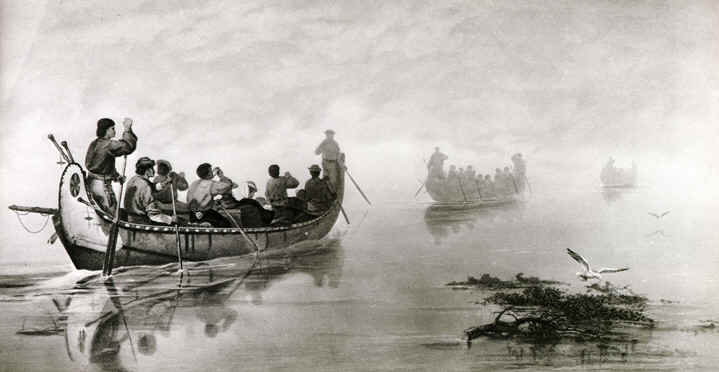
The Land Before Michigan: Indigenous History That Came First
Long before Michigan had borders, counties, or even a name, it was home to thriving Indigenous nations. Archaeological evidence shows humans lived in what is now Michigan more than 11,000 years ago, shortly after the last Ice Age.
The region was primarily inhabited by the Anishinaabe people, a group that includes the Ojibwe (Chippewa), Odawa (Ottawa), and Bodéwadmi (Potawatomi) tribes. These nations lived across the Great Lakes region and developed complex trade networks, agricultural systems, and spiritual traditions centered around the land and water.
Michigan’s geography, surrounded by the Great Lakes, made it a crossroads of culture and commerce even before Europeans arrived. Copper mined in Michigan’s Upper Peninsula has been traced to tools found thousands of miles away, proving Michigan was part of one of North America’s earliest trade economies (National Park Service).
Even today, Michigan has 12 federally recognized tribes, and Indigenous influence remains deeply woven into the state’s place names, culture, and history.

Credit: Detroit Free Press
How Michigan Got Its Name (And Why It Fits Perfectly)
The name Michigan comes from the Ojibwe word “Mishigami,” meaning “great water” or “large lake.” That might be the most accurate place name in America.
Michigan is the only state made of two peninsulas and is bordered by four of the five Great Lakes, Superior, Michigan, Huron, and Erie. With over 11,000 inland lakes and more than 3,200 miles of freshwater shoreline, Michigan has more freshwater coastline than any other state in the country (NOAA).
Water didn’t just shape Michigan’s geography, it shaped its economy, culture, and identity. Fishing, shipping, trade, tourism, and industry all grew because of it.
French Fur Traders and the Birth of Detroit
The first Europeans to establish permanent settlements in Michigan were the French. In 1701, French officer Antoine de la Mothe Cadillac founded Detroit, originally named Fort Pontchartrain du Détroit, meaning “the strait”, a reference to the narrow river connecting Lake St. Clair and Lake Erie.
Detroit quickly became a major hub for the fur trade, connecting Indigenous traders, French merchants, and later British and American settlers. The city’s location made it one of the most strategically important spots in North America.
Michigan changed hands multiple times, French to British, then British to American, before becoming part of the Northwest Territory after the American Revolution.
The Toledo War: Yes, Michigan Fought a “War”
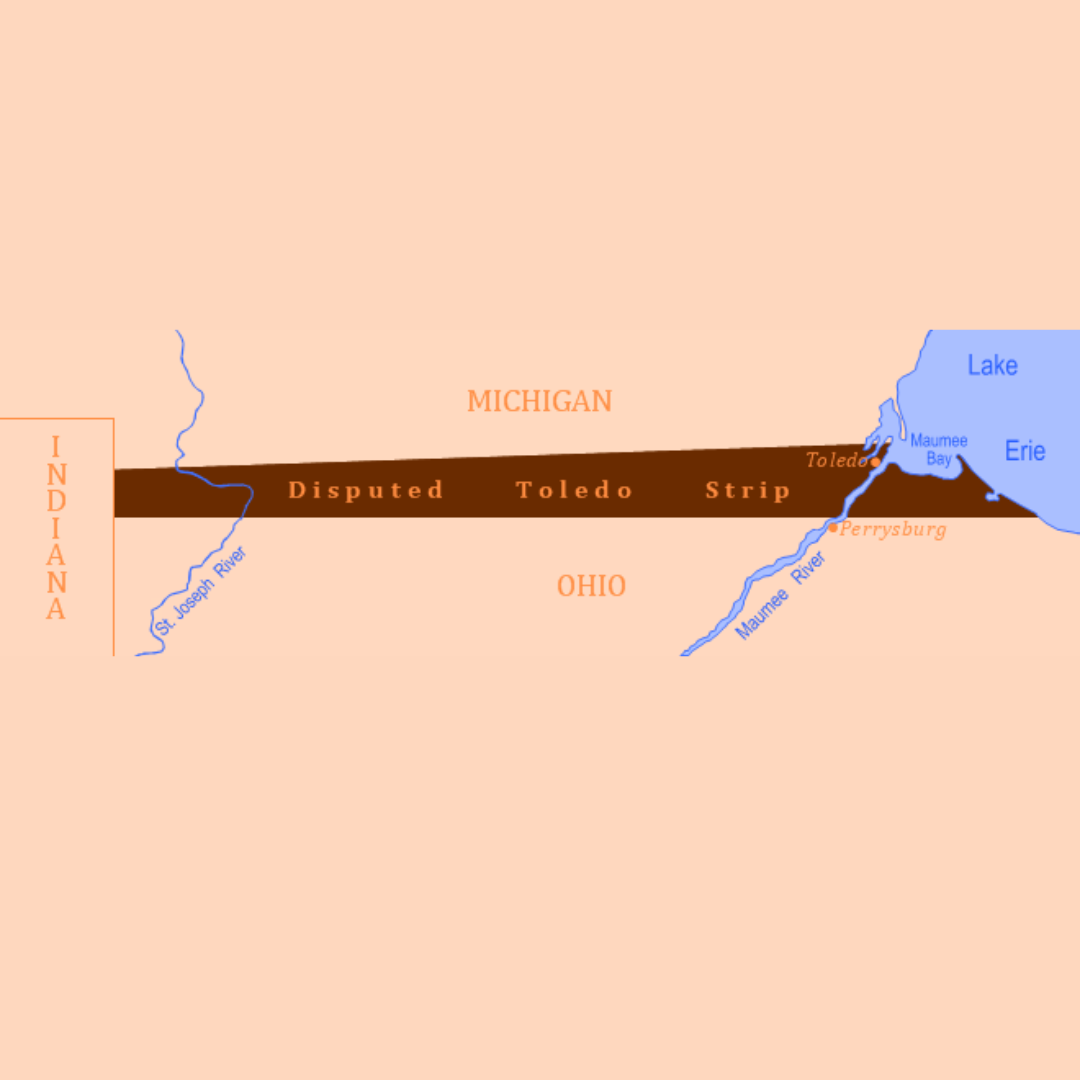
Michigan’s path to statehood wasn’t smooth. In the 1830s, Michigan and Ohio both claimed a strip of land known as the Toledo Strip. What followed was the oddly named Toledo War, a mostly bloodless conflict involving militias, arrests, and political maneuvering.
Michigan ultimately lost Toledo but gained something far more valuable, the Upper Peninsula.
At the time, many Michiganders thought the U.P. was worthless wilderness. That opinion changed quickly.
Copper, Iron, and the Upper Peninsula Boom
The Upper Peninsula turned out to be one of the most resource-rich regions in the country. By the mid-1800s, Michigan became the leading copper producer in the world, supplying over 90% of America’s copper at one point (National Park Service).
Iron ore mining soon followed, fueling railroads, shipbuilding, and eventually the auto industry. Immigrants from Finland, Italy, Ireland, and Eastern Europe flooded into the U.P., creating the distinct culture that still exists today.
Michigan’s industrial backbone was being built, literally.
January 26, 1837: Michigan Becomes the 26th State
On January 26, 1837, President Andrew Jackson signed the legislation admitting Michigan to the Union.
At the time:
- Michigan had about 174,000 residents
- Detroit was still a relatively small frontier city
- The economy was driven by agriculture, timber, mining, and shipping
Statehood gave Michigan control over its own laws, land, and future, and it didn’t waste the opportunity.
Agriculture: Michigan’s Quiet Powerhouse
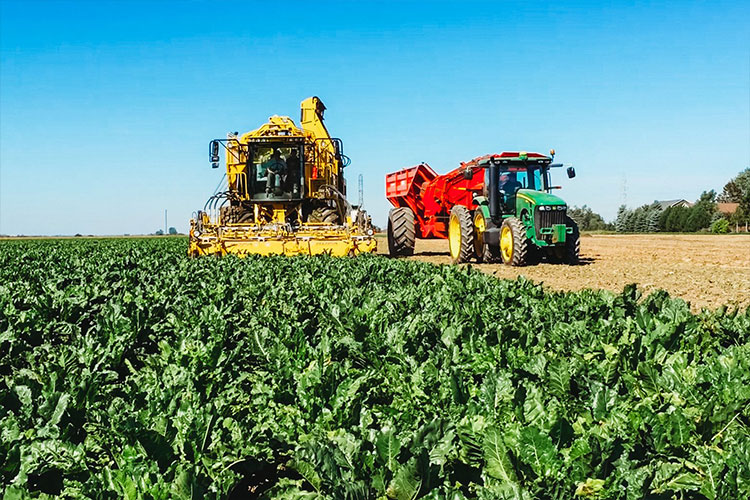
While industry gets most of the attention, agriculture has always been a core part of Michigan’s economy.
Thanks to its unique climate and glacial soil, Michigan is one of the most agriculturally diverse states in the country. It ranks in the top producers nationally for:
- Cherries (No. 1)
- Apples
- Blueberries
- Cucumbers
- Asparagus
- Dry beans
Michigan farmers grow over 300 different commodities, supported by the moderating effect of the Great Lakes (USDA).
The Auto Industry Changed Everything
In the early 1900s, Michigan became the center of a revolution that reshaped the world.
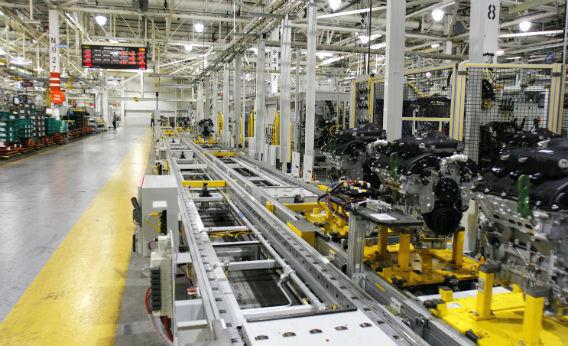
Henry Ford introduced the moving assembly line in 1913, slashing production times and making cars affordable for everyday Americans. Detroit quickly earned the nickname “Motor City.”
At its peak:
- Michigan produced more than half of the world’s automobiles
- Hundreds of thousands of workers migrated here for factory jobs
- Entire cities and suburbs were built around auto plants
The auto industry also reshaped labor rights, wages, and the American middle class.
War, Innovation, and the Arsenal of Democracy
During World War II, Michigan’s factories pivoted almost overnight. Automobile plants began producing tanks, planes, engines, and weapons.
Detroit was dubbed the “Arsenal of Democracy”, producing:
- B-24 bombers
- Tanks
- Jeeps
- Aircraft engines
Women entered the workforce in massive numbers, symbolized by Rosie the Riveter. Michigan didn’t just support the war effort, it powered it.
Reinvention After Decline
Michigan’s story isn’t all growth and glory. The late 20th century brought factory closures, population loss, and economic pain, especially in cities like Detroit and Flint.
But what defines Michigan isn’t collapse, it’s reinvention.
Over the last few decades, the state has diversified into:
- Advanced manufacturing
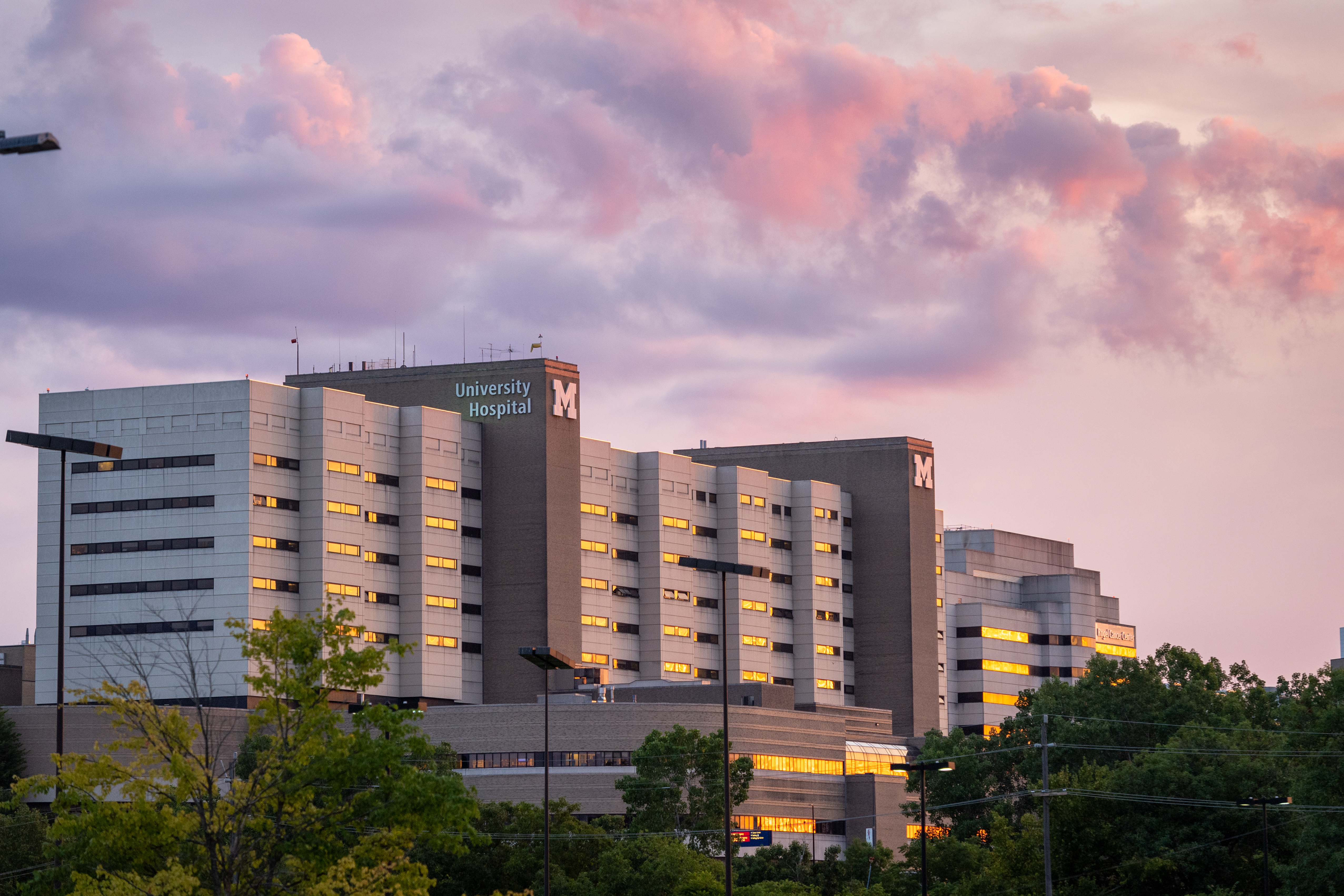
- Healthcare
- Tech and mobility
- Renewable energy
- Tourism and outdoor recreation
Detroit has reemerged as a hub for startups, arts, and culture. Small towns across the state have revitalized their downtowns. Michigan adapted again.
The Great Lakes: Michigan’s Greatest Asset
Michigan holds about 20% of the world’s surface freshwater and 95% of the U.S. supply. That isn’t just impressive, it’s strategically vital.
The Great Lakes support:
- Shipping and trade
- Drinking water
- Agriculture
- Tourism
- Wildlife ecosystems
As freshwater becomes more valuable globally, Michigan’s geography may be one of its greatest long-term advantages.

Michigan Today: A State That Still Builds Things
Today, Michigan is home to nearly 10 million people. It’s a state of contrasts:
- Big cities and quiet lakes
- Tech startups and century-old factories
- Snowy winters and world-class summer beaches
People come here for affordability, space, nature, and opportunity, and many stay because Michigan grows on you.
Why Michigan’s Past Still Matters Today
Michigan’s history explains:
- Why homes are built the way they are
- Why communities value independence and grit
- Why people here care deeply about place
- Why “Pure Michigan” isn’t just a slogan
The past isn’t gone, it’s visible everywhere.
Frequently Asked Questions About Michigan’s History
When did Michigan become a state?
Michigan became the 26th U.S. state on January 26, 1837.
Why is Michigan shaped the way it is?
Glaciers carved the land during the last Ice Age, forming the Great Lakes and Michigan’s peninsulas.
What was Michigan’s first major industry?
The fur trade, followed by timber, mining, and agriculture.
Why did Michigan become the auto capital?
Its access to raw materials, water transportation, and skilled labor made it ideal for manufacturing.
Was the Upper Peninsula always part of Michigan?
No. Michigan gained the U.P. after losing the Toledo Strip to Ohio.
How important are the Great Lakes to Michigan?
They are essential to Michigan’s economy, environment, and identity.
Who lived in Michigan before Europeans arrived?
Primarily Anishinaabe tribes, including the Ojibwe, Odawa, and Potawatomi.
What role did Michigan play in World War II?
Michigan was a major producer of military equipment and vehicles.
A Birthday Toast to Michigan
Michigan is imperfect. It always has been. But it’s also resilient, resourceful, and quietly special.
If you live here, you know it.
If you’ve left, it probably still pulls at you.
And if you’re thinking about moving here, now you understand the depth behind the place.
Happy Birthday, Michigan. 🎂
Thinking About Living in Michigan?
If Michigan’s history, lifestyle, or opportunities have you curious, and you’re thinking about moving to, from, or within the state, I help people do exactly that every day. No pressure, no sales pitch. Just real insight from someone who genuinely loves this place.
If Michigan is for you, you know where to find me!




An Expanded Brick Ranch in Madison Heights | …
Explore 28399 Palmer Blvd in Madison Heights,…
Michigan's FASTEST Growing Towns Are Losing Value (Here's …
Michigan is growing, but home prices are…