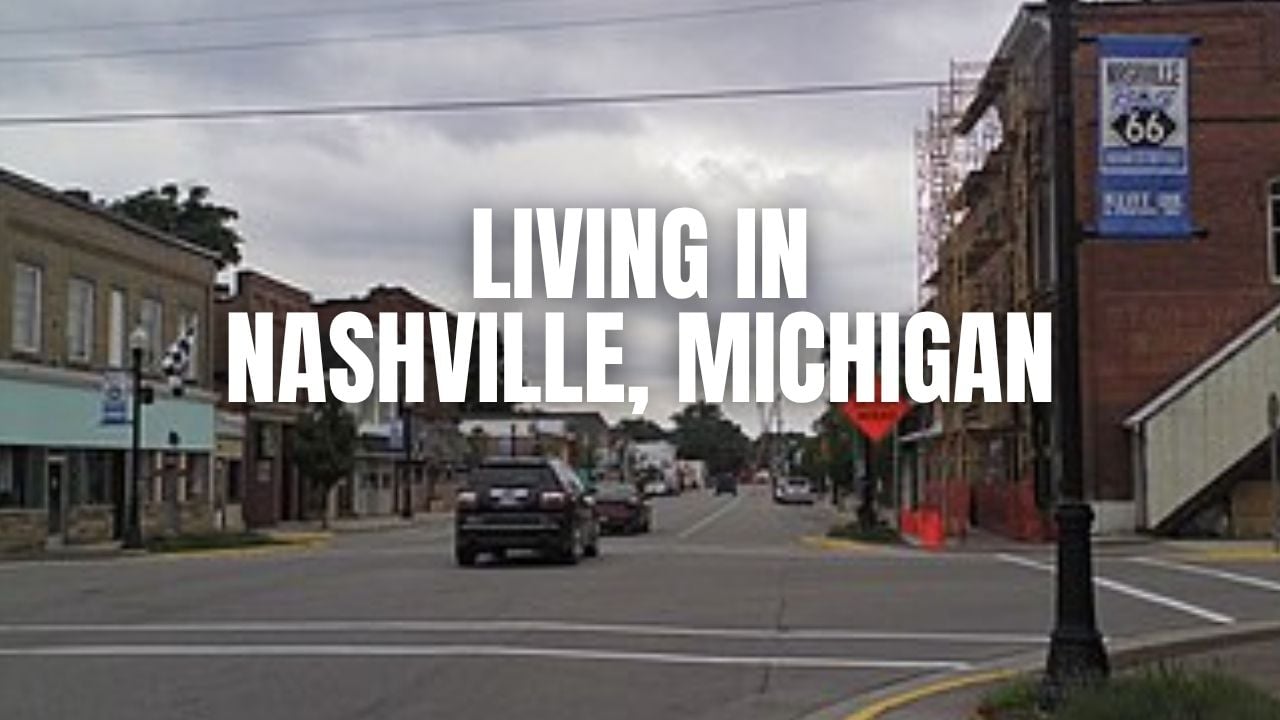
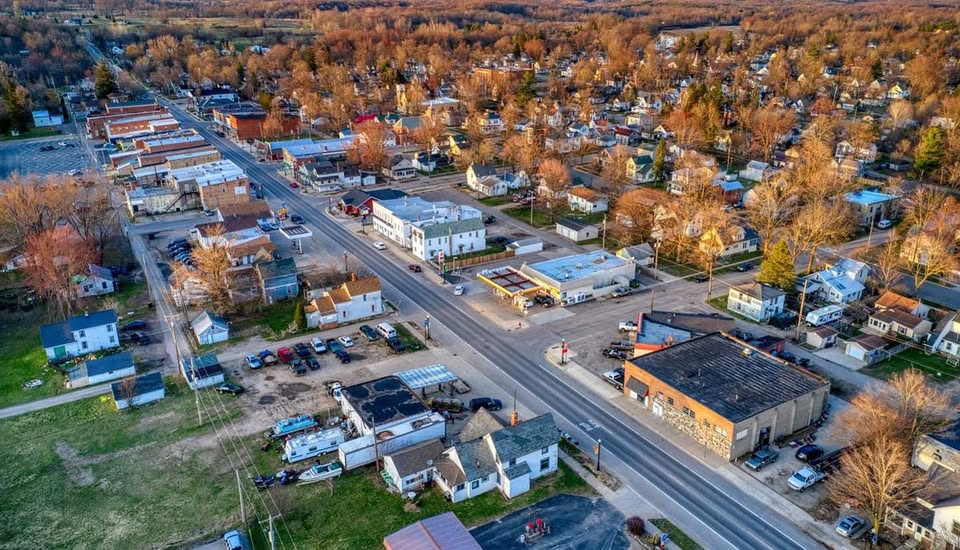
Living in Nashville Michigan offers a quiet, rural lifestyle centered around a small but historically rich village. With a population of just 1,537, Nashville provides a slower pace of life that appeals to buyers looking to get away from dense urban areas while still staying within driving distance of larger cities like Hastings, Battle Creek, and Lansing.
This village has deep roots tied to early settlement and railroad development, and today it maintains a close-knit community feel. Residents often appreciate the simplicity—local businesses, familiar faces, and minimal congestion are all part of daily life here.
That said, living here does come with trade-offs. Amenities are limited, with no chain grocery stores, hospitals, or major retail within the village. Most residents rely on nearby towns for essentials, making Nashville best suited for those comfortable with rural living and short commutes for services.
What Makes Nashville Different Than Other Places in Michigan?
Nashville stands out for its historical significance and its role as a transportation crossroads. Originally platted in 1836 and incorporated in 1869, the village played an important role in Michigan’s early railroad system. Starting in 1920, it served as a halfway stopping point between Jackson and Grand Rapids, where train crews would rest overnight.
Another defining feature is its location at the intersection of M-66 and M-79. M-66 is unique in that it runs the entire north-south length of Michigan’s Lower Peninsula, making Nashville a notable junction point.
The village is also partially located within two townships—primarily Castleton Township, with a small portion extending into Maple Grove Township. Additionally, Nashville has ongoing community improvements, including renovations to Putnam Park, which has been undergoing phased reopening since late 2025.
Cost of Living in Nashville
The cost of living in Nashville Michigan is generally lower than the national average. Using nearby Hastings as a reference point, the cost of living index is 94.2, which is approximately 5.8% below the U.S. average of 100.
While township- or village-specific cost data is not available for Nashville, the surrounding Barry County area is known for relatively affordable housing and everyday expenses compared to larger metropolitan regions. This makes Nashville appealing for buyers looking to stretch their budget further.
Real Estate & Housing Overview in Nashville
Housing Market Overview
The Nashville housing market is small and localized, reflecting the village’s population of just over 1,500 residents. Inventory tends to be limited, and homes may not turn over as frequently as in larger cities. Buyers should expect a slower-moving but steady market environment.
Types of Homes
Housing in Nashville primarily consists of single-family homes, many of which are situated on larger lots compared to suburban neighborhoods. The area reflects its agricultural roots, so it’s common to find properties with acreage or rural surroundings.
Price Range & Affordability
The median home price specific to Nashville village is not published by Zillow or Redfin. However, Zillow reports a typical home value of $199,966 for Nashville, MI as of 2026.
Based on this figure, entry-level homes may fall below that value, while mid-range properties align near the median. Higher-end homes—particularly those with more land or updated features—can exceed this benchmark. Buyers should note that these are approximations based strictly on the provided Zillow figure.
Market Activity
Market activity in Nashville tends to be stable but limited due to the small population and housing supply. Buyers may need to monitor listings closely, as available properties can be few at any given time.
Development Trends
There is no specific data available on large-scale residential or commercial development trends within Nashville. The village remains primarily residential and agricultural, with minimal expansion of commercial infrastructure.
Ownership Experience
Owning a home in Nashville offers a quieter lifestyle with fewer neighbors and less congestion. However, homeowners should plan for travel to nearby towns for essential services, shopping, and healthcare. This balance of privacy and inconvenience is a key consideration for prospective buyers.
Michigan Home For Sale Here With This Link - Browse available Michigan homes


Check Out the EXCLUSIVE "Living In Michigan" Apparel HERE
Living in Washington Township Michigan: Homes, Cost, Schools, …
Thinking about moving to Washington Township, Michigan?…
A Backyard Pool Retreat in Green Oak Township …
Explore 9925 Timothy Lane in Green Oak…