
Living in Madison Heights Michigan: The Metro Detroit Suburb More People Should Be Talking About
You can spend your Saturday morning climbing a rock wall, your Saturday afternoon exploring restaurants from around the world, and your Saturday evening relaxing in a brick ranch that was built before some of Metro Detroit's major highways even existed. All within roughly seven square miles.
Welcome to Madison Heights, Michigan, a small Oakland County suburb that has a whole lot more going on than you might expect.
When people start researching where to live in Metro Detroit, cities like Royal Oak, Troy, Birmingham, and Ferndale tend to dominate the conversation. Madison Heights doesn't always receive the same attention, which is interesting considering its location, relatively accessible housing prices, and impressive variety of restaurants and amenities.
But before you start browsing homes, there are a few things you should understand about Madison Heights. Property taxes can vary significantly depending on the address, school district boundaries aren't always obvious, and much of the housing stock is older. There are also some infrastructure considerations that deserve a closer look.
I'm Andrew McManamon, a Michigan Realtor and the creator of Living in Michigan. In this guide, we're covering what it's actually like living in Madison Heights, including home prices, neighborhoods, schools, property taxes, restaurants, parks, commuting, and the pros and cons of buying a home here.
That location is one of its biggest advantages. I-75 provides access toward downtown Detroit and Troy, while I-696 connects communities across the northern Detroit suburbs. Whether you're commuting for work, visiting friends, or heading out for the weekend, having both highways nearby can make a difference.
Madison Heights borders Troy to the north, Royal Oak to the west, Hazel Park to the south, and Warren to the east. Ferndale, Clawson, and downtown Royal Oak are also nearby.
Under typical driving conditions, downtown Detroit may be around 20 minutes away, while Detroit Metropolitan Wayne County Airport is approximately 27 miles from Madison Heights. Actual travel times depend heavily on your starting address, traffic, weather, and construction. Anyone familiar with I-75 during rush hour knows that a 20-minute commute can become a completely different adventure.
For buyers relocating to Southeast Michigan, Madison Heights is worth considering because it provides access to multiple employment centers without requiring you to live directly in one of the region's more expensive downtown districts.
A Brief History of Madison Heights Michigan
Madison Heights officially became a city in 1955 after separating from Royal Oak Township. Its development was closely connected to the enormous growth Metro Detroit experienced during and after World War II.
As the automotive industry expanded, workers and returning veterans needed housing. Communities throughout Oakland and Macomb counties experienced a wave of residential construction, and Madison Heights was no exception.
That history explains why you'll find so many ranch homes throughout the city. The classic postwar brick ranch wasn't designed to be flashy. It was practical, relatively affordable, and built for everyday living.
Madison Heights also has an interesting connection to the art world. Robert Wyland, the marine-life artist known for his enormous whale murals, grew up in Madison Heights. His work is represented locally at Lamphere High School.
Today, Madison Heights has a population of roughly 28,000 residents, combining established residential neighborhoods with busy commercial corridors and convenient regional access.

What Are Homes Like in Madison Heights Michigan?
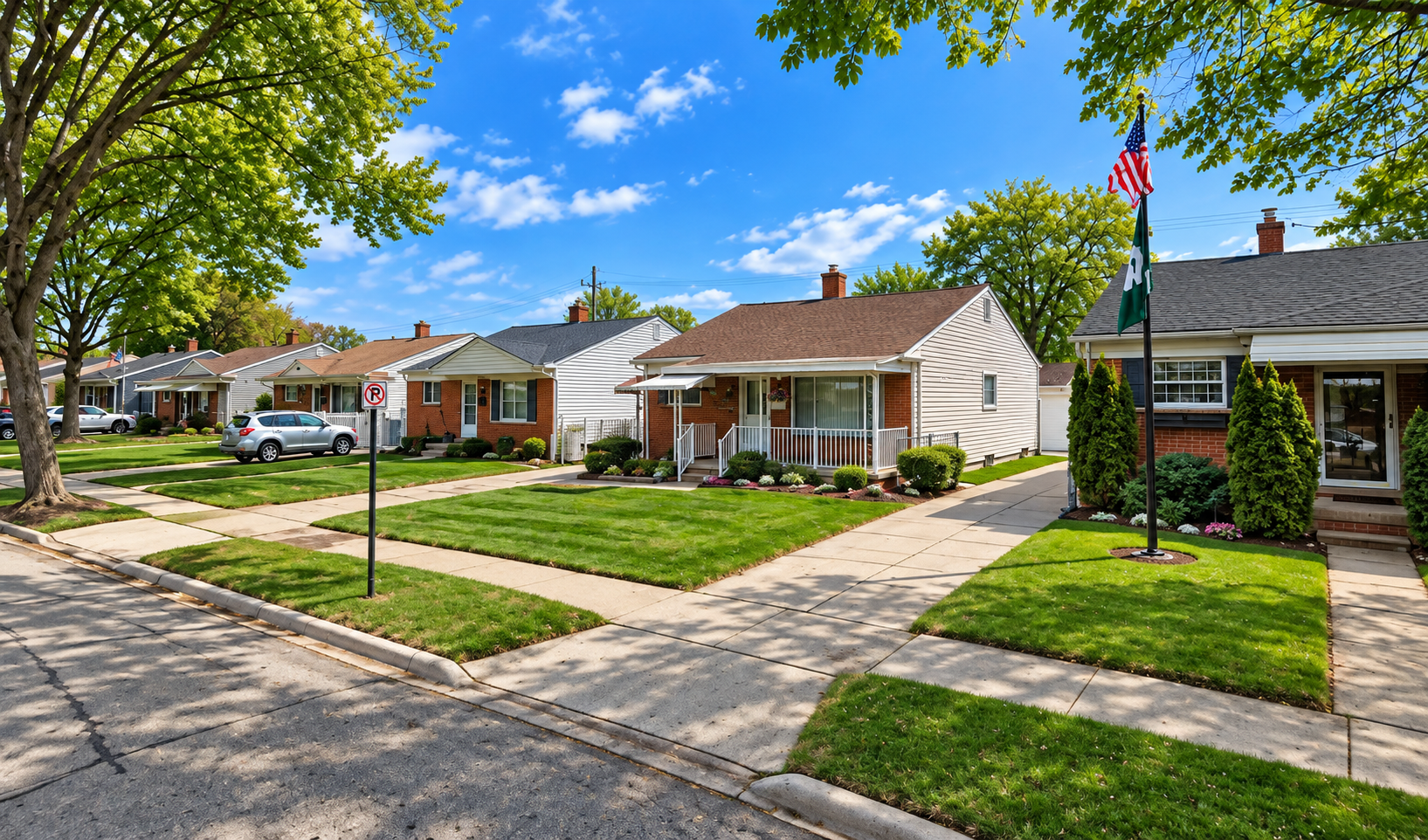
If you've spent time browsing Madison Heights real estate, you've probably noticed one architectural style appearing again and again: the brick ranch.
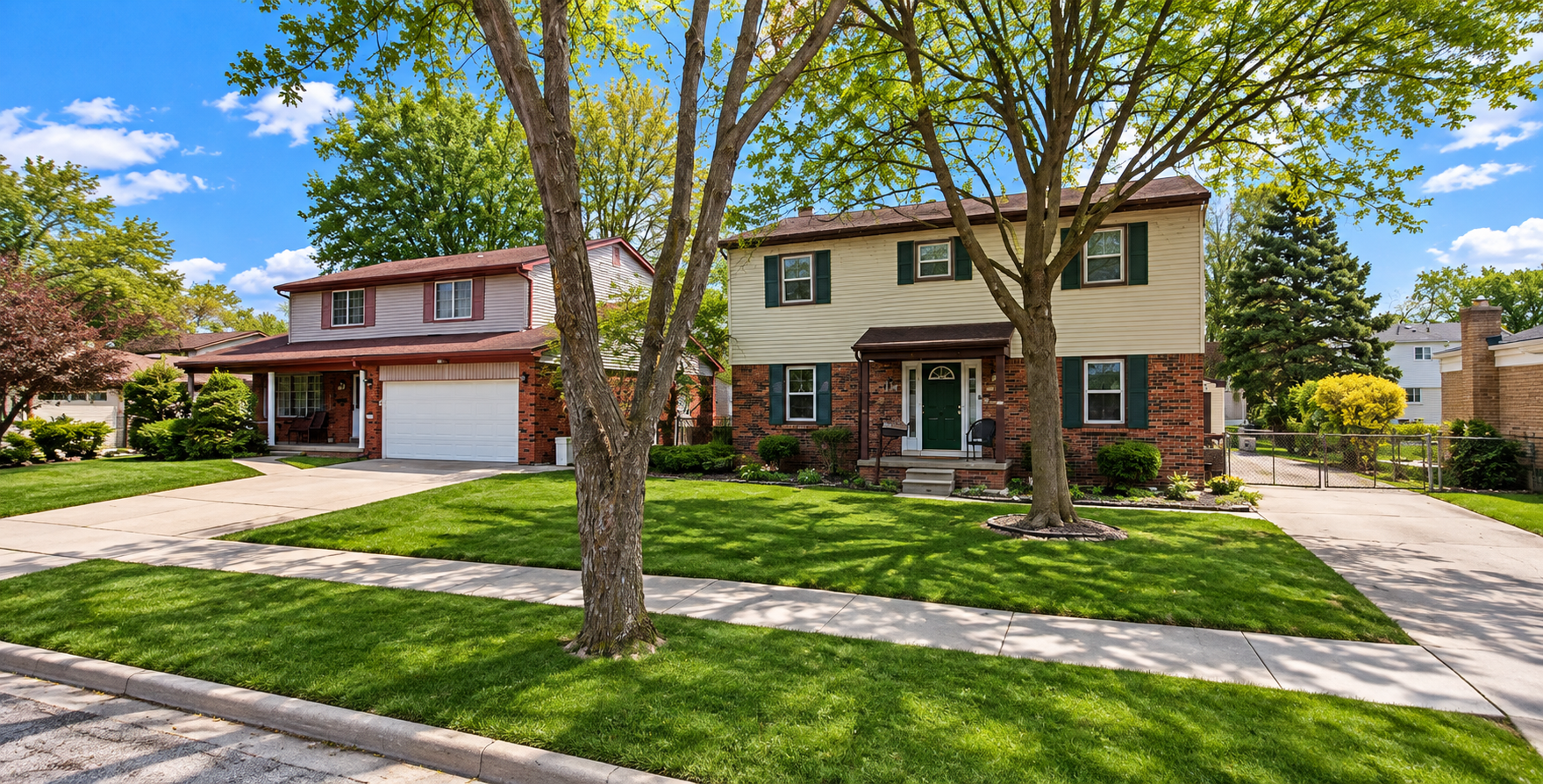
Many homes were constructed during the 1940s, 1950s, and 1960s. You'll also encounter bungalows, Cape Cod homes, colonials, and some newer housing developments, but the postwar ranch is a defining feature of the city's residential landscape.
These homes frequently offer practical layouts, established yards, basements, and relatively manageable square footage. Depending on the property, you may find original hardwood flooring, detached garages, updated kitchens, or finished lower levels.
One of the appealing aspects of Madison Heights is that you can find established residential streets with mature trees while remaining close to shopping, restaurants, and major roads.
Of course, older housing comes with tradeoffs. A beautiful brick exterior doesn't automatically mean the mechanical systems have been updated. Roof age, electrical panels, plumbing, sewer lines, insulation, basement moisture, and previous renovations all deserve attention.
When touring a Madison Heights home, I would pay particular attention to the condition of the sewer line, the age and material of the water service line, the electrical system, and any evidence of previous basement water intrusion. A sewer scope and a qualified home inspection can provide useful information before you commit to the purchase.
Madison Heights Michigan Home Prices and Real Estate Market
One of the biggest reasons buyers consider Madison Heights is its housing affordability relative to several nearby Oakland County communities.
According to the MLS snapshot used for this guide, Madison Heights had a median home sale price of approximately $230,000, compared with roughly $282,500 across the broader MLS market. That's a difference of more than $50,000.
Those figures are a snapshot rather than a guarantee of what homes are selling for today. Prices can change, and the broader MLS includes communities with very different housing types and price points. Still, the comparison helps illustrate why Madison Heights often attracts attention from buyers researching more accessible entry points into Oakland County.
The same market snapshot showed homes spending an average of approximately 24 days on the market, compared with around 40 days across the broader MLS. Inventory was also below two months of supply.
What does that mean if you're buying? Well-priced, well-maintained homes may attract interest quickly, especially when inventory is limited. But that doesn't mean every home deserves an aggressive offer or that buyers should waive important protections.
For sellers, a relatively competitive market can be encouraging, but pricing, condition, presentation, and comparable sales still matter. An outdated home requiring substantial repairs should not automatically be priced like a fully renovated property simply because both have three bedrooms.
If you're considering buying in Madison Heights, look at recent comparable sales within the same general area, with similar home styles, sizes, conditions, and features. Citywide medians are helpful for understanding the market, but they're not a substitute for evaluating an individual property.
Madison Heights Property Taxes: What Homebuyers Need to Know
Here's where I want you to pay especially close attention, because this is one of the biggest mistakes people make when buying a home in Michigan.
They find a house they love, look at the current owner's property tax bill, and assume they'll pay approximately the same amount after closing.
That assumption can be expensive.
Michigan uses a taxable value system, and the taxable value of a property can become uncapped following a qualifying transfer of ownership. Generally, that adjustment occurs in the calendar year after the transfer.
In other words, a seller who has owned a home for 25 years may have a taxable value significantly below its current assessed value. After you purchase that home, your future tax bill could be substantially higher.
Madison Heights adds another layer because properties fall within different school districts, including Lamphere Public Schools, Madison District Public Schools, and portions associated with Royal Oak Schools. School-related millages can affect the total property tax rate applicable to a specific address.
The MLS research used for this guide identified approximate principal-residence millage rates of 46.3 mills for the Royal Oak school district portion, 48.8 mills for Madison District, and 57.9 mills for Lamphere. These are reference figures from the research, not verified current tax quotes. Actual rates and exemptions should always be checked for the particular property and tax year.
To illustrate the difference, suppose a property's taxable value after uncapping is $115,000. At 46.3 mills, the annual tax calculation would be approximately $5,325. At 57.9 mills, it would be approximately $6,659. That's more than $1,300 annually in this simplified example.
However, you should not assume a $230,000 purchase price automatically creates a $115,000 taxable value. Michigan assessments are determined independently of the sale price, and the property's assessed value, taxable value, exemptions, and applicable millages must be considered.
Before purchasing, verify the property's parcel information, school district, current assessed value, current taxable value, principal residence exemption status, and projected taxes after a transfer. The City of Madison Heights assessing and treasury offices and Michigan's property tax resources can help you evaluate those figures.
This is especially important for relocation buyers who may be accustomed to a completely different property tax system in another state.
Schools in Madison Heights Michigan
Another detail that surprises people is that Madison Heights is not served by one single school district.
Much of the city falls within Lamphere Public Schools or Madison District Public Schools, while portions are associated with Royal Oak Schools.
These districts have different attendance boundaries, school buildings, academic programs, extracurricular opportunities, and financial structures. You cannot assume that two homes a few blocks apart are assigned to the same district.
In the Niche ratings referenced during the research for this guide, Royal Oak Schools received an A-minus overall grade, Lamphere Public Schools received a B, and Madison District Public Schools received a C-minus. These are third-party ratings that can change and should be considered alongside the underlying data rather than treated as definitive measures of educational quality.
For buyers comparing schools, I recommend reviewing Michigan's official school performance information, graduation data, academic programs, transportation options, and district enrollment policies.
Most importantly, confirm school assignments directly with the district before purchasing a home. Real estate listing descriptions and online maps are not always definitive.
Restaurants and Food in Madison Heights Michigan
Now we get to one of my favorite things about Madison Heights: the food.
For a city covering just over seven square miles, Madison Heights has an impressive variety of restaurants, specialty markets, bakeries, and international cuisines.
The John R Road corridor, in particular, is worth exploring if you enjoy discovering different restaurants and grocery stores. You'll find dining options representing a wide range of culinary traditions, including Vietnamese, Chinese, Korean, Japanese, and other cuisines.
Madison Heights doesn't necessarily offer the same walkable downtown restaurant district that you'll find in Royal Oak or Ferndale. Instead, its dining scene is distributed along commercial corridors, shopping plazas, and individual restaurant locations.
That's an important difference. If you want to park once and spend an evening walking between restaurants, boutiques, and bars, you may prefer a traditional downtown district. If you enjoy having a wide selection of places to eat within a short drive, Madison Heights has plenty to explore.
And because Royal Oak, Ferndale, Clawson, and Troy are nearby, residents can also take advantage of the larger Metro Detroit dining scene without traveling very far.
Things to Do in Madison Heights Michigan
Madison Heights offers more recreation opportunities than you might expect from a relatively compact suburb.
Planet Rock is one of the area's recognizable indoor attractions, offering climbing opportunities for people with different experience levels. Whether you're interested in trying something new or already enjoy rock climbing, it's an alternative to the usual gym routine.
The city also has public parks, recreational facilities, and convenient access to additional Oakland County destinations.
One of the biggest local projects is the transformation of the former Ambassador Park into Red Oaks Park. Oakland County Parks invested approximately $7.1 million into the seven-acre property, including the McGillivray Play Garden, playground improvements, hammocks, restroom facilities, shaded gathering spaces, and improvements to the sledding hill.
The park's grand opening is scheduled for October 30, 2026, with the county planning a community celebration. If you're reading this guide later, check Oakland County Parks for the latest operating information.
Madison Heights also provides convenient access to the Red Oaks Nature Center and other recreation destinations throughout Oakland County.
And if you're looking for a change of scenery, downtown Royal Oak and the Detroit Zoo are only a short drive away.
Commuting and Getting Around Madison Heights
Location is one of Madison Heights' strongest practical advantages, but it comes with a tradeoff.
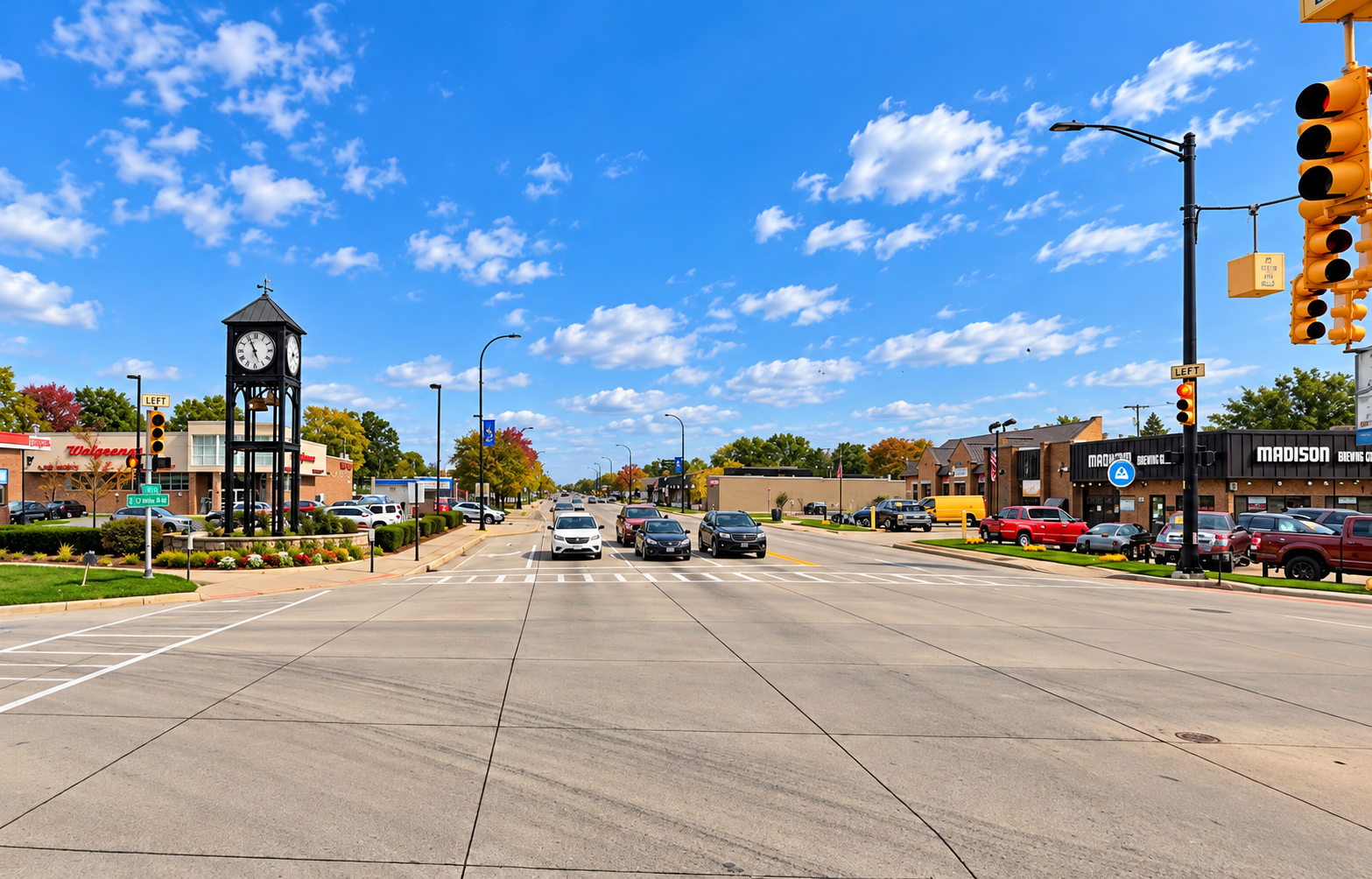
With I-75 and I-696 nearby, the city provides relatively direct driving access to downtown Detroit, Troy, Southfield, Warren, and other major employment centers.
However, the highways can experience heavy congestion, particularly during morning and evening commuting periods. Construction projects and interchange traffic can also affect travel times.
Madison Heights is largely car-oriented. While individual neighborhoods have sidewalks and some destinations may be walkable depending on the address, many errands and commutes will be more convenient by vehicle.
If walkability matters to you, don't rely solely on a city's overall walkability score. Visit the specific home you're considering, identify the destinations you'd regularly use, and see whether the routes actually work for your lifestyle.
For anyone commuting to Detroit, Troy, Warren, or Southfield, I also recommend testing the route during the hours you would normally travel. A commute that looks great on a Sunday afternoon can feel very different at 8 a.m. on a Tuesday.
Water Quality and Older Infrastructure in Madison Heights
There's another important consideration that deserves its own section: water infrastructure.
In October 2025, Madison Heights received notice from the Michigan Department of Environment, Great Lakes, and Energy that its drinking water sampling had exceeded the state's lead action level.
The city collected samples from 30 homes with lead service lines, and seven of those sampling locations exceeded the action level. The city's reported 90th percentile lead result was 18 parts per billion, compared with the state's action level of 12 parts per billion.
It's important to understand what that means. The samples came from homes with lead service lines and do not establish that every home in Madison Heights has elevated lead levels. However, the findings are a legitimate reason for buyers to investigate the water service line and plumbing materials at any property they're considering.
Madison Heights purchases drinking water from the Great Lakes Water Authority. According to the city, the concern involves lead entering water through individual service lines and plumbing components rather than lead in the original water source.
The city has been replacing lead service lines and conducting additional monitoring. If you're purchasing an older home, ask the seller about the service line material, check available city records, and contact the city's water department if further verification is needed.
Water and sewer costs are another part of homeownership worth budgeting for. For bills processed beginning July 1, 2026, Madison Heights lists a water rate of $5.01 per unit and a wastewater rate of $7.29 per unit. One billing unit represents 100 cubic feet, or approximately 748 gallons. Residential customers are billed quarterly, with minimum billing requirements.
Those rates are separate from your property taxes and mortgage payment, so include them when estimating the total cost of living in Madison Heights.
The Pros of Living in Madison Heights Michigan
The biggest advantage of Madison Heights is the combination of location and housing options. Buyers can explore established Oakland County neighborhoods while remaining close to major highways, shopping, restaurants, and neighboring downtown districts.
Compared with some nearby communities, Madison Heights may offer a lower entry price for certain types of homes. Its postwar housing stock also provides opportunities for buyers interested in ranch layouts, basements, established neighborhoods, and renovation potential.
The restaurant scene is another standout feature, particularly for anyone who enjoys trying different cuisines. Add in nearby recreational attractions and ongoing park improvements, and the city offers more amenities than its size might suggest.
And while Madison Heights doesn't have the same traditional downtown identity as Royal Oak or Ferndale, its central location makes it relatively convenient to enjoy those communities without necessarily paying their typical housing prices.
The Cons of Living in Madison Heights Michigan
Madison Heights isn't going to be the right fit for every buyer, and that's perfectly fine.
First, property taxes deserve careful attention. School district boundaries and millage differences mean you need to evaluate taxes by address, not simply by city.
Second, the housing stock is relatively old. That can mean attractive architectural features and established neighborhoods, but it can also mean maintenance, updates, and unexpected repair expenses.
Third, Madison Heights is a fairly developed inner-ring suburb. If you're searching for multiple acres, newer subdivisions with expansive lots, or a more rural setting, you'll likely want to compare communities farther from Detroit.
Fourth, being close to two major interstates doesn't mean you'll avoid traffic. Depending on the property, highway noise, busy commercial roads, and congestion may be important considerations.
Finally, the city doesn't have the same concentrated, pedestrian-oriented downtown district as some of its neighbors. That isn't necessarily a disadvantage if you prefer driving to restaurants and stores, but it's worth understanding before relocating.
Madison Heights vs Royal Oak, Ferndale, Troy and Hazel Park
One of the best ways to understand Madison Heights is to compare it with the communities surrounding it.
Royal Oak is known for its established neighborhoods, restaurants, entertainment, and active downtown. Madison Heights generally offers a different housing mix and a less centralized entertainment district, but residents can still reach downtown Royal Oak relatively easily.
Ferndale has a recognizable downtown along Woodward Avenue, with shops, restaurants, and an active local business scene. Madison Heights is more oriented around commercial corridors and convenient driving access than a single downtown destination.
Troy offers extensive shopping, employment centers, and a broad range of housing developments. Madison Heights tends to have a more compact, older residential housing stock, with many smaller ranch-style homes.
Hazel Park, immediately south of Madison Heights, is another community buyers frequently compare when searching for established homes near Detroit. Housing prices, lot sizes, property taxes, and available inventory should be compared at the individual property level rather than assuming one entire city is automatically less expensive.
The right choice depends on your priorities. If you value a traditional downtown, that may steer you in one direction. If you prioritize highway access, a particular home style, or your overall monthly housing budget, your search may lead somewhere else.
What Should You Check Before Buying a House in Madison Heights?
Before writing an offer on a Madison Heights home, I recommend doing more than comparing the asking price with recent sales.
Start by confirming the property's school district and estimating the property taxes after ownership transfers. Review the seller's disclosures, ask about previous water intrusion, and look into the age of the roof, furnace, air conditioning, and water heater.
For older properties, consider a sewer scope and investigate the water service line material. If the house has an older electrical panel, have a qualified inspector or electrician evaluate it. Also review the condition of the foundation, drainage, and any basement renovations.
Spend time around the property at different times of day. Check traffic, parking, nearby commercial activity, highway noise, and your actual commuting route.
Finally, understand what you're purchasing. A renovated kitchen is great, but the plumbing, electrical systems, foundation, and roof are usually much more expensive to address than cosmetic finishes.
Is Madison Heights Michigan a Good Place to Live?
Madison Heights deserves a serious look if you're comparing Oakland County communities and want access to Metro Detroit's employment centers, restaurants, recreation, and established residential neighborhoods.
Its combination of older brick homes, convenient highways, and nearby amenities makes it a practical option for many different housing searches.
But I wouldn't recommend buying here, or anywhere else in Michigan, based solely on an attractive asking price. You need to understand the actual property taxes, maintenance requirements, location, and long-term ownership costs.
That's what separates finding a house you can afford to purchase from finding one that makes sense for your finances and lifestyle.
Frequently Asked Questions About Living in Madison Heights Michigan
Where is Madison Heights Michigan located?
Madison Heights is located in Oakland County, north of Detroit. It borders Troy, Royal Oak, Hazel Park, and Warren and sits near the intersection of I-75 and I-696.
How far is Madison Heights from downtown Detroit?
Madison Heights is approximately 13 miles north of downtown Detroit. Driving often takes around 20 minutes under favorable conditions, although rush-hour traffic and construction can significantly increase travel time.
Is Madison Heights Michigan affordable?
Madison Heights can offer relatively accessible housing prices compared with certain neighboring Oakland County communities. A market snapshot used for this guide showed a median sale price of approximately $230,000, but current prices depend on market conditions, property size, location, and condition. Buyers should also consider taxes, insurance, utilities, and maintenance.
What is the average home price in Madison Heights Michigan?
The median sale price in the MLS snapshot referenced for this article was approximately $230,000. This is a historical market snapshot, not a live estimate. Review current closed sales for the most accurate picture of today's housing market.
Are property taxes high in Madison Heights Michigan?
Property taxes vary by address, taxable value, school district, exemptions, and applicable millages. Some areas have meaningfully different total millage rates. Buyers should estimate taxes after the taxable value uncaps rather than relying on the seller's current tax bill.
Why can property taxes increase after buying a home in Michigan?
Michigan generally limits annual increases in taxable value while a qualifying owner holds a property. Following most ownership transfers, taxable value uncaps in the following calendar year and is reset according to the property's assessed value. This can result in a higher tax bill for the new owner.
What school districts serve Madison Heights Michigan?
Madison Heights includes areas served by Lamphere Public Schools, Madison District Public Schools, and Royal Oak Schools. Confirm the exact district and school assignments for any property directly with the appropriate school district.
Does Madison Heights Michigan have a downtown?
Madison Heights does not have the same concentrated, traditional downtown district as Royal Oak or Ferndale. Its businesses, restaurants, and shopping destinations are distributed along commercial corridors, including John R Road and other major roads.
What types of houses are common in Madison Heights?
Brick ranch homes are especially common, reflecting the city's postwar development. Buyers can also find bungalows, Cape Cod homes, colonials, and some newer housing options.
Is Madison Heights a good location for commuting?
Madison Heights offers convenient access to I-75 and I-696, making it possible to commute to many Metro Detroit employment centers. However, actual commute times depend on traffic, construction, weather, and the property's location.
What are some things to do in Madison Heights Michigan?
Local recreation options include Planet Rock, Red Oaks Park, and other parks and recreational facilities. Nearby destinations include downtown Royal Oak, the Detroit Zoo, and restaurants and attractions throughout southeastern Oakland County.
Is Madison Heights Michigan walkable?
Walkability varies considerably by neighborhood and destination. Many residential streets have sidewalks, but the city is largely car-oriented, and major shopping and entertainment destinations are spread across several commercial corridors.
Does Madison Heights Michigan have lead water pipes?
Some properties have or have had lead service lines. In 2025, the city reported elevated lead results from sampling at certain homes with lead service lines. Buyers should verify the service line material at the specific property and review the city's current water quality and replacement information.
What should I inspect when buying an older home in Madison Heights?
Pay close attention to roofing, electrical systems, plumbing, sewer lines, water service lines, foundations, basement moisture, heating and cooling equipment, and any previous renovations. A qualified home inspector can help identify areas requiring additional specialist evaluations.
Is Madison Heights cheaper than Royal Oak or Troy?
Madison Heights has historically offered lower-priced housing options than many properties in Royal Oak and Troy, especially when comparing smaller postwar homes with larger or newer housing. However, pricing varies substantially, so compare similar homes and current closed sales rather than relying solely on citywide averages.
Is Madison Heights a good place to buy a first home?
Madison Heights may be worth exploring for buyers seeking smaller homes, established neighborhoods, and access to Oakland County amenities. The right decision depends on the buyer's budget, financing, property condition, taxes, and long-term goals. Older homes may also require additional maintenance planning.
Is Madison Heights Michigan a good real estate investment?
Investment potential depends on purchase price, financing, rental demand, maintenance costs, property taxes, and local regulations. Madison Heights' location and established housing stock may be worth evaluating, but no city guarantees appreciation or rental returns. Investors should review property-specific numbers before purchasing.
Thinking About Moving to Madison Heights Michigan?
Whether you're relocating from another state, moving across Metro Detroit, buying your first home, or considering selling a property in Oakland County, I'd be happy to help you understand the market and evaluate your options.
I'm Andrew McManamon, a Michigan Realtor and the creator of Living in Michigan. I help buyers, sellers, and people relocating to Southeast Michigan navigate everything from home prices and property taxes to neighborhood comparisons and the actual process of moving.
You can also get my free 74-page Michigan Relocation Guide, which covers many of the important details worth understanding before making a move. And if you enjoy learning about Michigan communities, check out the Living in Michigan newsletter for additional real estate insights and local information.
Madison Heights may not always be the first Oakland County suburb people mention, but depending on what you're looking for, it absolutely deserves a spot on your list.
Market statistics reflect the research snapshot supplied for this guide and may have changed. Tax rates, school assignments, public improvements, and utility rates should be independently verified before making a purchasing decision.

Check Out the EXCLUSIVE "Living In Michigan" Apparel HERE
Living in Madison Heights Michigan: Homes, Taxes, Schools …
Madison Heights might be one of Metro…
Living in Pleasant Ridge Michigan: The Tiny City …
Discover what makes Pleasant Ridge, Michigan unique,…
Living in Utica Michigan: What You Need to …
Discover what it's like living in Utica,…