
There is a tiny city along Woodward Avenue in Oakland County that has spent decades protecting its identity, from fighting a major freeway project to regulating short-term rentals in its residential neighborhoods.
It covers just 0.57 square miles, has roughly 2,600 residents, and sits between some of Metro Detroit's most recognizable inner-ring suburbs. Yet despite its size, Pleasant Ridge, Michigan, has two historic districts, distinctive architecture, its own community pool, parks, and a housing market where a century-old colonial can command well over a million dollars.
And if you're considering moving to Pleasant Ridge, there's a lot more to understand than its location or the price of the homes.
This location is one of Pleasant Ridge's biggest advantages. You can live in a relatively small residential community while remaining close to several of Metro Detroit's major restaurant districts, employment centers, and entertainment destinations.
Downtown Ferndale is just south along Woodward, while Downtown Royal Oak is a short drive north. Depending on traffic, Downtown Detroit may be roughly 15 to 25 minutes away.
Of course, those times vary depending on traffic and road construction, particularly around I-696 and Woodward Avenue.
One of Michigan's Smallest Incorporated Cities
Pleasant Ridge covers approximately 0.57 square miles and recorded a population of 2,627 in the 2020 United States Census.
That makes it one of Michigan's smallest incorporated cities by land area.
Unlike larger suburbs such as Royal Oak or Southfield, Pleasant Ridge has a very limited geographic footprint. There are no sprawling new subdivisions or large undeveloped areas waiting to become neighborhoods.
Much of the community is already built out, and its residential streets are defined by established homes, mature trees, sidewalks, and architecture dating back more than a century.
That limited space also plays a major role in the real estate market. When a city is this small, there simply aren't as many properties available to buy.
The History Behind Pleasant Ridge Michigan
Pleasant Ridge's story began in the early twentieth century when the surrounding Woodward corridor was transitioning from farmland into residential communities.
In 1913, developer Burt Taylor subdivided land that had been part of the Mayday farm, helping establish the neighborhood that would eventually become Pleasant Ridge.
The community developed as a village before incorporating as a city in 1927.
Its early development coincided with the growth of Detroit's automobile industry and the increasing popularity of suburban living along Woodward Avenue.
Over time, Pleasant Ridge became known for its residential architecture, established streetscapes, and distinctive neighborhood character.
One unusual part of the city's history was Hedge's Wigwam, a Native American-themed restaurant that operated along Woodward Avenue from 1927 until 1967. It became a recognizable roadside landmark during an era when Woodward was one of the region's most important travel corridors.
But perhaps the most revealing chapter in Pleasant Ridge's history involved something much larger than a restaurant or subdivision.
The Interstate 696 Battle That Helped Define Pleasant Ridge
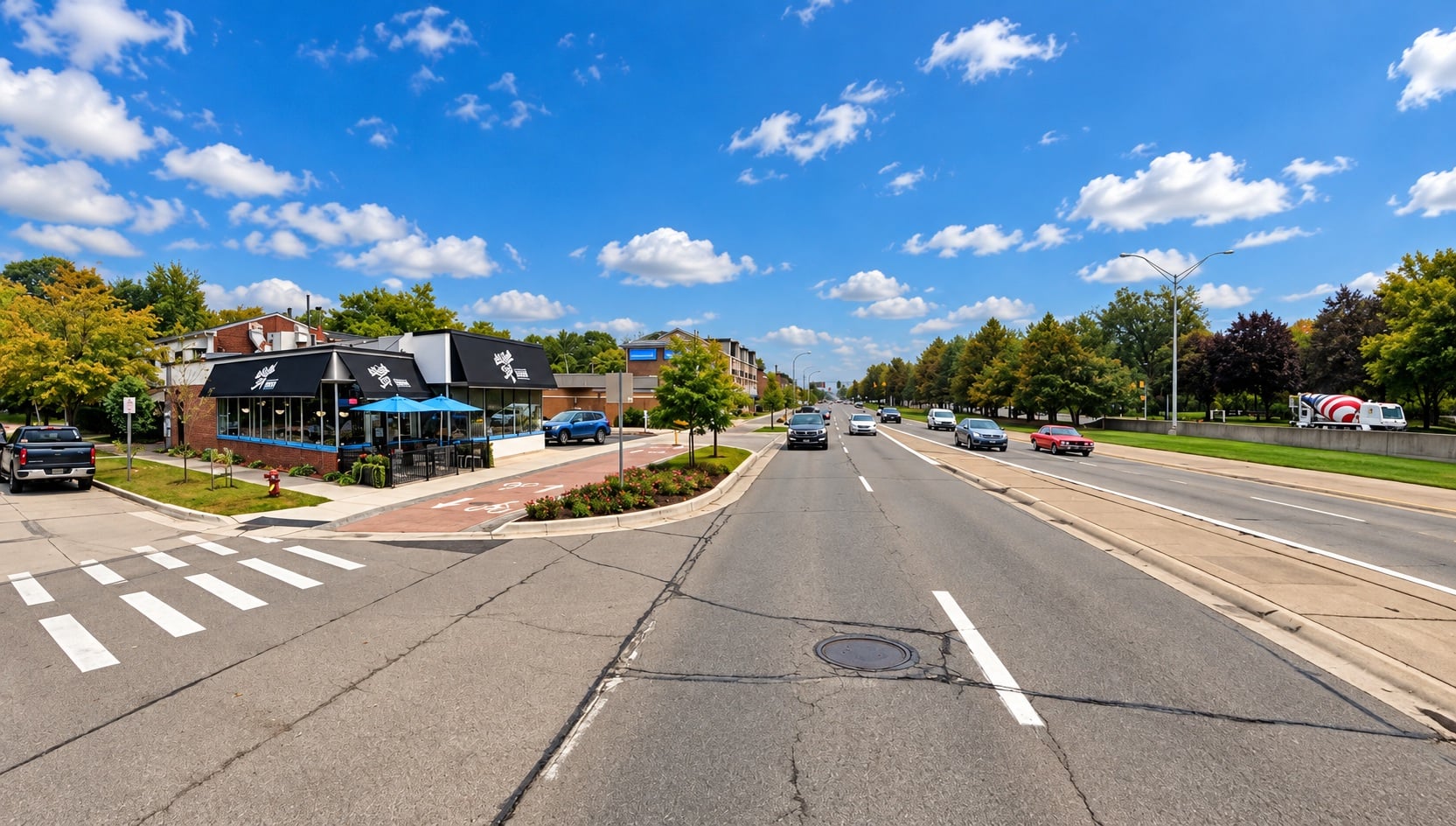
During the planning and development of Interstate 696, Pleasant Ridge became involved in a long-running dispute over the freeway's route and its effects on the community.
The proposed highway threatened to change the surrounding residential environment, and local opposition became part of the broader history of the project.
Interstate 696 was eventually constructed along Pleasant Ridge's northern edge.
Today, that highway provides important regional access, but it also creates a physical boundary and introduces traffic noise considerations for some nearby properties.
The freeway dispute is an important part of Pleasant Ridge's history because it illustrates how strongly local land-use decisions can affect a community this small.
That same attention to neighborhood character is still visible in the city's historic preservation efforts and more recent zoning policies.
Two Historic Districts With Distinct Architectural Styles
One of the biggest reasons Pleasant Ridge stands out from other Metro Detroit suburbs is its architecture.
The city contains two separate historic districts listed on the National Register of Historic Places, one west of Woodward Avenue and another east of Woodward.
Both areas contain homes built primarily during the early twentieth century, but the architectural styles, lot sizes, and housing characteristics vary.
This is not the type of suburb where every house was constructed by the same builder over a five-year period.
Instead, you'll find a collection of historic homes with different floor plans, exterior materials, architectural details, and levels of renovation.
The Pleasant Ridge Historic District West of Woodward
The historic district west of Woodward Avenue was added to the National Register of Historic Places in 1992 and expanded in 2010.
Many homes in this portion of Pleasant Ridge were constructed between approximately 1910 and 1930.
Architectural styles include Colonial Revival, Tudor Revival, Dutch Colonial, French Eclectic, and Craftsman designs.
Some properties feature larger floor plans, substantial architectural detailing, and more generous lot sizes than you might expect from a city covering less than one square mile.
Original woodwork, brick exteriors, decorative masonry, distinctive rooflines, and mature landscaping contribute to the area's historic appearance.
However, buyers should remember that architectural character and property condition are two different things.
A beautifully preserved exterior does not automatically mean the electrical system, plumbing, foundation, windows, or mechanical equipment has been modernized.
The Historic Neighborhoods East of Woodward
East of Woodward Avenue is another historic district, added to the National Register in 2007.
This area includes homes constructed during the 1920s and 1930s, with architectural styles such as Colonial Revival, English Cottage, bungalow, and Craftsman.
Many properties have more modest floor plans and lot sizes than some of the larger historic homes west of Woodward.
For buyers interested in Pleasant Ridge but not necessarily searching for a large estate, this portion of the city may offer different housing options.
Of course, prices depend on the individual property, condition, square footage, location, and recent comparable sales.
The important takeaway is that Pleasant Ridge contains more architectural variety than its small size might suggest.
The Pleasant Ridge Real Estate Market
Buying a home in Pleasant Ridge is different from searching in a much larger Oakland County community.
There are relatively few homes in the city, and the housing stock is predominantly established rather than newly constructed.
That means buyers may need to be patient when searching for a particular combination of bedrooms, bathrooms, garage space, lot size, and architectural style.
It also means that market statistics can fluctuate considerably when only a small number of properties sell during a given month.
Instead of looking exclusively at a citywide median, it's important to compare similar homes within the same market segment.
Home Prices in Pleasant Ridge Michigan
According to the local MLS snapshot used for this guide, Pleasant Ridge had a reported median sale price of approximately $473,500, compared with approximately $282,500 across the broader MLS market.
That same analysis showed a reported year-over-year median increase of approximately 7.6% in Pleasant Ridge, compared with 4.6% across the broader market.
These figures are a historical market snapshot rather than a live estimate of today's property values.
Because Pleasant Ridge has relatively few sales, changes in the types of properties sold can influence its median substantially. A few larger historic homes selling during one reporting period can push the median higher without necessarily indicating that every comparable property has appreciated at the same rate.
For buyers and sellers, individual comparable sales generally provide a more useful starting point than the citywide median alone.
From Smaller Colonials to Million Dollar Historic Homes
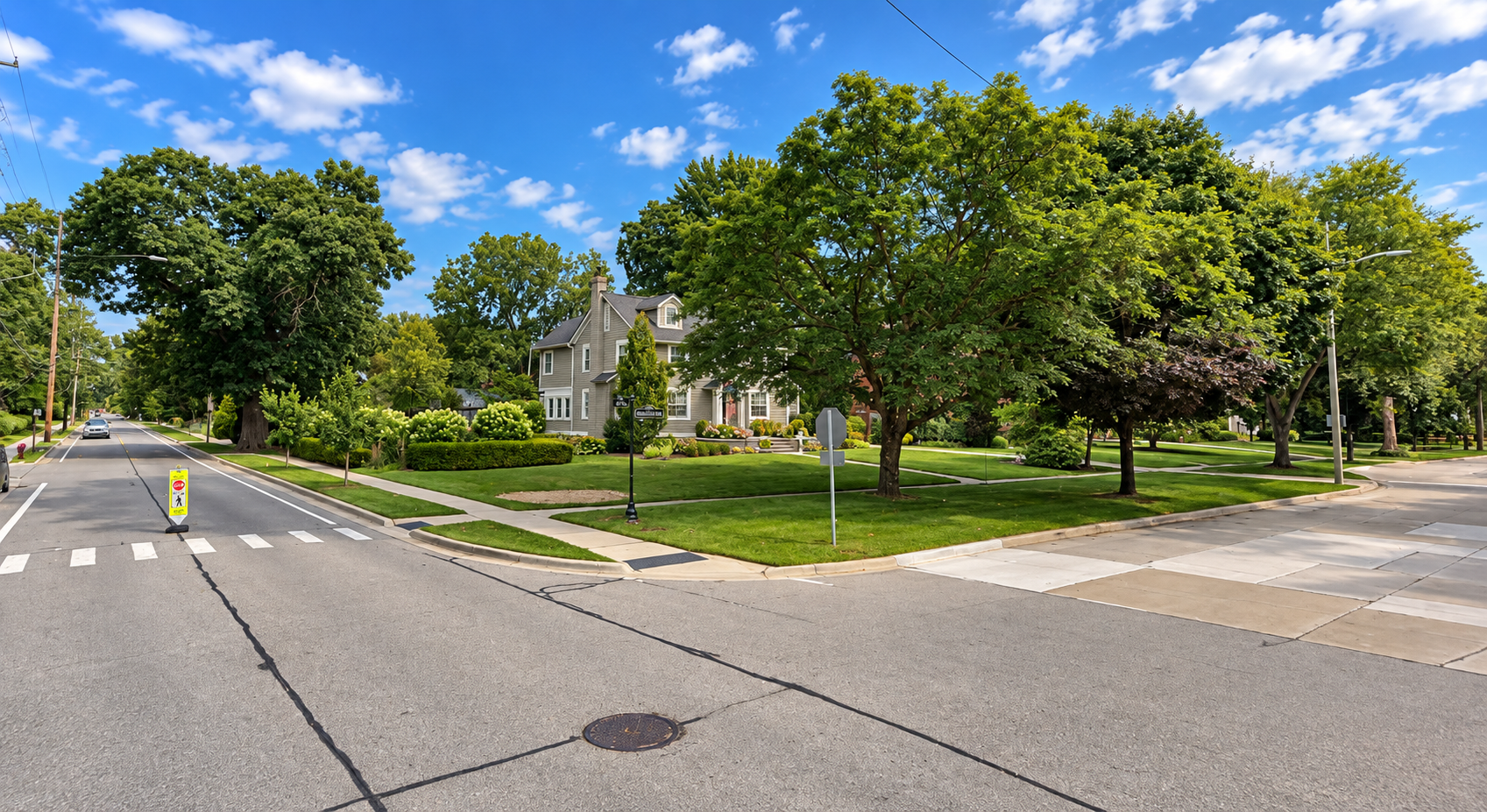
The range of available homes helps explain why Pleasant Ridge attracts attention from buyers searching for historic properties in Oakland County.
During the listing snapshot used for this guide, seven homes were actively listed in the city.
At the lower end was a three-bedroom, one-bathroom colonial built in 1923, offering approximately 1,428 square feet, a one-car garage, and a 0.15-acre lot. Its asking price was $350,000.
At the upper end was a six-bedroom, three-and-a-half-bathroom colonial built in 1910, with nearly 5,000 finished square feet on almost an acre, listed for $1.75 million.
These were asking prices at the time of the analysis, not confirmed closed sale prices, and current availability will differ.
Still, the contrast illustrates the variety of housing within Pleasant Ridge. A relatively compact historic home and a large estate can exist in the same city while appealing to very different budgets and property preferences.
Why Housing Inventory Is So Limited
One of the biggest challenges when buying in Pleasant Ridge is simply finding the right home for sale.
The city is largely developed, its boundaries are fixed, and opportunities for substantial new residential construction are limited.
Unlike a growing township with multiple new subdivisions, Pleasant Ridge cannot easily add hundreds of new homes to its housing inventory.
That does not mean every listing automatically receives multiple offers or sells above asking price.
However, buyers looking for a specific property type may have fewer alternatives when a suitable home becomes available.
If Pleasant Ridge is high on your list, it can help to monitor new listings, recent sales, and nearby comparable communities rather than waiting until the perfect property appears on a real estate website.
The Real Cost of Owning a Home in Pleasant Ridge
Property taxes are one of the most important expenses to evaluate when buying a home in Pleasant Ridge.
Michigan property taxes are based on taxable value and the millage rates applying to the property.
For a principal residence, the total tax rate can include city, county, school, and other authorized millages.
The research used for this guide referenced a 2025 principal residence millage rate of approximately 46 mills. Buyers should confirm the applicable rate and assessments for their specific property using the latest published tax information.
For illustration, a $350,000 purchase with an estimated taxable value of $175,000 and a 46-mill tax rate would generate approximately $8,050 in annual property taxes.
A $1.75 million purchase with an estimated taxable value of $875,000 at the same rate would generate approximately $40,250 annually.
These examples are estimates, not guaranteed tax bills. Actual taxable value after purchase is determined under Michigan law and may differ from exactly half the purchase price. Special assessments and exemptions may also affect the amount owed.
For an address-specific estimate, use the Michigan Department of Treasury Property Tax Estimator.
Michigan Property Tax Uncapping and What Buyers Should Know
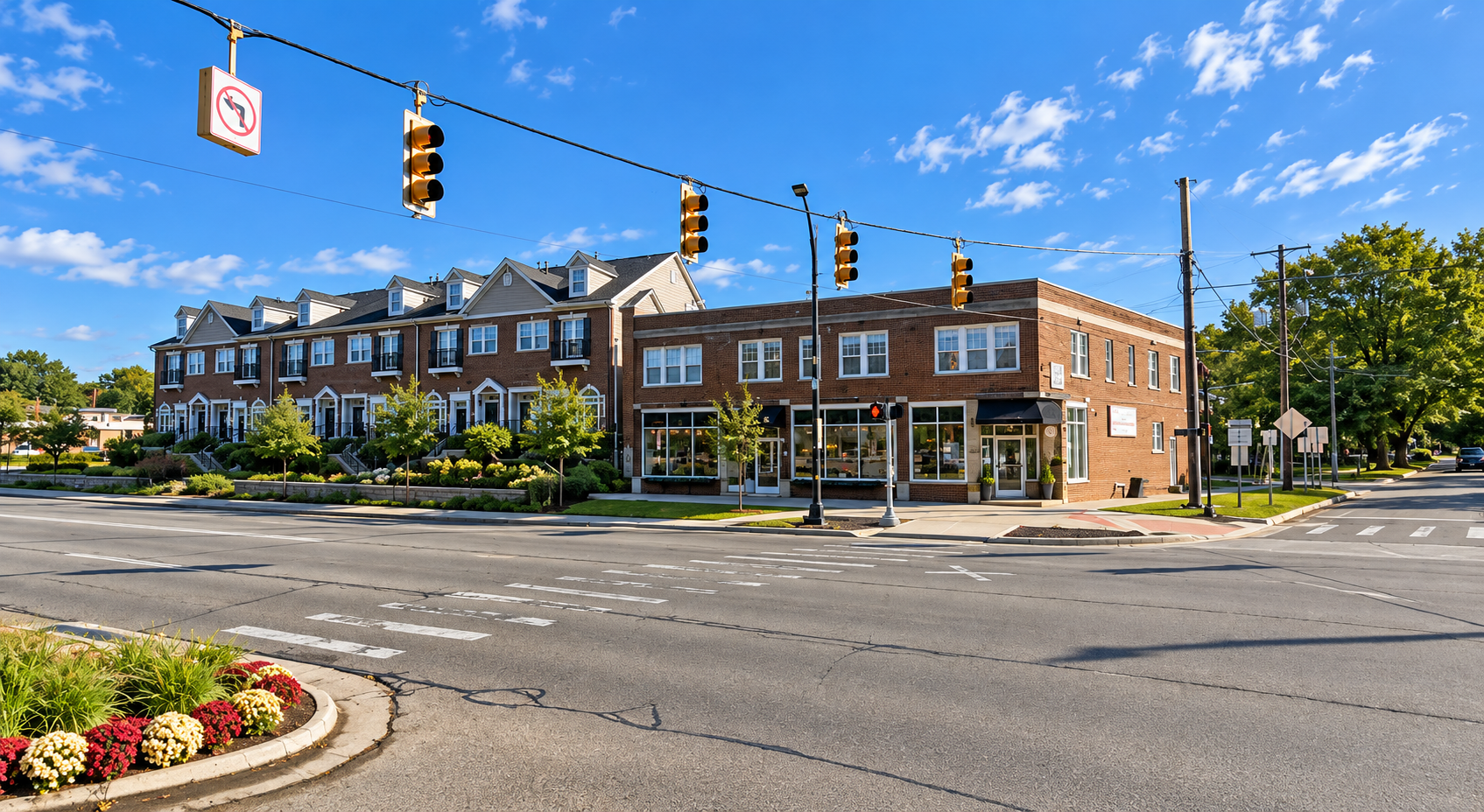
One of the most common mistakes Michigan homebuyers make is assuming the current owner's property tax bill will remain the same after purchasing the property.
Michigan limits many annual taxable value increases while ownership remains unchanged.
Following a qualifying transfer of ownership, taxable value is generally uncapped for the following tax year.
That means a seller who has owned a Pleasant Ridge home for several decades may be paying taxes based on a substantially lower taxable value than a new purchaser will experience.
Before making an offer, estimate the property's post-purchase taxes rather than simply copying the amount displayed on the current listing.
Ferndale Public Schools and Pleasant Ridge
Pleasant Ridge is served by Ferndale Public Schools, a public school district serving communities in this portion of Oakland County.
The district includes elementary, middle, and high school programs, along with additional educational opportunities.
Because school assignment can affect a buyer's daily schedule and transportation planning, verify the assigned schools for any property directly with the district.
Third-party school rating websites may provide additional data, but ratings are based on different methodologies and can change over time.
For the most reliable information, review official academic performance data, available programs, attendance boundaries, and transportation policies through Ferndale Public Schools.
Pleasant Ridge Parks and Recreation
Despite covering less than one square mile, Pleasant Ridge maintains a surprisingly substantial collection of recreational facilities.
The city operates a Community Center, seasonal outdoor swimming pool, wellness center, parks, sports facilities, and recreation programs.
These facilities are an important part of understanding what living in Pleasant Ridge can look like beyond the architecture.
Instead of having to travel to another city for every recreational activity, residents have access to several amenities within the municipal boundaries.
The Pleasant Ridge Community Center and Pool
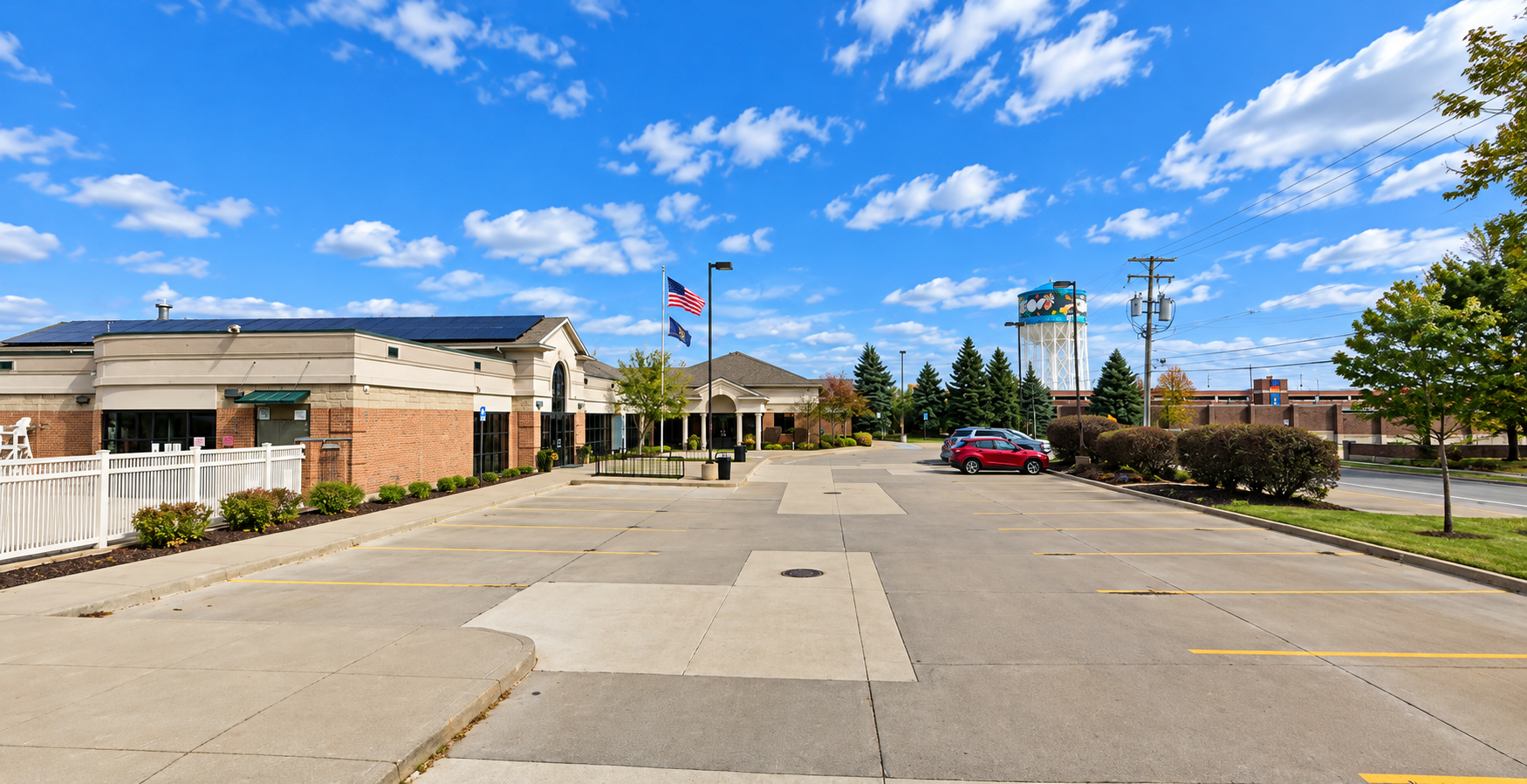
The Pleasant Ridge Community Center is located at 4 Ridge Road and serves as a hub for local recreation and community programming.
The complex includes a wellness center, activity rooms, meeting spaces, and a seasonal outdoor pool.
The pool was rebuilt in 2004 and includes a zero-depth entry area, lap lanes, diving boards, and additional amenities.
According to the city, the outdoor pool operates seasonally, generally from Memorial Day weekend through Labor Day, with access subject to residency and facility rules.
The wellness center provides fitness equipment and is another recreation benefit available through the city's municipal facilities.
Current schedules, eligibility, and programming are available through the Pleasant Ridge Recreation Department.
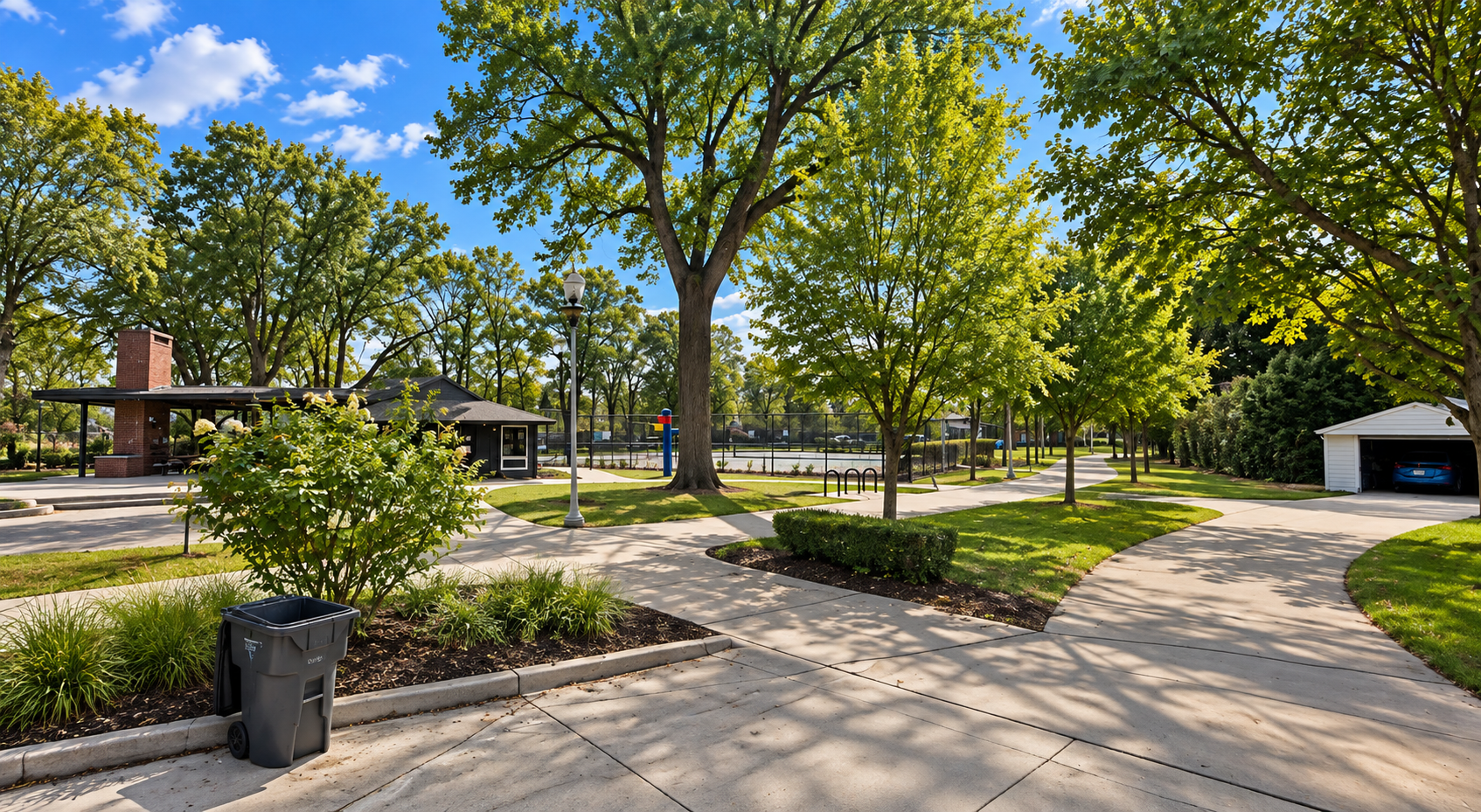
Gainsboro Park and Other Local Green Spaces
Gainsboro Park is one of Pleasant Ridge's primary outdoor recreation areas.
The park includes walking paths, playgrounds, sports facilities, open recreation space, a community garden, and a dog park.
The city also maintains Community Center Park, Hessel Park, and greenbelt areas along Woodward Avenue.
These amenities are particularly noteworthy because Pleasant Ridge has limited land available for large parks.
Residents can also explore larger regional parks and recreation destinations in nearby Royal Oak, Ferndale, and other Oakland County communities.
Local Events and Community Traditions
Pleasant Ridge hosts a variety of community activities throughout the year.
Events and traditions have included seasonal celebrations, community gatherings, arts programming, and holiday activities.
The city's Historical Commission has also organized home and garden tours highlighting the community's historic architecture.
These tours provide an opportunity to appreciate the architectural details that make Pleasant Ridge different from many newer Metro Detroit subdivisions.
The city publishes a community newsletter called The Ridger, which provides updates about municipal projects, recreation, events, and other local information.
For current events and programming, visit the City of Pleasant Ridge website.
Pleasant Ridge Short Term Rental Rules
Pleasant Ridge's approach to short-term rentals is another example of how local land-use decisions influence the city.
In June 2026, the Pleasant Ridge City Commission approved ordinance amendments regulating short-term rental properties.
The regulations generally allow short-term rentals in designated multifamily and commercial zoning districts, largely along Woodward Avenue.
New short-term rental operations are generally not permitted in single-family residential zoning districts, although certain previously lawful uses may qualify for exceptions under the ordinance.
Rental licensing requirements also apply.
These rules are particularly important for anyone considering purchasing property in Pleasant Ridge as an investment or operating a short-term rental.
Before purchasing for rental use, review the latest zoning and licensing requirements with the Pleasant Ridge Building Department.
Walkability and Everyday Convenience
Pleasant Ridge has a relatively compact residential layout with sidewalks and access to nearby commercial districts.
Its Woodward Avenue location puts it close to downtown Ferndale and Royal Oak, where residents can find restaurants, coffee shops, shopping, entertainment, and additional services.
However, there is an important distinction between living in a compact community and being able to walk to every daily destination.
Some Pleasant Ridge homes offer easier pedestrian access to surrounding businesses than others.
Crossing Woodward Avenue and navigating the I-696 corridor can also affect walking and cycling routes.
Buyers who prioritize walkability should evaluate the specific property's sidewalks, crossings, distances, and preferred destinations rather than relying on the city's overall size.
Pleasant Ridge vs Ferndale and Royal Oak
Pleasant Ridge is often considered alongside Ferndale and Royal Oak because all three communities are located along or near the Woodward Avenue corridor.
However, their housing markets and everyday environments are different.
Ferndale has a recognizable downtown with restaurants, entertainment, shops, and a wider variety of residential neighborhoods.
Royal Oak is substantially larger, with a major downtown, more housing inventory, and a broader mix of property types.
Pleasant Ridge is much smaller and is primarily known for its established residential neighborhoods, historic homes, and municipal recreation amenities.
For buyers who want immediate proximity to restaurants and entertainment, all three locations may be worth considering.
For buyers specifically interested in early twentieth-century residential architecture and a smaller municipal footprint, Pleasant Ridge offers a different combination of features.
The Advantages of Living in Pleasant Ridge
Pleasant Ridge has several characteristics that distinguish it from larger Metro Detroit suburbs.
- Historic homes with varied architectural styles
- Two National Register historic districts
- Convenient location along Woodward Avenue
- Access to nearby Ferndale and Royal Oak downtown districts
- City-operated community pool and wellness center
- Local parks, walking paths, and recreation programs
- Established residential streets and mature landscaping
- Relatively short distances to major Metro Detroit employment centers
The combination of architecture, location, and municipal amenities is particularly distinctive given the city's limited size.
The Tradeoffs of Living in Pleasant Ridge
There are also several practical considerations that buyers should understand.
Limited inventory: Pleasant Ridge has a small housing stock, so buyers may need to wait for a property matching their requirements.
Higher purchase prices: Historic homes and the city's location can command a premium compared with some other Southeast Michigan communities.
Property taxes: Buyers should budget for the estimated tax bill after ownership transfers, particularly when purchasing higher-priced homes.
Older construction: Many properties are approximately a century old, making thorough inspections and maintenance planning important.
Limited new construction: The city's developed footprint means buyers searching for newly built subdivisions may find fewer options.
Traffic considerations: Woodward Avenue and Interstate 696 provide regional access but may introduce traffic noise or congestion near certain properties.
Smaller commercial footprint: Many restaurants, grocery stores, and larger shopping destinations are located in surrounding communities.
What Buyers Should Inspect in Historic Pleasant Ridge Homes
Purchasing a historic home can be rewarding, but older construction deserves careful attention during the inspection process.
Depending on the property's age and renovation history, buyers should evaluate the electrical system, plumbing, foundation, basement moisture, roof, windows, insulation, heating and cooling equipment, and any previous additions.
It's also worth reviewing whether a property is subject to local historic district requirements or other regulations affecting exterior alterations.
National Register listing by itself does not automatically prohibit ordinary private-property renovations, but local ordinances and applicable restrictions should always be checked.
For buyers planning major remodeling projects, confirming permit requirements before closing can prevent expensive surprises.
The Pleasant Ridge Lifestyle and Housing Market
Pleasant Ridge offers something different from the typical Metro Detroit subdivision.
Instead of extensive new development, the community is defined by established architecture, relatively limited housing inventory, neighborhood parks, and access to nearby downtown districts.
Its location makes it possible to enjoy the amenities of larger surrounding cities while living within a smaller municipality.
At the same time, that small footprint limits housing choices and means buyers should be prepared to evaluate older properties carefully.
If historic architecture, established streets, and a central Oakland County location are high on your list, Pleasant Ridge deserves consideration.
If your priorities include extensive new construction, very large lots, or a broad selection of newly built homes, you may find more options in other parts of Oakland County.
Frequently Asked Questions About Pleasant Ridge Michigan
Where is Pleasant Ridge Michigan?
Pleasant Ridge is located in southeastern Oakland County, approximately 11 miles northwest of Downtown Detroit. It sits along Woodward Avenue near Ferndale, Royal Oak, Huntington Woods, and Oak Park.
How big is Pleasant Ridge Michigan?
Pleasant Ridge covers approximately 0.57 square miles, making it one of Michigan's smallest incorporated cities by land area.
What is the population of Pleasant Ridge Michigan?
The 2020 United States Census recorded 2,627 residents in Pleasant Ridge.
Is Pleasant Ridge Michigan a good place to live?
Pleasant Ridge offers historic homes, municipal recreation facilities, established residential streets, and convenient access to nearby Ferndale and Royal Oak. Whether it is a good fit depends on your housing budget, property preferences, commute, and desired amenities.
Is Pleasant Ridge Michigan expensive?
Pleasant Ridge generally has higher home prices than many communities in the broader regional MLS market. The MLS snapshot used for this guide reported a median sale price of approximately $473,500, although current prices vary with inventory and property characteristics.
What school district is Pleasant Ridge Michigan in?
Pleasant Ridge is served by Ferndale Public Schools. Buyers should verify individual school assignments and current attendance policies directly with the district.
Does Pleasant Ridge Michigan have a downtown?
Pleasant Ridge does not have a large traditional downtown comparable with Ferndale or Royal Oak. However, its location along Woodward Avenue provides convenient access to nearby downtown commercial districts.
Is Pleasant Ridge Michigan walkable?
Many residential streets have sidewalks, and the city has a compact layout. Actual walking convenience depends on the property's location and the destinations involved, particularly when crossing major roads such as Woodward Avenue.
Does Pleasant Ridge have a community pool?
Yes. Pleasant Ridge operates a seasonal outdoor community pool at its Community Center complex at 4 Ridge Road. The facility includes lap lanes, diving boards, and other amenities. Access is subject to city residency and facility rules.
Does Pleasant Ridge have historic homes?
Yes. Pleasant Ridge contains two National Register historic districts with homes built primarily during the early twentieth century. Architectural styles include Colonial Revival, Tudor Revival, Craftsman, bungalow, and other period designs.
Are Airbnb rentals allowed in Pleasant Ridge Michigan?
Short-term rentals are generally restricted to designated multifamily and commercial zoning districts under regulations adopted in 2026. New short-term rentals are generally not permitted in single-family residential districts, subject to limited exceptions for qualifying existing uses. Owners should verify current zoning and licensing requirements with the city.
How far is Pleasant Ridge from Downtown Detroit?
Pleasant Ridge is approximately 11 miles northwest of Downtown Detroit. Driving times can be roughly 15 to 25 minutes under favorable conditions, with longer trips possible during heavy traffic or construction.
Is Pleasant Ridge near Royal Oak?
Yes. Pleasant Ridge is located immediately southwest of the broader Royal Oak area, with Downtown Royal Oak a short drive north along Woodward Avenue.
Is Pleasant Ridge near Ferndale?
Yes. Pleasant Ridge is directly adjacent to Ferndale, and Downtown Ferndale is a short distance south along Woodward Avenue.
Why are homes in Pleasant Ridge expensive?
Several factors influence Pleasant Ridge home prices, including its location, limited housing inventory, historic architecture, lot sizes, and property condition. Not every home commands the same premium, and individual comparable sales are the best way to evaluate a property's value.
Are property taxes high in Pleasant Ridge?
Annual property taxes can be substantial, especially on higher-priced homes. Taxes depend on the property's taxable value, applicable millages, exemptions, and assessments. Buyers should estimate taxes after a qualifying ownership transfer rather than relying only on the seller's current bill.
Is Pleasant Ridge a historic district?
Pleasant Ridge contains two separate historic districts listed on the National Register of Historic Places, one west of Woodward Avenue and one east of Woodward.
Is Pleasant Ridge Better Than Ferndale or Royal Oak?
There is no universally better choice. Pleasant Ridge offers a smaller municipal footprint and a concentration of historic residential architecture, while Ferndale and Royal Oak have larger downtown districts and broader housing inventories. The right location depends on the individual property and your priorities.
Final Thoughts on Living in Pleasant Ridge Michigan
Pleasant Ridge is a small city with a distinctive history and an unusually strong architectural identity.
Its historic homes, location along Woodward Avenue, community recreation facilities, and limited geographic footprint create a housing market unlike many larger Metro Detroit suburbs.
But those same characteristics come with tradeoffs. Housing inventory is limited, prices can be substantial, and older homes require careful due diligence.
For buyers who appreciate historic architecture and want access to nearby Ferndale, Royal Oak, and Downtown Detroit, Pleasant Ridge is a community worth understanding before making a move.
Thinking About Moving to Pleasant Ridge Michigan?
I'm Andrew McManamon with Living in Michigan, and I help buyers, sellers, and people relocating throughout Metro Detroit and Southeast Michigan understand the local housing markets, communities, and costs behind the listings.
If you're considering Pleasant Ridge, Ferndale, Royal Oak, Huntington Woods, or another Oakland County community, feel free to reach out. We can compare housing options, property taxes, commute times, and the characteristics that matter most to your move.
You can also explore my free 74-page Living in Michigan Relocation Guide HERE, covering Michigan housing, property taxes, schools, cost of living, and communities throughout the state.
For additional Michigan real estate insights, subscribe to the Living in Michigan newsletter for community guides, market updates, and new videos.

Check Out the EXCLUSIVE "Living In Michigan" Apparel HERE
Living in Pleasant Ridge Michigan: The Tiny City …
Discover what makes Pleasant Ridge, Michigan unique,…
Living in Utica Michigan: What You Need to …
Discover what it's like living in Utica,…

Living in Rose, Springfield & Tyrone Townships Michigan: …
Discover what it’s like living in Rose,…