
Introduction
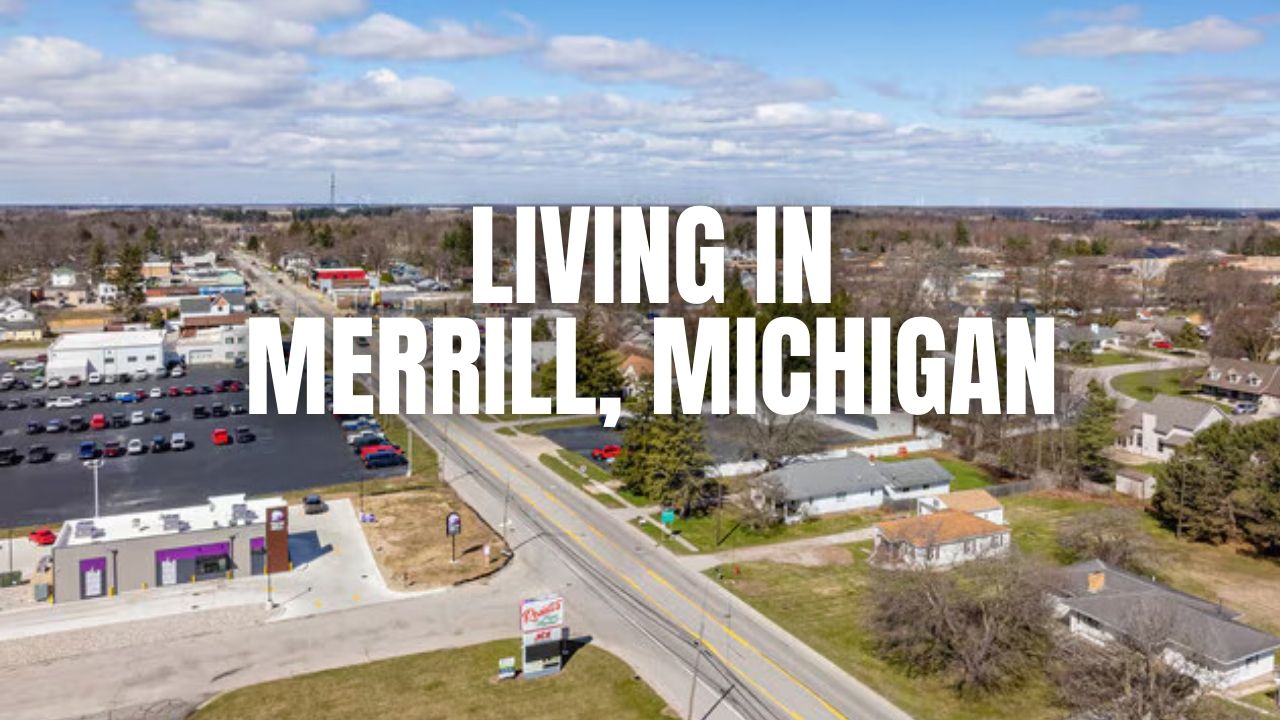
If you’re exploring quieter Michigan communities with a rural setting and small-town feel, Merrill, Michigan may be on your list.
This village offers a slower pace of life, open space, and housing that is generally more affordable than larger suburban markets. While it doesn’t have the commercial density of bigger cities, that’s often exactly the appeal for those looking for room to breathe.
In this guide, we’ll walk through what living in Merrill looks like — including home prices, property taxes, schools, and local lifestyle considerations — so you can decide if it aligns with your long-term plans.
Cost of Living in Merrill, Michigan
Cost of living is often one of Merrill’s most practical advantages.
According to U.S. Census Bureau data, median household income in Merrill is lower than the statewide median, which aligns with its rural setting. BestPlaces.net reports that overall cost of living in Merrill is below the national average.
Housing costs are typically lower than Michigan’s statewide median home value, based on U.S. Census Bureau housing value data. Niche.com also reports below-average housing costs compared to many Michigan communities.
Utilities and transportation expenses generally align with broader Midwest averages, according to the Bureau of Labor Statistics.
Because Merrill is a small village, local commercial amenities are limited, and residents often drive to nearby towns for shopping and services — which can affect transportation costs depending on commute distance.
Real Estate & Housing Overview
Merrill’s housing stock reflects its rural character.
According to U.S. Census Bureau data:
Many homes were built between the 1940s and 1980s
Owner-occupied homes make up a significant share of the housing market
Larger lot sizes are common compared to suburban developments
You’ll typically find:
Single-story ranch homes
Traditional two-story homes
Properties with acreage outside the village center
New construction activity is limited compared to higher-growth regions, and inventory can be smaller due to the village’s size.
Local MLS data for Saginaw County shows that rural properties often stay on the market longer than urban homes, though pricing tends to reflect lot size and land value.
As always, market conditions shift based on supply and interest rates, so reviewing current listings is important.




Croswell, Michigan: Best Neighborhood Pockets + Pros/Cons for …
Considering a move to Croswell, Michigan? This…
Brown City, Michigan: What It’s Like to Live …
Considering a move to Brown City, Michigan?…
Before You Move to St. Charles, Michigan: The …
Thinking about relocating to St. Charles, Michigan?…